
Petar Bojović: Serbian military commander and Voivoda (Field Marshal)
Overview of Petar Bojović (1858–1945), a senior Serbian army officer who fought in Balkan wars and World War I, attained the rank of Voivoda (Field Marshal), and whose final years and death are historically contested.
Overview
Petar Bojović (born 16 July 1858 in Miševići, Nova Varoš; died 19 January 1945 in Belgrade) was a senior Serbian military officer whose career spanned the last decades of the 19th century and the first half of the 20th. He is widely remembered for long service through multiple regional conflicts and the First World War, and for receiving the high military rank commonly translated as Field Marshal or Voivoda. His life and the circumstances of his death in 1945 have been subjects of differing accounts and historiographical debate.
Image gallery
8 Images


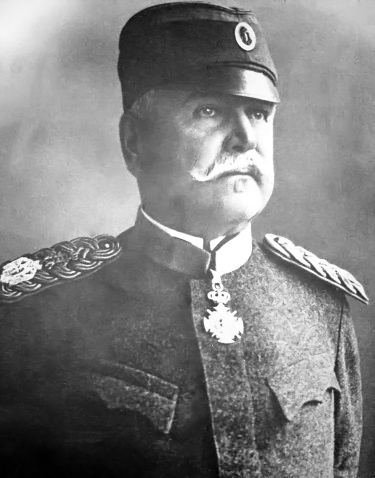


Early life and education
Bojović was born into a period of political and military upheaval in the Ottoman Balkans. He undertook military training in Serbian institutions and entered the national armed forces at a time when the emerging Serbian state was professionalizing its officer corps. Over the following decades he advanced through a series of command and staff appointments, gaining experience that would shape his later roles in major campaigns.
Military career and campaigns
Across his long career Bojović served in many of the conflicts that reshaped Southeast Europe. He saw action in the late-19th-century wars involving the Ottoman Empire, took part in the Serbo-Bulgarian confrontations, and held commands in both the First and Second Balkan Wars. During World War I he served at the highest levels of the Serbian army. In the later stages of that conflict he commanded the Serbian First Army on the Salonika (Thessaloniki) Front, and following the Allied and Serbian breakthrough in 1918 his formations advanced into formerly enemy-held territory.
His wartime service on the Macedonian Front and participation in the final campaigns of 1918 were important elements in the liberation efforts that contributed to the end of fighting in the region. For his leadership in these operations he was elevated to one of Serbia's most senior military ranks.
Rank, honors and command
Bojović attained the rank of Field Marshal, known in Serbian as Voivoda, a distinction awarded to a small number of commanders for exceptional service. Contemporary observers and later historians have described him as a steady professional officer who combined operational experience with administrative ability. His career exemplifies the generation of Serbian officers who led the army through a succession of wars and the creation of new state structures in the Balkans.
The rank is commonly rendered in English as Field Marshal and has sometimes been translated using terms such as "duke" in older sources; for discussions of terminology see general works on Serbian military ranks and titles (Voivoda, translations).
Later life and circumstances of death
After the First World War Bojović remained a prominent figure in military and public life during the interwar period. The political landscape changed dramatically in the 1940s with the outbreak of World War II and the emergence of armed resistance movements and revolutionary forces. In the immediate aftermath of the Second World War some contemporary reports and later narratives describe a violent confrontation in which Bojović was assaulted and lost his home; other sources treat details of these events with caution and highlight differing testimonies. Accounts of his injuries and subsequent death in January 1945 appear in both contemporary press reports and later historical summaries, and scholars advise consulting multiple primary and secondary accounts when reconstructing the final episode of his life (World War II context, property disputes and postwar actions).
Historical assessment and legacy
- Military legacy: Bojović is remembered as one of a small group of Serbian officers who reached the rank of Voivoda and as a commander who served through successive major conflicts.
- Contested final years: The circumstances of his treatment after 1944 and the exact causes of his death remain subject to differing interpretations; historians emphasize the need to weigh contemporary reports against later testimony (postwar sources).
- Commemoration: In Serbia and among scholars of Balkan military history his career appears in military histories, biographical dictionaries and discussions of the period's leadership.
For further research, readers may consult archives, military records and collections of memoirs that address the campaigns in which he served and the politics of the interwar and wartime periods. General reference works and specialized studies of the Salonika Front and Serbian military institutions provide context for understanding his career and the broader transformations of the region (Serbian archives and resources, World War I studies).
A cautious reading of available evidence—drawing on contemporary military reports, personal testimonies and later scholarly analysis—helps distinguish well-documented elements of Bojović's service from claims that remain contested or poorly corroborated.
Related articles
Author
AlegsaOnline.com Petar Bojović: Serbian military commander and Voivoda (Field Marshal) Leandro Alegsa
URL: https://en.alegsaonline.com/art/76046
Sources
- srbin.info : "We celebrate those 50 years ago kicked to death Serbian heroes!"
- politika.rs : "Memorial Day forgotten liberation of Belgrade"
- commons.wikimedia.org : Petar Bojović