
Pegasus (constellation)
Pegasus is a large northern constellation best known for the Great Square asterism, several bright stars such as Markab and Enif, prominent galaxies and for hosting 51 Pegasi, the first Sun‑like exoplanet host.
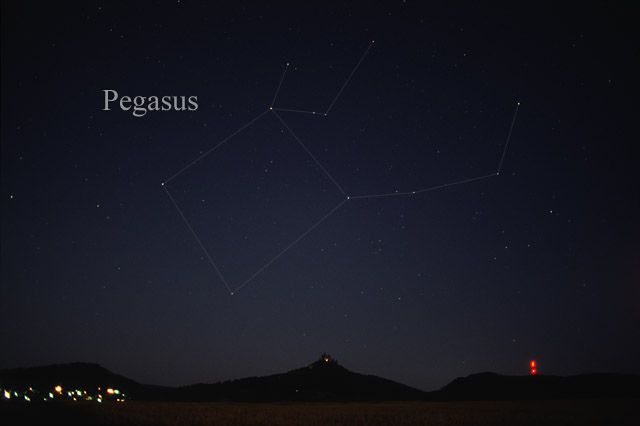
Pegasus is a prominent constellation in the northern celestial hemisphere. Recognizable by its large square-shaped asterism called the Great Square of Pegasus, the figure represents the winged horse of classical mythology. It is one of the constellations catalogued by ancient astronomers and remains a useful landmark for amateur stargazers and professionals alike.
Image gallery
6 Images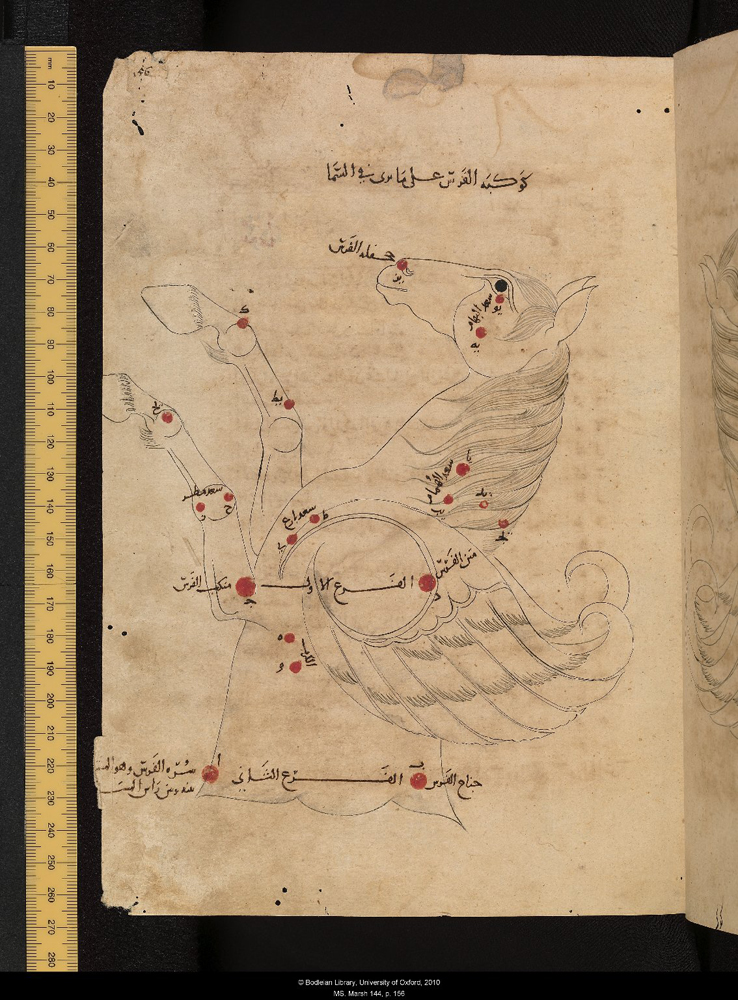



Notable stars and asterisms
The Great Square is formed by several stars, including Markab, Scheat and Algenib; Alpheratz, now usually assigned to Andromeda, completes the pattern. Enif (Epsilon Pegasi) is the constellation's brightest visible star and is used as an easy pointer when locating Pegasus. The arrangement of these stars makes Pegasus particularly straightforward to identify in autumn evenings for observers in northern latitudes.
Deep-sky objects and discoveries
Although Pegasus is not rich in Messier clusters, it contains several interesting galaxies and galaxy groups. NGC 7331, sometimes called a Milky Way twin for its spiral appearance, and the compact group known as Stephan's Quintet are among its more famous deep-sky targets. The constellation also gained modern astronomical fame because the star 51 Pegasi, located within its boundaries, was the first Sun-like star shown to host a close-orbiting exoplanet (discovered in 1995), transforming the study of planetary systems.
History, mythology and boundaries
Pegasus has roots in Greek myth as the winged horse born from Medusa's blood and associated with the hero Bellerophon. It was listed by Ptolemy among the classical constellations and its official modern boundaries were fixed in the 20th century when the International Astronomical Union standardized constellation limits. That standardization defines which stars and deep-sky objects belong to Pegasus today.
Observing tips and significance
For casual observers, the Great Square serves as a gateway for star-hopping to nearby constellations and objects. A small telescope or good binoculars will reveal the brighter galaxies and some fainter companions near NGC 7331 and Stephan's Quintet. For additional background on its stars and objects see Pegasus.
Related articles
Author
AlegsaOnline.com Pegasus (constellation) Leandro Alegsa
URL: https://en.alegsaonline.com/art/75453
Sources
- iau.org : "Pegasus, Constellation Boundary"