
Pearl White — Silent film star and serial heroine
American silent-film actress (1889–1938), famed for The Perils of Pauline and for popularizing the cliffhanger serial; a major star of early cinema who retired in the 1920s and died in France.

Pearl White (4 March 1889 – 4 August 1938) was an American actress best remembered as one of the leading faces of early silent-film serials. She rose to national fame in the 1910s for starring roles that placed a woman at the center of adventure stories built around weekly cliffhangers. White began performing as a child and became widely known for her physicality on screen and willingness to undertake daring sequences that helped define the serial form.
Image gallery
6 Images



Early life and stage beginnings
White was born in New Jersey and spent part of her childhood in Springfield, Missouri. She started appearing in local theatrical productions at a young age and later worked in touring stage companies and vaudeville before moving into motion pictures. Her stage experience gave her the training and presence that translated well to silent cinema, where expressive physical performance mattered more than spoken dialogue.
Film career and star persona
Her breakthrough came with the 1914 serial The Perils of Pauline, an episodic series that made heavy use of suspenseful endings to keep audiences returning. The serial format, often released in short episodes, relied on recurring jeopardy and rapid pacing; White’s characters were frequently shown escaping danger, which contributed to her reputation for doing many of her own stunts. She became closely associated with the popular image of the daring serial heroine and was sometimes nicknamed the “Queen of the Serials.” For contemporary readers seeking primary film listings and credits, see period filmographies and archival catalogs.

Notable works and style
- The Perils of Pauline (1914) — the role that made her a household name.
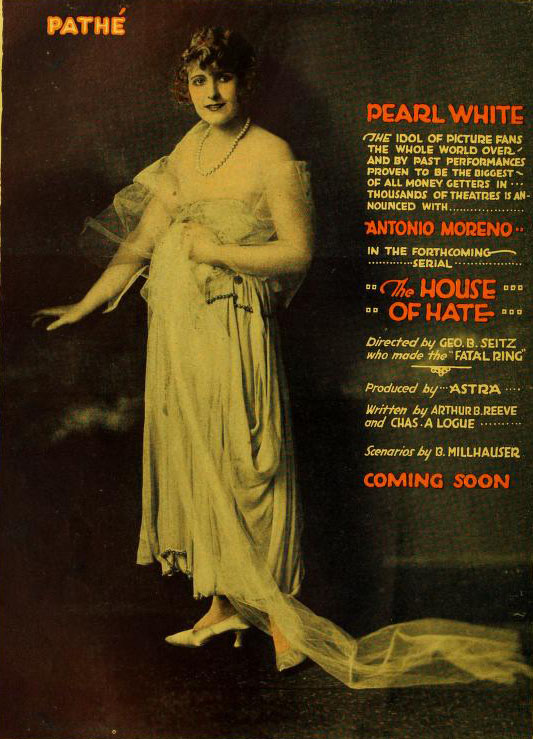
- The House of Hate (1918) — another popular serial association from the late 1910s.
- Various features and short serials through the early 1920s that showcased action-oriented plots and cliffhanger endings.
White’s screen persona blended vulnerability and resourcefulness; while her characters often faced extreme peril, they also displayed ingenuity and resilience. Her films helped popularize narrative techniques—episodic suspense and visual daring—that influenced later adventure storytelling in cinema and radio.
Later years, retirement and death
White largely withdrew from film work in the mid-1920s as the industry moved toward feature-length productions and, later, sound pictures. She spent her later life in Europe and died in France in 1938 of cirrhosis at age forty-nine. Her life after stardom is the subject of biographical essays and retrospectives available through film history resources such as biographical archives and silent-film centers.

Legacy and preservation
Pearl White’s work exemplifies both the popularity and the impermanence of early cinema: many serials and shorts from the silent era are now lost or survive only in incomplete form. Film historians note her importance in expanding the range of roles available to women onscreen and in shaping the adventure serial as a commercially successful entertainment form. Collections, retrospectives and restoration projects occasionally highlight her contributions; further information is offered by curated collections and scholarly sites at film archives and museum programs.

Her grave in Passy has been cited in several guides to the final resting places of film pioneers, and her name remains associated with the early development of cinematic suspense and serial storytelling.
Related articles
Author
AlegsaOnline.com Pearl White — Silent film star and serial heroine Leandro Alegsa
URL: https://en.alegsaonline.com/art/75361