
Australian Open: Overview, History, Surfaces and Significance
Comprehensive article on the Australian Open: its role as the first Grand Slam of the year, court surfaces, history, venue, event format, and notable features.
The Australian Open is one of the four major championships of professional tennis, commonly referred to as a Grand Slam. Held each January in Melbourne, Australia, it traditionally serves as the season’s opening major and attracts the world’s top players. The tournament includes men’s and women’s singles and doubles, mixed doubles, junior draws and wheelchair events, and it contributes important ranking points, prize money and historic records.
Image gallery
10 Images
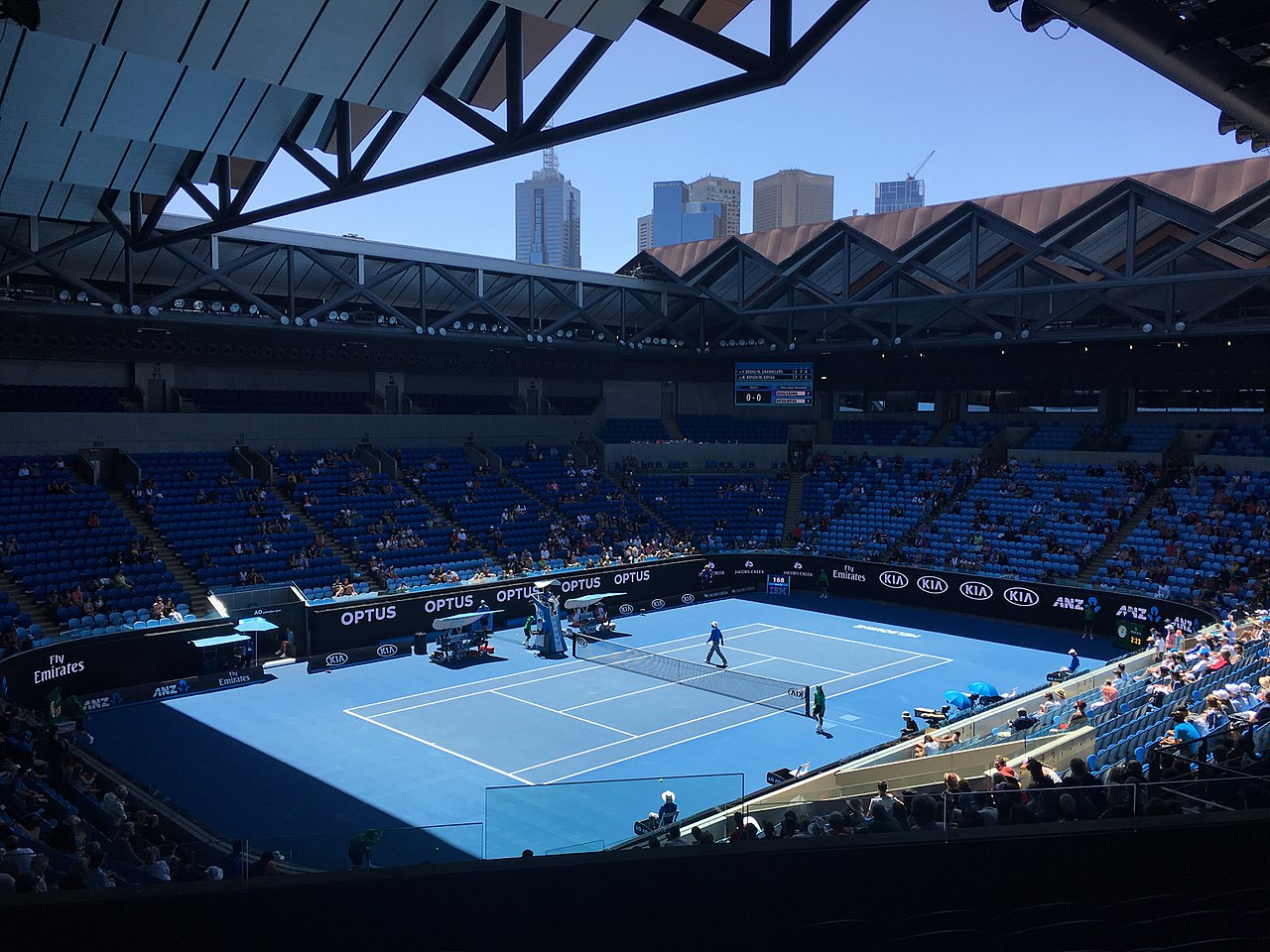


Court surfaces and playing characteristics
Over its long history the Australian Open has been contested on multiple court types, and changes in surface have altered playing conditions and player success. Early decades used natural grass courts, favoring fast, serve-and-volley tennis. From the late 1980s the event moved to synthetic hard courts: Rebound Ace was used for a period, followed by Plexicushion, and in more recent years other hard-court systems have been employed to moderate speed and bounce. These hard surfaces tend to reward baseline consistency, athletic movement and endurance.
History and development
The tournament began in the early 20th century and for many decades was less attended by European and North American players because of travel distance and timing. Improvements in air travel, scheduling, prize money and facilities in the late 20th century changed that. The principal venue today is Melbourne Park, a complex redeveloped in the 1980s and 1990s that includes show courts with retractable roofs and seating configured for large crowds.
Format, scheduling and notable features
Played over two weeks, the Australian Open follows the standard Grand Slam format with best-of-five sets for men’s singles and best-of-three for women’s singles, plus comparable formats for doubles and other categories. Unique logistical and climatic issues—such as extreme summer heat—have led to specific policies on heat, player welfare and scheduling. The event is also known for evening sessions under lights and for using central courts equipped with roofs to limit weather disruptions.
Importance and distinctions
As the opening major of the calendar, the Australian Open often sets early-season storylines and momentum. Its changes in surface and venue over time have been influential in the evolution of modern tennis: players who adapt to its hard courts and extreme conditions often gain an early advantage in the rankings. The tournament is a focal point for fans in the Asia–Pacific region and plays a major role in the international tennis calendar.
Further reading and resources
- Overview of Grand Slam tournaments: Grand Slam
- General tennis rules and formats: Tennis basics
- Host city information: Melbourne
- Country context: Australia
- Historical surfaces and court types: Grass and hard courts
Related articles
Author
AlegsaOnline.com Australian Open: Overview, History, Surfaces and Significance Leandro Alegsa
URL: https://en.alegsaonline.com/art/7505
Sources
- australian.open-tennis.com : "Australian Open Weather / Extreme Heat Policy | Australian Open"
- abc.net.au : "Extreme heat policy likely at Australian Open - ABC News (Australian Broadcasting Corporation)"
- espn.go.com : "Stan Wawrinka wins Aussie title"
- espn.go.com : "Li Na wins Australian Open"
- espn.go.com : "Novak Djokovic takes title in 4 sets"
- espn.go.com : "Victoria Azarenka beats Li Na for title"
- espn.go.com : "Novak Djokovic outlasts Rafael Nadal"
- espn.go.com : "Victoria Azarenka routs Sharapova"
- australianopen.com : "Australian Open 2011 - Official Site presented by IBM - Beaten Murray simply second best"
- australianopen.com : "Australian Open 2011 - Official Site presented by IBM - Kim Clijsters"
- australianopen.com : "Australian Open 2011 - Official Site presented by IBM - Roger Federer"
- australianopen.com : "Australian Open 2011 - Official Site presented by IBM - Serena Williams"
- australianopen.com : "Australian Open 2011 - Official Site presented by IBM - Rafael Nadal"
- australianopen.com : "Australian Open 2011 - Official Site presented by IBM - Novak Djokovic"
- australianopen.com : "Australian Open 2011 - Official Site presented by IBM - Maria Sharapova"