
Patañjali: Grammarian, Yoga Author, and the Question of Identity
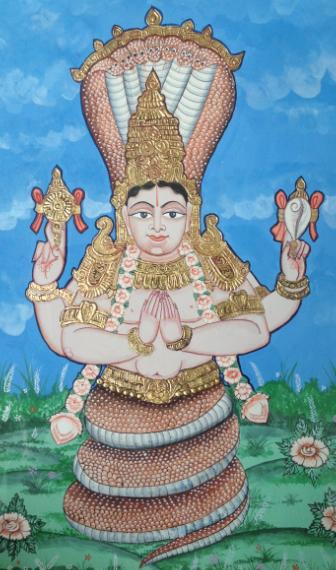
Patañjali is the name attached to influential Sanskrit works — a grammatical commentary (Mahābhāṣya), the Yoga Sūtras, and a medical treatise — though scholars debate whether these were written by a single person.
Overview
Patañjali is traditionally credited with several major Sanskrit works: a celebrated commentary on Pāṇini's grammar (the Mahābhāṣya), a concise manual of classical yoga philosophy (the Yoga Sūtras), and in some traditions an Ayurvedic or medical text. The name and the surviving texts have exercised scholars, practitioners and commentators for centuries. Modern researchers emphasize uncertainty about dates, authorship, and whether all these works were composed by the same individual.
Image gallery
3 Images

Major works and their content
Patañjali's reputation rests mainly on three categories of writings:
- Mahābhāṣya — a long commentary on Kātyāyana's vārttikas and on Pāṇini's Aṣṭādhyāyī. It analyzes grammar, interpretation and linguistic theory and became a foundational text in traditional Sanskrit scholarship. Editions and critical studies appear in classical and modern scholarship (Pāṇini and his tradition).
- Yoga Sūtras — a compact collection of aphorisms outlining a systematic theory and practice of yoga, often associated with the eight-limbed (aṣṭāṅga) path: yama, niyama, āsana, prāṇāyāma, pratyāhāra, dhyāna, dhāraṇā and samādhi. This work shaped later medieval and modern yoga traditions (Yoga tradition sources).
- Attributed medical work — some manuscripts and later bibliographies link the name to a medical treatise or notes used in Ayurveda, but the attribution is less secure and may reflect later ascription (medical attributions).
Dating and questions of identity
Scholars place the grammarian Patañjali usually in or around the 2nd century BCE because of linguistic, stylistic and citation patterns in the Mahābhāṣya. The Yoga Sūtras have been dated by different scholars to a range from the last centuries BCE to the early centuries CE. As a result, many modern studies treat the grammatical commentator and the author of the Yoga Sūtras as possibly distinct figures, or as separate layers of textual development. For discussions of these issues and manuscript evidence see dating and manuscript studies and authorship debates.
Historical significance and influence
The Mahābhāṣya consolidated and extended the classical Pāṇinian tradition and influenced centuries of grammatical commentary, education, and philology. The Yoga Sūtras, despite their terse form, provided a durable philosophical framework and vocabulary for later commentaries that developed practical, devotional and metaphysical strands of yoga. Across South Asia and later Europe, texts attributed to Patañjali served as authoritative references for language, practice, and theory (studies on influence).
Notable facts and distinctions
- The name Patañjali appears in different manuscript traditions; identical names do not guarantee a single author.
- The Mahābhāṣya is technical and scholarly; the Yoga Sūtras are aphoristic and contemplative — differences that support caution about single authorship.
- Later commentators, translators and practitioners have layered interpretations onto the Yoga Sūtras, producing diverse schools of thought still active today.
Because of the gaps and ambiguities in evidence, reliable accounts emphasize what can be established: the Mahābhāṣya and the Yoga Sūtras are landmark texts in their fields; both shaped classical Indian education and religious-philosophical life; and the question of whether one historical Patañjali wrote them remains an open scholarly issue. For further reading and manuscript catalogues consult specialist editions and the linked resources above (bibliographies, textual studies).
Related articles
Author
AlegsaOnline.com Patañjali: Grammarian, Yoga Author, and the Question of Identity Leandro Alegsa
URL: https://en.alegsaonline.com/art/74986