
Parry People Movers: British flywheel-powered railbuses
British manufacturer of lightweight railbuses that use mechanical flywheel energy storage for traction on short branch lines, offering low emissions, low running costs and suitability for shuttle services.
Parry People Movers is a British company that produces very lightweight railbuses designed for short, low-demand railway services. Their vehicles are unusual because they use mechanical flywheel energy storage to capture and reuse energy for traction, reducing fuel consumption and emissions compared with conventional diesel multiple units. The company’s products are aimed primarily at branch lines, community rail services and shuttle routes where high capacity and high speed are not required.
Image gallery
3 Images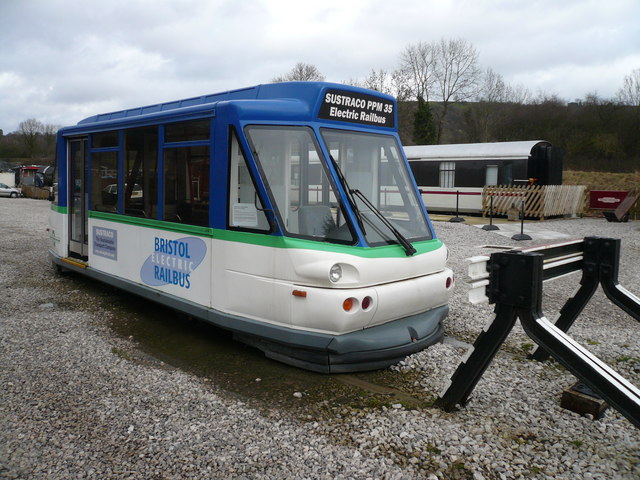


Design and operation
Parry People Movers combine a compact passenger cabin with a lightweight chassis and a mechanical flywheel system. The flywheel stores rotational energy: it is accelerated by a small onboard engine (or by regenerative braking) and then supplies power back to the wheels when the vehicle needs to accelerate. This arrangement reduces the size of the prime mover required and allows frequent stop-start operation with improved efficiency. Controls manage the transfer of energy to smooth acceleration and braking.
History and development
The concept grew from a desire to lower operating costs on local services that cannot sustain full-size trains. Over time the manufacturer refined the design and completed trials and small-scale introductions on demonstration routes. Units produced by the firm have been given national vehicle classifications and have operated in public passenger service on short branch lines, showing the practical potential of mechanical energy storage on the mainline network.
Uses, examples and suitability
Parry People Movers are most often deployed on shuttle services and short branch lines where low weight, simplicity and economy are priorities. They are especially suited to routes with frequent stops because the flywheel recovers braking energy and returns it during each acceleration. Operators choose these vehicles to keep fares and subsidies low while maintaining reliable service.
Advantages and limitations
- Advantages: reduced fuel use, lower emissions and noise, simpler maintenance, and good efficiency in repeated stop-start operation.
- Limitations: limited top speed and passenger capacity compared with full-size trains, making them unsuitable for busy or long-distance services.
- Notable: the technology demonstrates a mechanical alternative to battery or hydrogen systems and can be combined with small internal-combustion engines or other prime movers.
For more information about the manufacturer see Parry People Movers, or read about the underlying technology at flywheel energy storage.
Related articles
Author
AlegsaOnline.com Parry People Movers: British flywheel-powered railbuses Leandro Alegsa
URL: https://en.alegsaonline.com/art/74806