
Passing loop (railway)
A short section of double track on a single-track railway or tramway where vehicles traveling in opposite directions can pass or faster services can overtake slower ones.
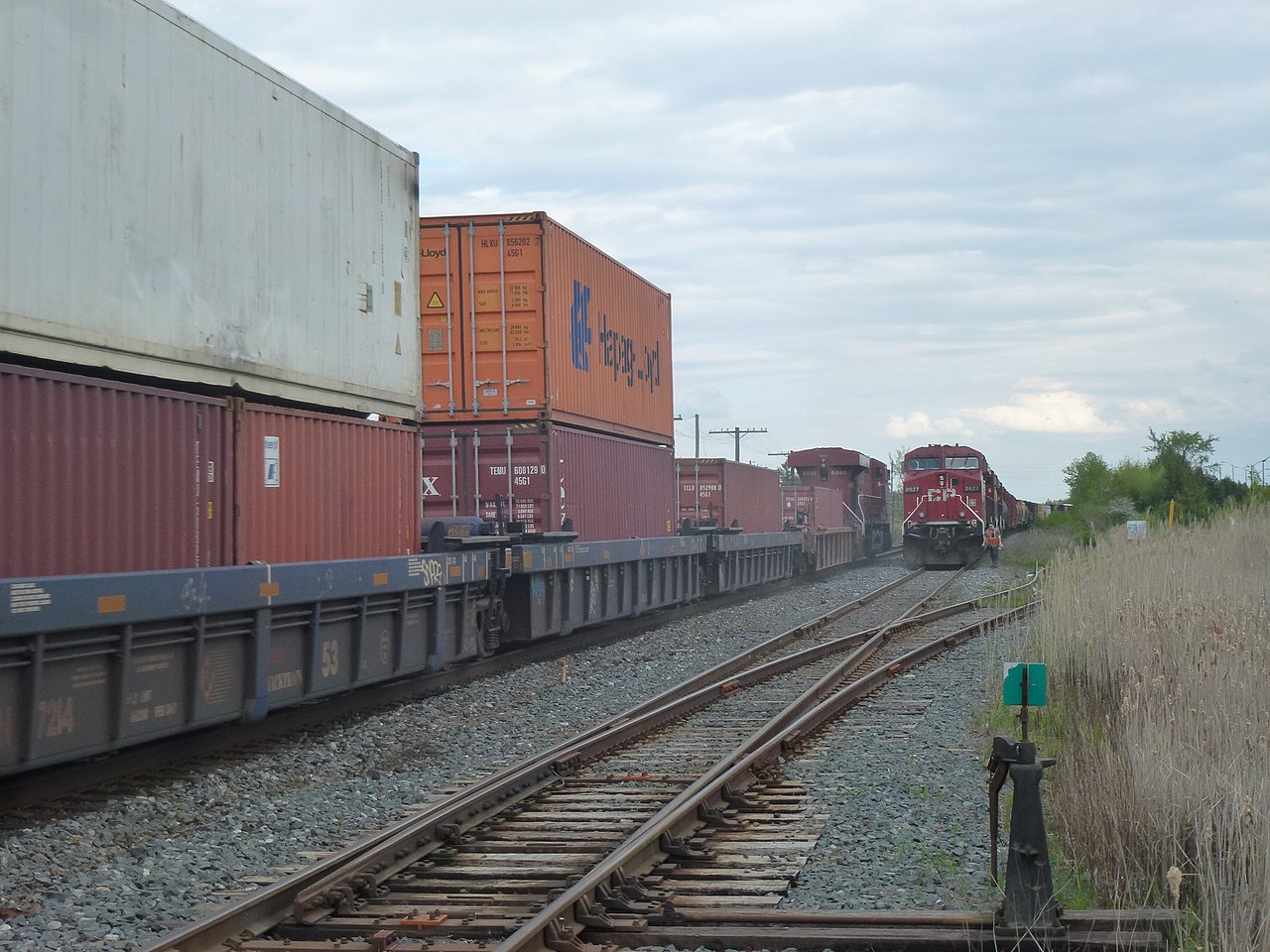
A passing loop, also called a passing siding, crossing loop, crossing place or colloquially a "hole", is a short length of double track on a primarily single-track railway or tramway that allows vehicles to pass one another. Passing loops are commonly placed at stations, halts or midway between them to increase line capacity and flexibility without the cost of full double-tracking.
Image gallery
5 Images



Design and components
Typical elements of a passing loop include two turnouts (points) at each end, parallel rails long enough to accommodate the longest train expected, and often a platform arrangement. Some loops provide an island platform serving both tracks; others place platforms on the outer faces. Loops may be held at one end by catch sidings or refuge tracks for slow-moving freight.
Operation and signalling
Effective use of loops depends on signalling, timetabling and train control. On many modern installations each track through the loop is signalled for bi-directional working so trains may enter from either direction. Dispatchers or automatic systems decide which train waits and which continues; on simple rural lines this may be governed by a timetable and written orders. Passing loops also enable overtaking where a faster passenger train passes a slower freight or local service.
History and development
Passing loops have been used since the earliest days of single-track railways to reduce construction costs while permitting two-way traffic. As signalling and communications improved, loops could be used more flexibly and safely. In tram and light rail networks, short sections of double track serve the same purpose in constrained urban corridors.
Uses, advantages and limitations
- Increase line capacity without continuous double track.
- Allow recovery from delays and permit scheduled meets.
- Provide locations for overtakes and operational flexibility.
- Limitations include the need for precise scheduling and potential bottlenecks if loops are too few or too short.
For more technical detail on single-track practice and loop arrangements see resources on single line operation and signalling systems. Variations such as refuge loops, long loops for freight trains, and staggered platforms illustrate how passing places are adapted to local traffic patterns and geography.
Related articles
Author
AlegsaOnline.com Passing loop (railway) Leandro Alegsa
URL: https://en.alegsaonline.com/art/74940