
Paola Epifani (Rabarama): Italian painter and sculptor
Paola Epifani, known as Rabarama, is an Italian artist (b. 1969) whose painted figurative sculptures and mixed-media works explore identity, the human body and surface ornamentation.
Paola Epifani (born 22 August 1969 in Rome), who signs her work as Rabarama, is an Italian artist active as a painter and sculptor. Her practice centers on figurative representation and the relationship between surface and form: two- and three-dimensional works often combine the visual language of painting with sculptural volume to examine questions of self, transformation and human presence.
Image gallery
8 Images



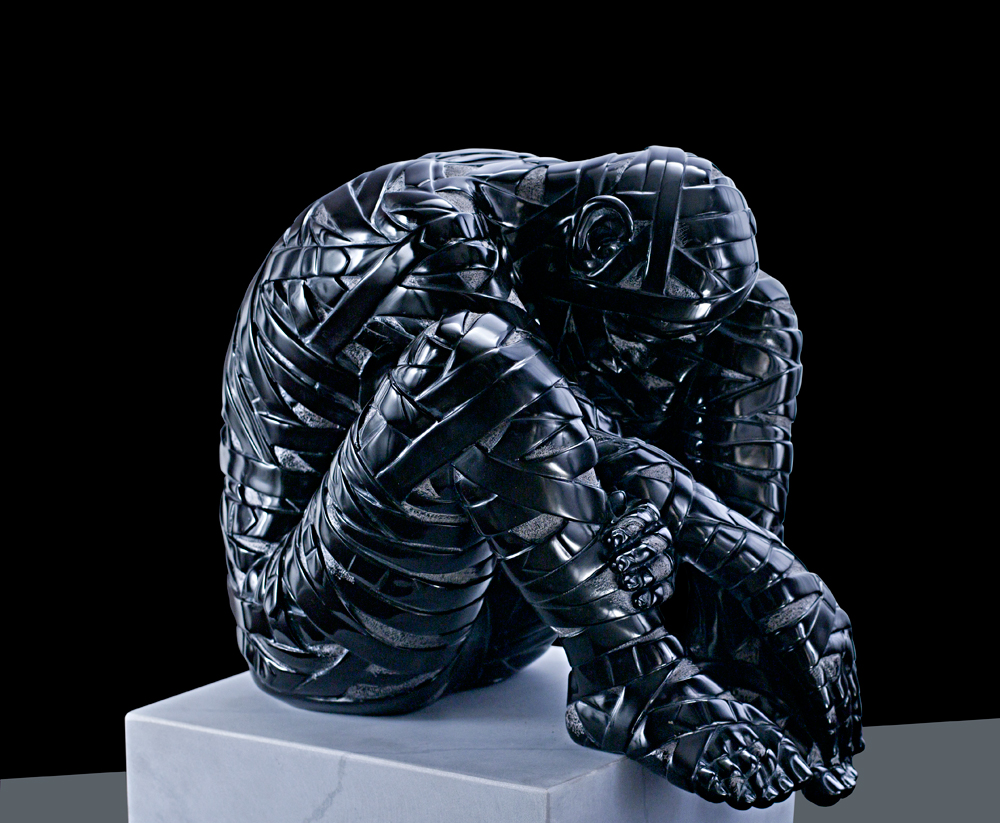

Artistic characteristics and themes
Rabarama's work is frequently described in terms of a dialogue between anatomy and decoration. Figures and partial bodies recur as motifs, presented in isolation or clustered into installations. Surfaces are treated as carriers of meaning: patterns, colors and textured markings function like a second skin that both conceals and reveals. Recurring themes include identity, metamorphosis, the limits of representation and the relationship between inner life and outward appearance.
Materials and working methods
Working across painting and sculpture, Epifani employs mixed media and site-aware approaches. Her sculptures can be designed for indoor gallery settings as well as for outdoor display. The combination of pictorial surface treatment with modeled form is central to her practice, and she often adapts scale to the context—creating intimate pieces as well as larger public works that engage architecture and landscape.
Education and career highlights
Epifani studied at the Art School of Treviso and completed her studies at the Academy of Fine Arts in Venice in 1991. She established her studio life in Padua around 1990 and has since exhibited in a number of national and international venues. One notable moment in her career was participation in the 54th Venice Biennale in 2011, where her work was presented alongside a wide range of contemporary practices.
Exhibitions and public presence
- Regular solo and group exhibitions in Italy and abroad, often showing both painted works and sculptures.
- Works intended for public settings and temporary outdoor installations that invite interaction with viewers.
- Inclusion in major contemporary art events, contributing to wider discussions about figurative sculpture today.
Reception and significance
Critics and curators tend to emphasize Epifani's ability to blend decorative surface treatment with sculptural volume, producing pieces that are visually striking and conceptually layered. Her use of the pseudonym Rabarama has become the recognizable brand for her artistic output, under which she has built an international reputation. While interpretations vary, many observers read her work as a meditation on the human condition in the contemporary world.
For brief reference and further information, see these resources: artist profile, educational background, academy records, exhibition history.
Related articles
Author
AlegsaOnline.com Paola Epifani (Rabarama): Italian painter and sculptor Leandro Alegsa
URL: https://en.alegsaonline.com/art/74411