
Paolo and Vittorio Taviani — Italian film directors and screenwriters
The Taviani brothers, Paolo and Vittorio, were an influential Italian directing duo known for collaborative direction, socially engaged storytelling and prize-winning films including Padre padrone and Caesar Must Die.
The Taviani brothers, Paolo (born 1931) and Vittorio (1929–2018), formed one of Italy's most celebrated directing partnerships. Born in Tuscany — Paolo in San Miniato and raised in Italy — they worked together across six decades as co-writers and co-directors. Rather than dividing credits, the two developed a shared cinematic language and routine of collaborating on scripts, scenes and editorial decisions, producing films that range from intimate dramas to historical epics.
Image gallery
3 Images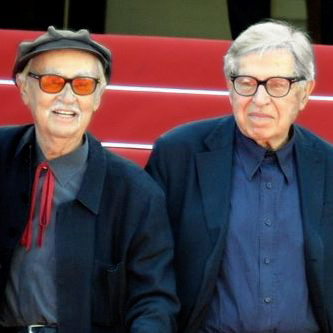


Working method and collaboration
The brothers maintained a distinctive creative practice: they co-authored screenplays and jointly directed films, often alternating responsibilities by scene or sequence and making unified choices in casting and post-production. This close collaboration created films with consistent thematic concerns and stylistic continuity, so that their output is usually attributed to the pair rather than to either brother individually. Their joint approach also allowed them to combine literary adaptation with documentary-influenced realism.
Major films and recognition
The Tavianis achieved international attention and festival success. In 1977 they won the top prize at the Cannes Film Festival, the Palme d'Or, for Padre padrone, a film adapted from a memoir that explored family dynamics and social change. Their 1982 film La notte di San Lorenzo (The Night of the Shooting Stars) received the Grand Prix at Cannes and further cemented their reputation for blending mythic elements with historical memory. In 2012 the brothers returned to festival prominence when Caesar Must Die, an intense, theatrical film about inmates staging Shakespeare, won the Golden Bear at the Berlin International Film Festival.
Style, themes and influences
The Tavianis drew on Italy's neorealist tradition while often incorporating lyrical, folkloric or allegorical layers. Recurring themes include memory and history, moral and political responsibility, rural life versus modernity, and the power of storytelling itself. Their work frequently adapts literary sources or historical episodes and privileges ensemble casts and location shooting. Critics have noted their ability to move between intimate human portraits and collective experiences of crisis or transition.
Selected filmography and awards
- Padre padrone (1977) — Palme d'Or, Cannes
- La notte di San Lorenzo / The Night of the Shooting Stars (1982) — Grand Prix, Cannes
- Caesar Must Die (2012) — Golden Bear, Berlin
- Other notable works span both fiction and documentary, illustrating their interest in historical memory and moral inquiry.
Legacy and later life
The Taviani brothers influenced generations of Italian and European filmmakers by demonstrating how political and personal histories can be dramatized without sacrificing formal ambition. They remained active into the 21st century, continuing to premiere films at major festivals. Vittorio died in Rome in April 2018; reports cite complications related to heart disease as the cause. Paolo has continued to be associated with the brothers' body of work, which is studied for its moral seriousness, humanist outlook and hybrid aesthetic between realism and fable.
For further reading and film credits, see festival archives and filmographic resources that document their long collaboration and international awards. Their films remain part of discussions about postwar Italian cinema and the possibilities of collective authorship in filmmaking.
Related articles
Author
AlegsaOnline.com Paolo and Vittorio Taviani — Italian film directors and screenwriters Leandro Alegsa
URL: https://en.alegsaonline.com/art/74417
Sources
- bbc.com : "Celebrated Italian film-maker dies"