
Pancho Villa (José Doroteo Arango Arámbula)
Mexican revolutionary general and folk figure who led forces in the north during the Mexican Revolution, advocated land reform, and carried out the 1916 raid on Columbus, New Mexico.
Pancho Villa was the popular name of José Doroteo Arango Arámbula (1878–1923), a central figure of the Mexican Revolution. Rising from a humble and often violent early life, Villa became a charismatic military commander and political actor who shaped events across northern Mexico. He is remembered both as a guerrilla leader and a folk hero who championed rural grievances and agrarian change.
Image gallery
10 Images


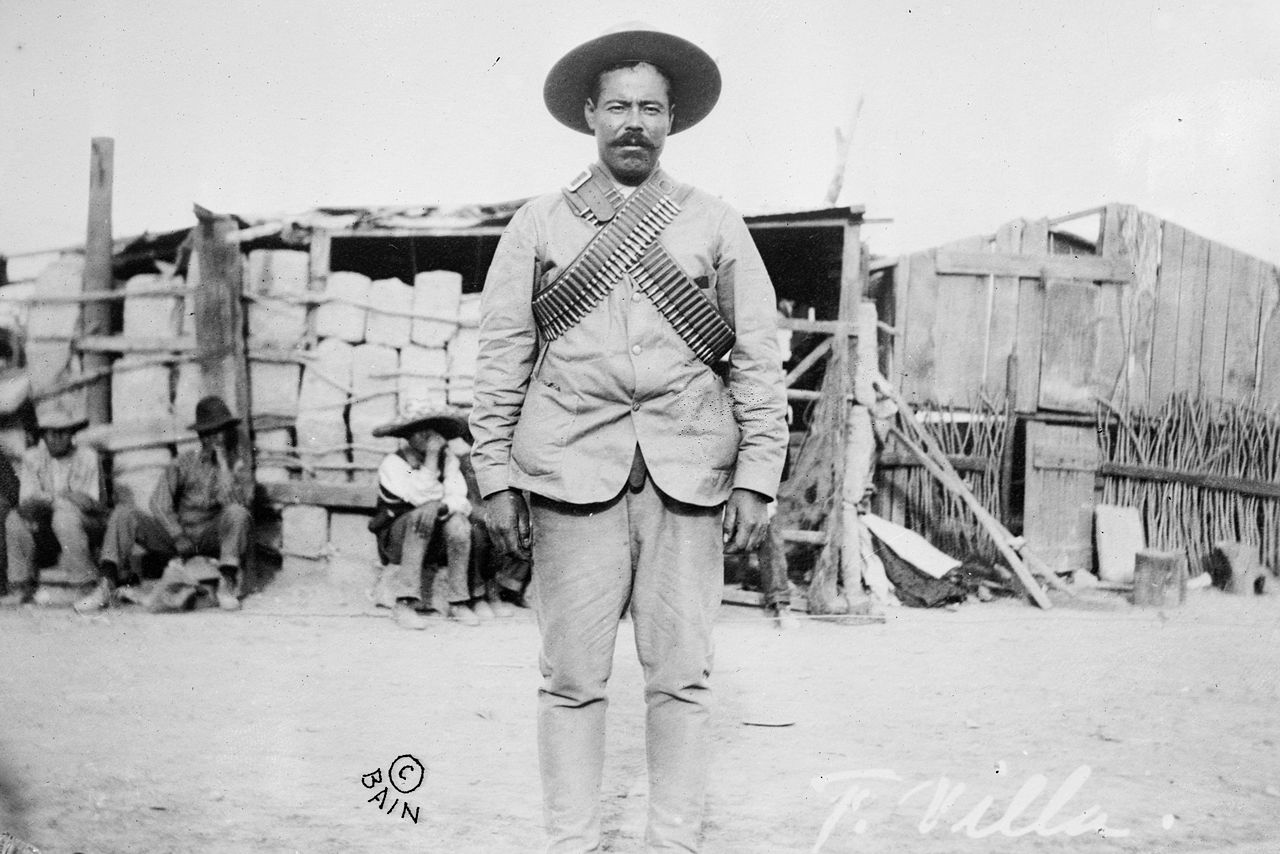


Overview and role
Villa led a large, semi-regular force in the north, often called the División del Norte by contemporaries, and combined conventional cavalry tactics with fast-moving raids. His forces operated alongside and sometimes in rivalry with other revolutionary leaders. Villa's aims included better conditions for peasants and dismantling of the old hacienda system, positions commonly described as agrarian reform. Scholars vary in interpreting his long-term political goals, but his battlefield successes and popularity were real forces in the revolutionary era.
Background and development
Born into poverty, Villa's early years involved ranch work and episodes of banditry—common background elements in many accounts of his rise. He entered the wider political struggle after Francisco I. Madero's challenge to the long-standing Porfirio Díaz regime and later opposed the usurper Victoriano Huerta. Villa's authority grew through a combination of tactical skill, local alliances, and appeal to dispossessed rural communities. For further reading on the broader political context see Mexican Revolution.
- Military style: mobile cavalry, rapid strikes, and local recruitment.
- Political posture: popular appeal to peasants and workers, allied at times with other agrarian leaders.
- Reputation: both praised as a social champion and criticized for lawlessness.
One of the most consequential episodes associated with Villa was the 1916 cross-border raid on Columbus, New Mexico, which led to a U.S. military response. That attack remains notable in U.S.–Mexican relations as the most serious incursion on U.S. territory in that period and provoked the so-called Punitive Expedition led by U.S. forces into northern Mexico.
Villa's fortunes shifted during the post-revolutionary power struggles. He clashed with constitutionalist leaders and was eventually marginalized politically. Assassinated in 1923, his death did not end his symbolic potency; across Mexico and beyond he is remembered through songs, stories, and debates about social justice. For perspectives on U.S.–Mexico interactions during his era see U.S. relations and for interpretations of his leadership style consult sources on revolutionary leadership.
Today Pancho Villa remains a contested historical figure: a skilled military commander, a sometimes brutal outlaw, and a lasting emblem of popular resistance and the struggle for land and dignity in rural Mexico.
Related articles
Author
AlegsaOnline.com Pancho Villa (José Doroteo Arango Arámbula) Leandro Alegsa
URL: https://en.alegsaonline.com/art/74326