
Palace of the Shirvanshahs
A major medieval palace complex in Baku's Inner City, the Palace of the Shirvanshahs is a leading example of Shirvan-Absheron architecture and an important cultural and historical landmark in Azerbaijan.
The Palace of the Shirvanshahs is a medieval royal complex in the Inner City of Baku, celebrated as one of the finest surviving examples of the Shirvan-Absheron school of architecture. Set within the historic walled quarter, the ensemble combines administrative, religious and funerary buildings and is widely regarded as a cultural symbol of Azerbaijan.
Image gallery
10 Images


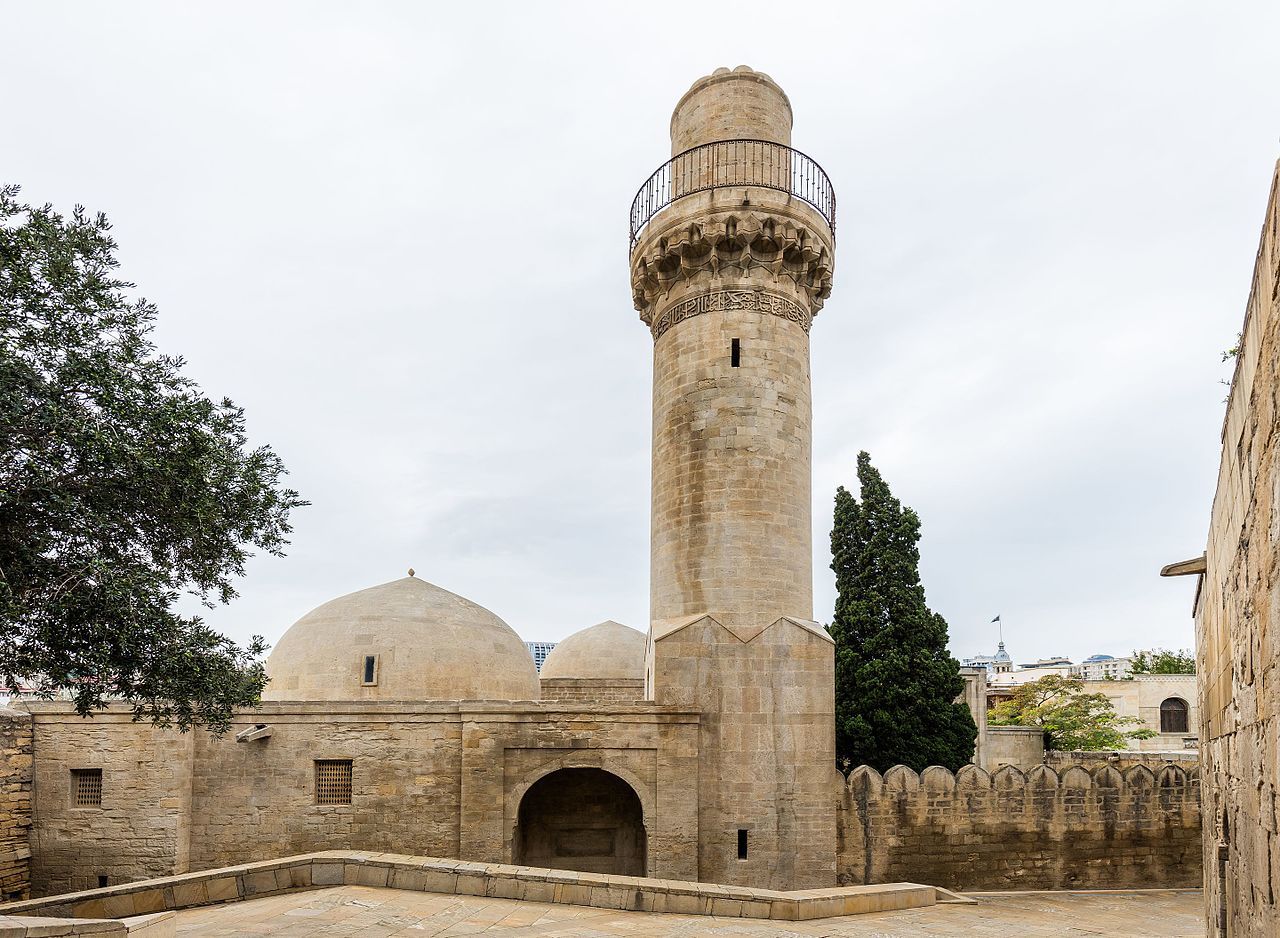


Layout and principal components
The complex is organized around a central courtyard and includes multiple distinct structures. Key elements are:
- Main palace building — residential and representative rooms arranged around inner spaces and passages, carved from local stone.
- Divanhane — a vaulted audience hall used for receptions and state business.
- Burial vaults and mausoleums — family tombs and memorial monuments, including the mausoleum of notable local religious figures.
- Shah's mosque and minaret — a modest mosque attached to the palace, with a single minaret forming part of the skyline.
- Auxiliary structures — a reservoir, the remains of a bath-house, and an eastern portal known as Murad's gate.
Architecture and materials
Constructed largely of pale limestone, the complex illustrates regional methods of stone carving, vaulting and ornamentation characteristic of Shirvan-Absheron architecture. Decorative elements are generally restrained, emphasizing refined proportions, geometric motifs and carefully cut portal surrounds. The intimate scale of courtyards and chambers reflects both practical climate responses and courtly ritual.
History and development
The core of the palace dates mainly from the late medieval period when the Shirvanshah dynasty ruled the region. Over time the site was expanded and adapted: elements such as the eastern gate were added later, reflecting changing political influences. The complex survived periods of decline and has been the subject of conservation to preserve its fabric and historical appearance.
Significance and public use
The palace is part of the historic Inner City of Baku and is frequently visited by tourists, scholars and locals. It functions as a museum complex and educational site, illustrating the political and cultural life of the medieval Shirvan court. The monument is also a national emblem and appears on Azerbaijani banknotes: it was depicted on the 10,000 manat note issued in the 1990s and later on more recent currency.
Visitor information and further reading
Visitors can approach the site from the narrow streets of the walled city and explore the courtyard, the main palace building, the Divanhane, and the burial vaults. Nearby features include the Inner City of Baku fabric and related monuments. For overviews of the region and its cultural heritage see general resources on Azerbaijan and studies of the mosque and minaret complex shah's mosque. Additional archival and interpretive materials are available through museum displays and specialist publications.
The Palace of the Shirvanshahs remains a central reference point for the study of Caucasian medieval architecture and continues to be an active focus of conservation, research and public engagement.
Related articles
Author
AlegsaOnline.com Palace of the Shirvanshahs Leandro Alegsa
URL: https://en.alegsaonline.com/art/74103
Sources
- cbar.az : Central Bank of Azerbaijan
- cbar.az : 10000 manat