
Orrorin tugenensis: an early hominin from the Tugen Hills
Extinct early hominin species from Kenya (≈6.1–5.8 Ma). Known from fragmentary bones, Orrorin tugenensis informs debates about the origins of bipedalism and human ancestry.
Overview
Orrorin tugenensis is an extinct species of early hominin first described from fossils recovered in the Tugen Hills of central Kenya. Discovered around 2000 and reported soon afterward, the remains are dated to the late Miocene (roughly 6.1–5.8 million years ago) and have been interpreted by some researchers as evidence that hominin-like anatomy and upright walking appeared earlier than once thought. The name Orrorin derives from a local term meaning "original man." Original descriptions emphasize its potential significance for human origins.
Image gallery
9 Images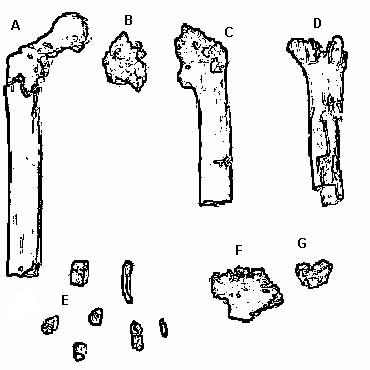





Anatomy and inferred behavior
The fossil sample is fragmentary and comes from a small number of individuals. Preserved elements include pieces of femora (thighbones), teeth and jaw fragments, and some upper limb bones. Features of the femur—especially aspects of the neck and head—have been interpreted by proponents as consistent with habitual bipedalism, while the arm and finger bones suggest retained climbing abilities. Dental traits show a mixture of primitive and derived characters: relatively thick enamel and reduced canine size compared with many apes, traits that are often considered in hominin diagnoses.
Discovery, dating and context
The fossils were unearthed in the Tugen Hills region and studied in geological layers assigned to the late Miocene. Scientists used stratigraphic and radiometric methods to place the material at about 6.1–5.8 million years ago, a period close to molecular estimates for the human–chimpanzee split. The paleoenvironment inferred from associated fauna and sediments suggests a mosaic landscape with patches of forest and more open habitats, implying that early hominins occupied a range of ecological settings. See field reports from the Tugen Hills locality for details. Tugen Hills reports and regional studies provide context for those finds, while broader dating discussions appear in reviews of Miocene hominins. Late Miocene dates
Significance and scientific debate
Orrorin tugenensis has played an important role in debates about when and how bipedalism evolved. Supporters argue that femoral morphology indicates upright walking predating australopithecines, implying that bipedalism was an early hallmark of the hominin lineage. Critics caution that the small and fragmentary sample limits confidence: some researchers contend that the fossils might not belong to the direct human line or that certain features can be interpreted differently. Ongoing comparative work, including 3D morphometrics and broader fossil discoveries, continues to shape interpretations.
Importance and open questions
Even with uncertainties, Orrorin tugenensis remains a key taxon for understanding late Miocene primate evolution and the origin of hominins. Its mosaic anatomy—legs that may show adaptations for walking alongside arms suited to climbing—illustrates how complex early hominin evolution likely was. Future discoveries and refined analyses are required to clarify the species' exact place in the human family tree and to test hypotheses about the sequence of anatomical changes leading to modern humans.
Related articles
Author
AlegsaOnline.com Orrorin tugenensis: an early hominin from the Tugen Hills Leandro Alegsa
URL: https://en.alegsaonline.com/art/73251