
Oologah, Oklahoma: small town, lake, and Will Rogers heritage
Oologah is a small town in northeastern Oklahoma known for its Cherokee origins, proximity to Oologah Lake, and association with humorist Will Rogers. It combines rural character with outdoor recreation.
Overview
Oologah is a small town in northeastern Oklahoma in the United States. It functions as a local center for nearby rural areas and is best known for its links to Cherokee history, a nearby reservoir that supports recreation and water management, and its association with the early life of humorist and performer Will Rogers. The town retains a predominantly small‑town character with residential neighborhoods, a main street of businesses, and community institutions.
Image gallery
3 Images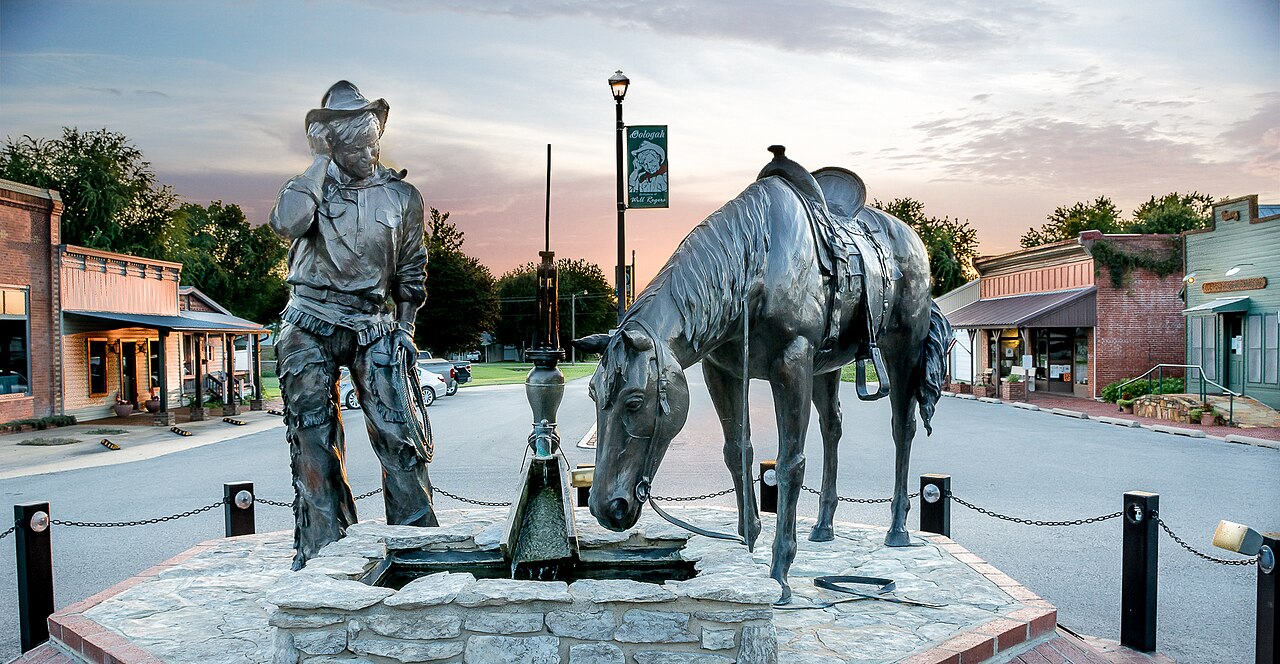

History and name
The settlement grew in the period after the land in this region was organized for non‑Native settlement and railroad development. The name Oologah derives from a Cherokee personal name; local accounts link it to a Cherokee leader and to words from the Cherokee language. The area was part of the broader story of the Cherokee Nation in eastern Oklahoma and later developed as agricultural land and ranching country.
Geography and the lake
Oologah lies in a landscape of rolling plains and river valleys. The most notable nearby feature is Oologah Lake, an Army Corps of Engineers reservoir constructed in the mid‑20th century for flood control, water supply, and recreation. The lake and its shoreline parks attract anglers, boaters, and campers and have diversified the local economy by increasing tourism and outdoor activity options.
Economy, education and community life
The town’s economy historically centered on farming, ranching and small businesses; in recent decades recreation and service industries connected to the lake have become more important. Public services are anchored by a local school district that serves the town and surrounding rural communities. Community life includes school sports, seasonal festivals, and volunteer organizations that maintain local traditions.
Notable facts and visitor information
- Oologah is closely associated with the childhood and family ranch of Will Rogers, an influential early 20th‑century entertainer; sites and references to Rogers are part of local identity.
- Oologah Lake offers boating, fishing, picnic areas and campgrounds maintained by federal and state agencies.
- Visitors can explore small museums, local businesses, and regional trails; the town functions as a gateway for exploring northeastern Oklahoma’s history and outdoor recreation.
Related articles
Author
AlegsaOnline.com Oologah, Oklahoma: small town, lake, and Will Rogers heritage Leandro Alegsa
URL: https://en.alegsaonline.com/art/72713