
Once Upon a Time in Mexico
A 2003 action film by Robert Rodriguez, the third entry in his El Mariachi trilogy—stylized, violent, and operatic; praised for visuals and action, criticized for its convoluted plot.
Overview
Once Upon a Time in Mexico is a 2003 American action film written and directed by Robert Rodriguez. Released on September 12, 2003, the picture concludes Rodriguez's loose El Mariachi trilogy and continues the saga of the guitar‑playing gunslinger known as El Mariachi. The film blends gun‑play, melodrama and dark humor in a broad, genre‑mixing story that draws on western and spy thriller conventions.
Image gallery
2 Images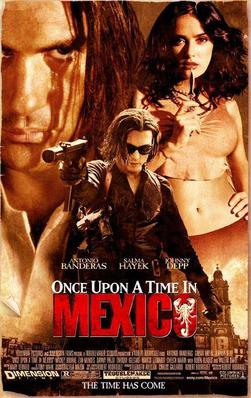

Production and context
Rodriguez maintained a hands‑on role in the production, sharing producing credits with Elizabeth Avellán and Carlos Gallardo. This release followed the low‑budget breakthrough El Mariachi and the more studio‑backed Desperado; the three films are frequently discussed together as a single trilogy because they revolve around the same central character and recurring themes. Early advertising and some fans referred to the film as a sequel or as "Desperado 2," but Rodriguez treated it as a standalone episode with its own tone and scope.
Cast and characters
- Antonio Banderas returns as El Mariachi, a solitary assassin and musician.
- Salma Hayek appears as a former love interest and rebel leader, a pivotal emotional anchor.
- Johnny Depp plays a mysterious U.S. agent whose motives complicate the story.
- Willem Dafoe and Danny Trejo are among the supporting players who populate the film's network of villains, allies and assassins.
Style, influences and filmmaking
Once Upon a Time in Mexico is notable for its highly stylized approach: saturated color, rapid editing, choreographed action set pieces and a tendency to favor striking images over explanatory exposition. Rodriguez borrowed freely from the spaghetti western lexicon—echoing long takes, baroque closeups and archetypal Mexican‑border atmosphere—and infused it with contemporary kinetic action and a pulpy, operatic sensibility. Musically, the film continues the trilogy's use of Latin rhythms and guitar motifs to underscore character and mood.
Reception and legacy
The film received a mixed to positive reaction from reviewers: many praised the energetic direction, production design and action sequences while some critics found the plot tangled and episodic. On aggregate review sites it holds a generally favorable rating. Prominent reviewers noted that Rodriguez often emphasizes memorable moments—visual flourishes, ironic reversals and intense closeups—over tight narrative coherence; one well‑known critic awarded the film three out of four stars while making that point about its priorities. Audiences familiar with the earlier installments tend to view the movie as a bold, if divisive, conclusion to the trilogy.
Notable facts and distinctions
Once Upon a Time in Mexico is often referenced in discussions about filmmakers who wear multiple hats: Rodriguez's involvement spanned writing, directing and a range of creative departments, which contributed to the film's distinct personal stamp. Its title and stylistic nods also invite comparison to classic western auteurs, positioning the movie as both an homage and a modern reinterpretation rather than a straightforward western or action picture.
For more information on production details, cast lists and critical excerpts, see pages and resources linked here: director, release information, producer Elizabeth Avellán, producer Carlos Gallardo, El Mariachi, Desperado, lead actor, lead actress, supporting actor, supporting actor, supporting actor.
Questions and answers
Q: What is Once Upon a Time in Mexico?
A: Once Upon a Time in Mexico is a 2003 American action movie directed by Robert Rodriguez and produced by Robert Rodriguez, Elizabeth Avellán, and Carlos Gallardo.
Q: When was Once Upon a Time in Mexico released?
A: Once Upon a Time in Mexico was released on September 12, 2003.
Q: Is Once Upon a Time in Mexico a sequel?
A: Yes, Once Upon a Time in Mexico is a sequel to El Mariachi and Desperado.
Q: What is the Mexico Trilogy?
A: The Mexico Trilogy is a series of three movies directed by Robert Rodriguez, of which Once Upon a Time in Mexico is the final movie.
Q: What is the rating of Once Upon a Time in Mexico on Rotten Tomatoes?
A: Once Upon a Time in Mexico has a 68% rating on Rotten Tomatoes.
Q: What did Roger Ebert say about Once Upon a Time in Mexico?
A: Roger Ebert of the Chicago Sun-Times gave Once Upon a Time in Mexico 3 stars out of 4 and said that the movie is more interested in great shots and surprises than in a coherent story.
Q: What was the main criticism of Once Upon a Time in Mexico?
A: Once Upon a Time in Mexico was criticized for having a plot that was hard to follow.
Related articles
Author
AlegsaOnline.com Once Upon a Time in Mexico Leandro Alegsa
URL: https://en.alegsaonline.com/art/72549
Sources
- boxofficemojo.com : "Once Upon a Time in Mexico"
- rottentomatoes.com : "Once upon a Time in Mexico"
- rogerebert.com : "Once Upon a Time in Mexico"