
Attack on Titan (Shingeki no Kyojin)
Overview of the manga and anime series Attack on Titan by Hajime Isayama: premise, major adaptations, themes, cultural impact and distinctions in modern pop culture.
Attack on Titan (Japanese: Shingeki no Kyojin) is a Japanese dark fantasy media franchise created by manga artist Hajime Isayama. It began as a serialized comic and grew into a multi-format phenomenon, noted for its high-stakes story about humanity's survival against enormous humanoid creatures known as Titans. The saga is widely discussed for its moral ambiguity, dramatic reveals, and striking visual design.
Image gallery
7 Images


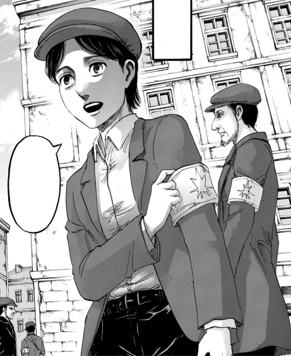
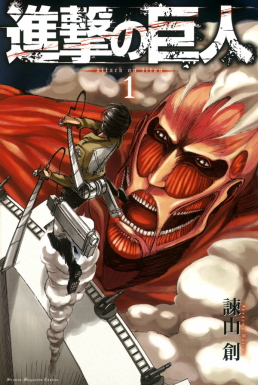

Premise and main elements
The central premise follows humans who shelter behind concentric walls to survive repeated Titan attacks. The narrative focuses on young protagonists who join a military force to fight Titans and uncover the truth about their world: the identity of the Titans, the origin of the walls, and the larger political forces at work. Key recurring elements include intense battles, specialized maneuvering equipment, and revelations that shift the story's scope from local defense to geopolitical conflict.
Publication and adaptations
The original manga was written and illustrated by Hajime Isayama and serialized in a monthly magazine; it ran for several years and reached a global readership. The property was adapted into an anime adaptation, whose early seasons were animated by Wit Studio and whose later episodes were produced by MAPPA. The franchise also expanded into other formats: a pair of live-action films released in 2015, multiple video game and stage adaptations, and licensed translations and spin-offs. For information on editions and publication history, see dedicated listings and publisher pages here.
Themes and style
Attack on Titan combines military drama, mystery, and political thriller elements. The series explores themes such as freedom versus security, the costs of war, identity, and how fear shapes societies. Stylistically it is known for stark, often brutal action sequences, a somber tone, and a tendency to subvert heroic tropes by revealing uncomfortable truths about its characters and institutions.
Reception and cultural impact
The franchise achieved strong commercial success and critical attention worldwide, contributing to wider interest in contemporary manga and anime beyond established genres. Its characters, imagery, and terminology have become part of popular culture discussions about storytelling that blends spectacle with morally complex questions. The series has also sparked academic and journalistic commentary on its political and philosophical implications.
Notable distinctions
- Origin as a dark, mystery-driven serialized manga that expanded into a major multimedia franchise.
- Multiple adaptation studios and formats—anime seasons, live-action films, games, and stage productions—illustrate its cross-media appeal.
- Frequent discussion for storytelling ambition: shifting scope from survival horror to large-scale political drama.
Related articles
Author
AlegsaOnline.com Attack on Titan (Shingeki no Kyojin) Leandro Alegsa
URL: https://en.alegsaonline.com/art/7093
Sources
- funimation.com : "Attack On Titan"
- ajw.asahi.com : "Boosted by anime version, 'Attack on Titan' manga sales top 22 million"
- animenewsnetwork.com : "House of 1000 Manga: Crunchyroll Manga" · web.archive.org
- kodanshacomics.com : "Attack on Titan Now Monthly" · web.archive.org
- animenewsnetwork.com : "Funimation Acquires Attack on Titan Season 3"
- animenewsnetwork.com : "Yuuki Kaji, Yui Ishikawa, Marina Inoue Lead Attack on Titan Cast"
- animenewsnetwork.com : "Funimation Plans Attack on Titan on Home Video in 2014"
- twitter.com : "Season 3 - Official Subtitled Trailer IT'S OFFICIALLY COMING TO FUNIMATION, JULY 2018!"
- animenewsnetwork.com : "=Attack on Titan 3rd Season's Promo Video Reveals July 22 Premiere (Updated)"
- animenewsnetwork.com : "March comes in like a lion, Space Bros. Win Kodansha Manga Awards"
- animenewsnetwork.com : "Attack on Titan Wins Top Prizes in Newtype Anime Awards"