
Nightwing — DC Comics superhero identity
Nightwing is a DC Comics identity best known as the adult persona of Dick Grayson (the original Robin). It has earlier Kryptonian roots and a long publication history across comics, animation and live action.
Overview
Nightwing is a superhero name used by several characters in the DC comics universe. Most widely recognized as the adult persona of Dick Grayson — the original Robin — Nightwing represents a step from sidekick to independent crimefighter. The name also has an earlier connection to Superman stories and to Kryptonian folklore in the comics, showing how the identity has been reused and reshaped over time. For more on differing uses of the name see other Nightwing characters and the wider context of the DC Universe.
Image gallery
5 Images



Origins and development
The Nightwing identity became closely associated with Dick Grayson after he left his Robin role and sought to forge his own path. The choice of the name was a deliberate break from the childlike connotations of "Robin" while retaining a bird motif tied to his past. Before Dick adopted the identity, early Superman stories introduced Nightwing and a counterpart called Flamebird as costumed identities used in tales of the bottled city of Kandor; those stories established the name in DC continuity and were later referenced when Dick chose it. For background on the Superman connection see Superman-related uses.
Characteristics and equipment
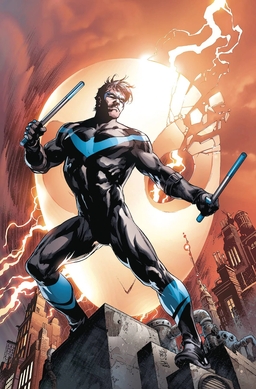
Nightwing differs from Batman and other vigilantes in tone and tactics. He emphasizes agility, acrobatics, and hand-to-hand combat derived from his circus origins. Typical features include a dark suit with a distinctive bird-shaped emblem (often blue or red on black), lightweight armor, and a pair of escrima sticks or batons for both offense and mobility. His skills include detective work, leadership, and tactical experience gained as Robin and as a leader of teams such as the Teen Titans.
Publication history and media
The Nightwing comic starring Dick Grayson has appeared in multiple series runs. Long-running titles have chronicled his life as a solo hero, a team leader, and at times a protector of cities other than Gotham. A widely known run of the Nightwing solo title was published in the late 1990s and 2000s, and a revived series began again in the 2010s; readers can find details about specific series under the comic listings at Nightwing comics. His evolution from Robin to Nightwing is also covered in character profiles such as Dick Grayson.
Roles, adaptations, and notable distinctions
Nightwing plays several roles: symbolic successor to Robin, independent urban hero, and veteran team leader. He is often positioned as more empathetic and less brooding than Batman, while still carrying a complex relationship with his mentor. Nightwing has appeared in animated series, feature films, video games, and live-action television portrayals, where his backstory and costume design are adapted for different audiences. For an overview of his cultural impact and appearances, consult media guides and encyclopedic entries at character lists and franchise pages such as DC Universe resources.
Why Nightwing matters
As a concept, Nightwing illustrates themes of growth and independence in superhero fiction: a young partner who matures, rejects a permanent sidekick label, and redefines his role. The identity's reuse and its roots in earlier Superman tales also show how comic-book names and symbols can be repurposed across decades to serve new storytelling needs while keeping ties to continuity.
Related articles
Author
AlegsaOnline.com Nightwing — DC Comics superhero identity Leandro Alegsa
URL: https://en.alegsaonline.com/art/70157