
Night on Bald Mountain
A vivid orchestral tone poem by Modest Mussorgsky depicting a witches' Sabbath, later arranged by Rimsky-Korsakov and famously used in Walt Disney’s Fantasia (1940).
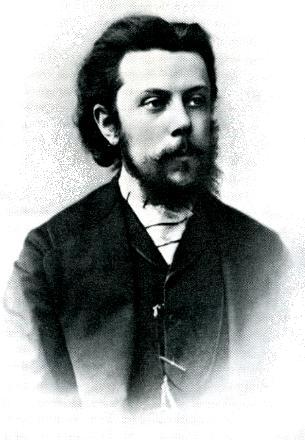
Night on Bald Mountain (also translated as Night on Bare Mountain) is a dramatic orchestral composition by Modest Mussorgsky. Written in the late 1860s as a tone poem, it evokes a supernatural gathering on St. John’s Night and uses the colors and forces of the orchestra to portray storm, terror and eerie revelry.
Image gallery
5 Images


Musical characteristics
The piece relies on vivid orchestration, striking contrasts, and a compact dramatic arc rather than on traditional symphonic development. Expect jagged themes, aggressive brass, stamping rhythms, rapid string tremolos and sudden silences that suggest spells and flight. Mussorgsky’s harmony favors modal and chromatic inflections to create a sense of menace; the writing makes strong use of orchestral effects to conjure images of a nocturnal witch-conclave.
History and versions
Mussorgsky completed the work in the 1860s but left it unpublished; his death in 1881 preceded the best-known premiere of an edited version. Nikolai Rimsky-Korsakov produced an orchestral arrangement and reworking that was performed in 1886 and became the standard concert edition for decades. Modern scholarship and recordings have since recovered Mussorgsky’s original conception and present both Rimsky-Korsakov’s polished reorchestration and Mussorgsky’s rawer material for comparison; the two versions are often contrasted in discussions of authenticity and editorial practice. See the Rimsky-Korsakov edition for context: Rimsky-Korsakov edition.
Uses and cultural impact
The work achieved wide popular recognition when Walt Disney used the Rimsky-Korsakov arrangement in the 1940 film Fantasia, setting the music to an animated sequence of witches, devils and spectral flight. That adaptation brought Night on Bald Mountain to audiences far beyond concertgoers and has shaped popular images of the composition ever since.
Performances and notable facts
- Concert programs alternate between Mussorgsky’s original conception and Rimsky-Korsakov’s version; both are recorded and performed.
- The piece is frequently programmed as a dramatic encore or as an opening to a concert featuring Russian repertory.
- Its vivid illustrative quality makes it a favorite for film and multimedia adaptations.
Whether heard in its edited form or in reconstructions closer to Mussorgsky’s manuscript, Night on Bald Mountain remains a striking example of musical storytelling that uses orchestral color to suggest landscape, ritual and the supernatural.
Related articles
Author
AlegsaOnline.com Night on Bald Mountain Leandro Alegsa
URL: https://en.alegsaonline.com/art/70137