
New Territories (Hong Kong)
The New Territories, known in Chinese as 新界 (Xīnjiè, San1gaai3), is the largest region of Hong Kong, spanning mainland areas, over 200 islands, rural villages, and major new towns between Kowloon and the mainland border.
Overview
The New Territories (Chinese: 新界; pinyin: Xīnjiè; Jyutping: San1gaai3) is one of the three principal regions of Hong Kong. It lies to the north of Kowloon and extends to the Mainland China border. The area includes a substantial mainland zone and more than two hundred outlying islands, including Lantau, Lamma and Cheung Chau. The New Territories accounts for the majority of Hong Kong's land area and is home to roughly half of the territory's population, commonly estimated at around 3.5 million people.
Image gallery
3 Images

Geography
The region features a variety of landscapes: coastal plains, river estuaries, low hills and numerous bays and islands. Much of the mainland portion is designated as country parks, reservoirs and protected green belts, which provide recreation and habitat conservation close to urban communities. Large tracts remain rural, with traditional villages and farmland coexisting alongside dense urban developments.
History and development
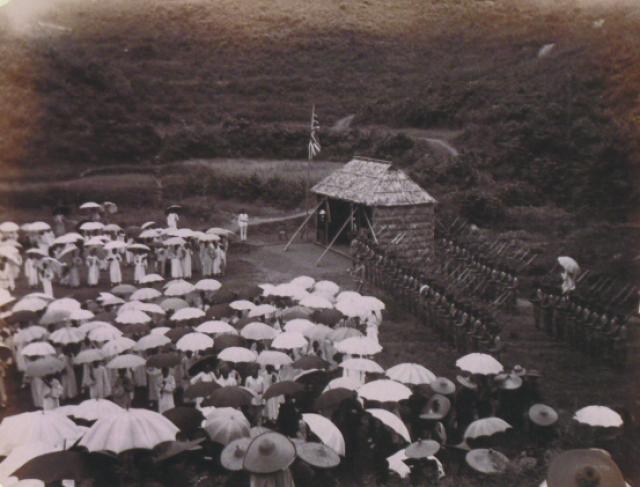
Historically the New Territories comprised many longstanding indigenous villages and agricultural settlements. In 1898 these areas were leased to the British administration, which spurred later changes in land use and governance. During the second half of the 20th century the New Territories underwent rapid transformation: new towns were planned and built to house a growing population, infrastructure such as highways and rail links was extended, and former rural areas urbanized.
Administration and society
Administratively the New Territories are divided into multiple districts that form part of the Hong Kong Special Administrative Region. Its population includes indigenous villagers with traditional rights, long-established rural communities and large numbers of residents in public and private housing estates. Some village-related policies, notably the small house policy, reflect historical arrangements and remain subjects of public debate and legal review.
Economy, transport and infrastructure
The New Territories contributes substantially to Hong Kong’s economy: it hosts industrial and logistics zones, cross-border transport hubs, and major infrastructure such as the airport facilities located on parts of Lantau Island and associated reclamations. An integrated network of railways, roads and border control points links the New Territories to urban Kowloon and to neighbouring cities across the border, supporting daily commuting, freight movement and tourism.
Culture, conservation and notable places
The New Territories preserves many cultural features: ancestral halls, temples, walled villages and seasonal festivals remain important in village life, while newer urban districts provide shopping, education and cultural facilities. Notable natural and built landmarks include extensive country parks, popular hiking trails, Lantau’s attractions and the diverse island communities. For further geographic and administrative details consult regional planning and government resources on Hong Kong and documents that refer to 新界 and nearby areas such as Kowloon.
Related articles
Author
AlegsaOnline.com New Territories (Hong Kong) Leandro Alegsa
URL: https://en.alegsaonline.com/art/69625