
Neume: Early Musical Notation for Chant
Neumes are early written signs for chant melodies that indicate melodic contour and vocal inflection rather than precise pitch or rhythm. They survive in liturgical traditions and musicological study.
Overview
Neumes are one of the earliest systems used to record vocal music and chant. Originating in medieval liturgical practice, they functioned primarily as mnemonic marks to remind singers of melodic shapes, phrasing, and inflection rather than to prescribe exact pitches or strict durations. Neumes are most closely associated with plainchant such as Gregorian chant and related repertories; for broader context see music and the European Middle Ages.
Image gallery
6 Images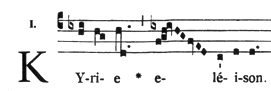


Characteristics
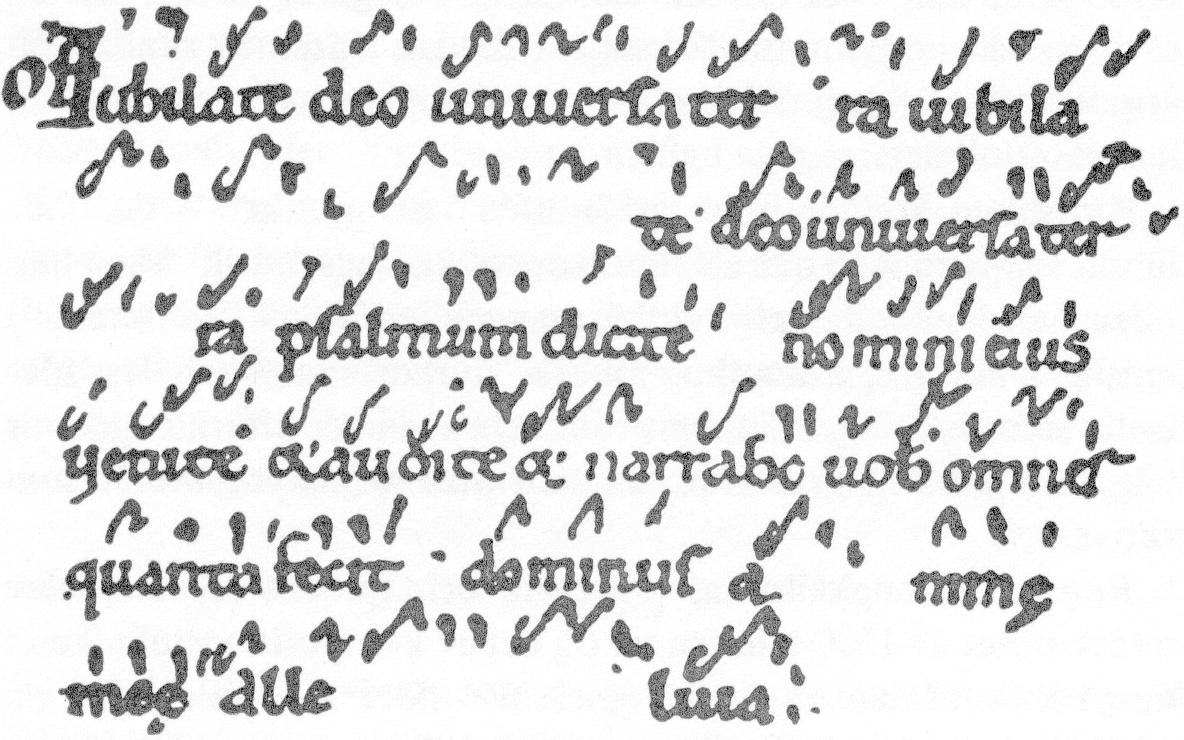
Unlike modern staff notation, many early neumes convey relative motion (up, down, repeated tone) and vocal ornamentation rather than absolute pitch values. Early forms are often described as unheighted, because signs were written without a fixed vertical relationship to one another; later manuscripts developed heighted neumes or added a reference line so that relative pitch could be read more precisely, a step toward modern notation. Rhythm is generally not specified in the earliest neumatic systems: timing and tempo were governed by local tradition and the natural flow of the text. In some traditions and later manuscripts additional signs or systems were used to indicate rhythmic or modal nuances (rhythm).
History and development
Neumatic signs appear in Western manuscripts from roughly the first millennium CE onward. The earliest surviving examples were memory aids for singers who already knew the chants by ear. Over centuries there were important developments: the introduction of a staff or single reference line, the standardization of certain sign shapes, and theoretical work by medieval teachers that improved the transmission of pitch relationships. These changes, together with copying practices and pedagogy, helped transform neumes into a more precise notational system used in later medieval music.
Types and examples
- Simple neumes: single marks such as the punctum or virga indicate a single tone or stressed syllable.
- Compound neumes: groups like the podatus (rising two-note figure) or clivis (falling two-note figure) show short melodic patterns.
- Regional families: Western (Gregorian) neumes, Mozarabic forms, and Byzantine neumes represent different sign repertories and interpretive conventions.
Notation and performance
Because neumes often leave precise intervals and durations unspecified, performance practice depends on historical knowledge, local tradition, and careful study of manuscripts. Modern editors produce transcriptions that map neumes onto staff notation for study and performance, and sometimes provide editorial conjectures about rhythm and ornament. Neumes therefore remain a valuable source for historically informed chant performance and research.
Use and importance
Neumes are still used liturgically in some Christian rites and in specialist teaching: the Roman Catholic Church preserves Gregorian chant traditions, and many Eastern churches preserve their forms of neumatic notation. Contemporary practice and scholarship connect these living traditions with manuscript studies and musicology; see resources on general Catholic chant and on Eastern Orthodox chant for liturgical context.
Study and editions
Scholars study neumes both as musical notation and as paleographic objects: manuscripts reveal local chant practices, scribal conventions, and liturgical variation. Critical editions, facsimiles, and teaching editions are widely used to interpret neumes for performance and research. For introductory material consult general works on music history and the evolution of modern notation, and specialized texts that discuss rhythm and interpretation (rhythm).
Further notes
While neumes do not provide the same level of exactitude as later staff notation, they are a crucial link in the history of Western musical writing and continue to inform how chant is taught, transmitted, and performed today.
Related articles
Author
AlegsaOnline.com Neume: Early Musical Notation for Chant Leandro Alegsa
URL: https://en.alegsaonline.com/art/69337
Sources
- books.google.com : Dom Gregory Sunol, Textbook of Gregorian Chant According to the Solesmes Method 2003
- musicasacra.com : Chants of the Church
- musicasacra.com : Liber Usualis