
Nesvizh Castle — Radziwiłł residence and historic ensemble in Nesvizh, Belarus
A historic residential castle in Nesvizh, Belarus, long associated with the Radziwiłł family; noted for its architecture, park, and UNESCO World Heritage status as a cultural and architectural ensemble.
Overview
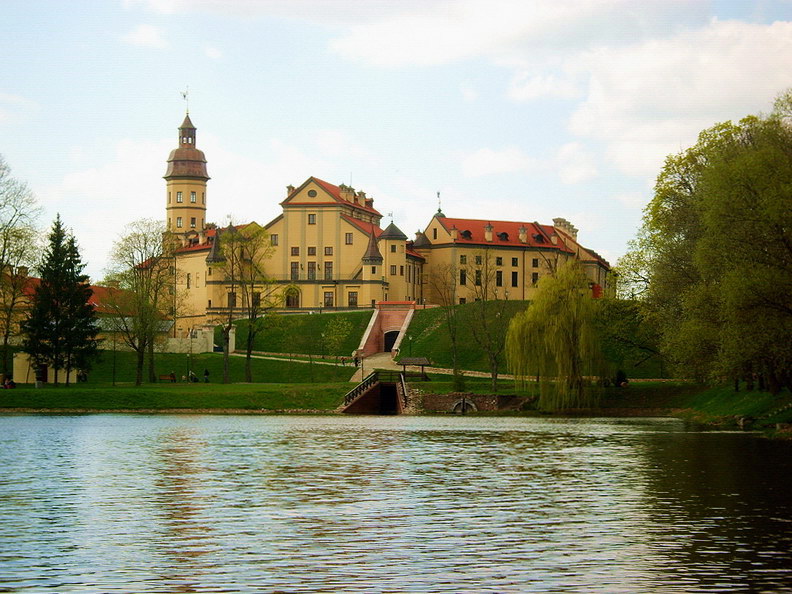
Nesvizh Castle is a large historic estate in Nesvizh (Niasvizh), Belarus, that served as the principal residence of the noble Radziwiłł family for several centuries. The site combines fortified elements, palace wings and a landscaped park with water features. It is widely regarded as one of the most important cultural monuments in the region.
Image gallery
7 Images


Architecture and grounds
The complex mixes defensive and residential architecture. Original fortifications were later integrated with Renaissance and Baroque styles to form a palatial residence. The ensemble includes fortified bastions and moats, successive wings and courtyards, a family chapel and an extensive landscaped park with ponds and alleys. Interiors historically contained state rooms, private apartments and family burial chapels.
History and development
The castle developed from a 16th‑century stronghold into a grand country seat as the Radziwiłł family, prominent magnates of the Grand Duchy of Lithuania and the Polish–Lithuanian Commonwealth, expanded and remodeled it over the 17th and 18th centuries. Over time the complex reflected changing tastes, military needs and residential requirements. It experienced damage and alteration in later centuries and underwent conservation and restoration in the 20th and 21st centuries. The site was recognized internationally when it was inscribed on the UNESCO World Heritage List as part of a cultural ensemble.
Uses and public role
Today the castle functions as a museum and cultural venue. Exhibitions interpret the Radziwiłł family history, the building’s architecture and local art. The grounds host festivals, educational programs and concerts that emphasize historical preservation and cultural tourism. The castle is a significant destination for visitors interested in architecture, aristocratic history and landscape design.
Notable facts
- The estate represents a rare survival of a combined fortress‑palace and designed park in Eastern Europe.
- It preserves layers of architectural history reflecting changing political and social contexts.
- Conservation has been an ongoing effort to balance historical authenticity with public access.
As a cultural landmark, Nesvizh Castle continues to attract scholarly attention and visitors, offering a tangible link to the region’s aristocratic, architectural and landscape traditions.
Related articles
Author
AlegsaOnline.com Nesvizh Castle — Radziwiłł residence and historic ensemble in Nesvizh, Belarus Leandro Alegsa
URL: https://en.alegsaonline.com/art/69250