
NES Satellite
A battery-powered infrared multiplayer adapter for the Nintendo Entertainment System that enabled up to four players on compatible games; an official wireless alternative to wired multitaps.
The NES Satellite is an official Nintendo peripheral for the Nintendo Entertainment System that expanded the console's multiplayer capability. Rather than adding wired ports directly to the console, the Satellite provided a battery-powered infrared (IR) hub so multiple controllers could be used without a long cable between players and the console.
Image gallery
2 Images
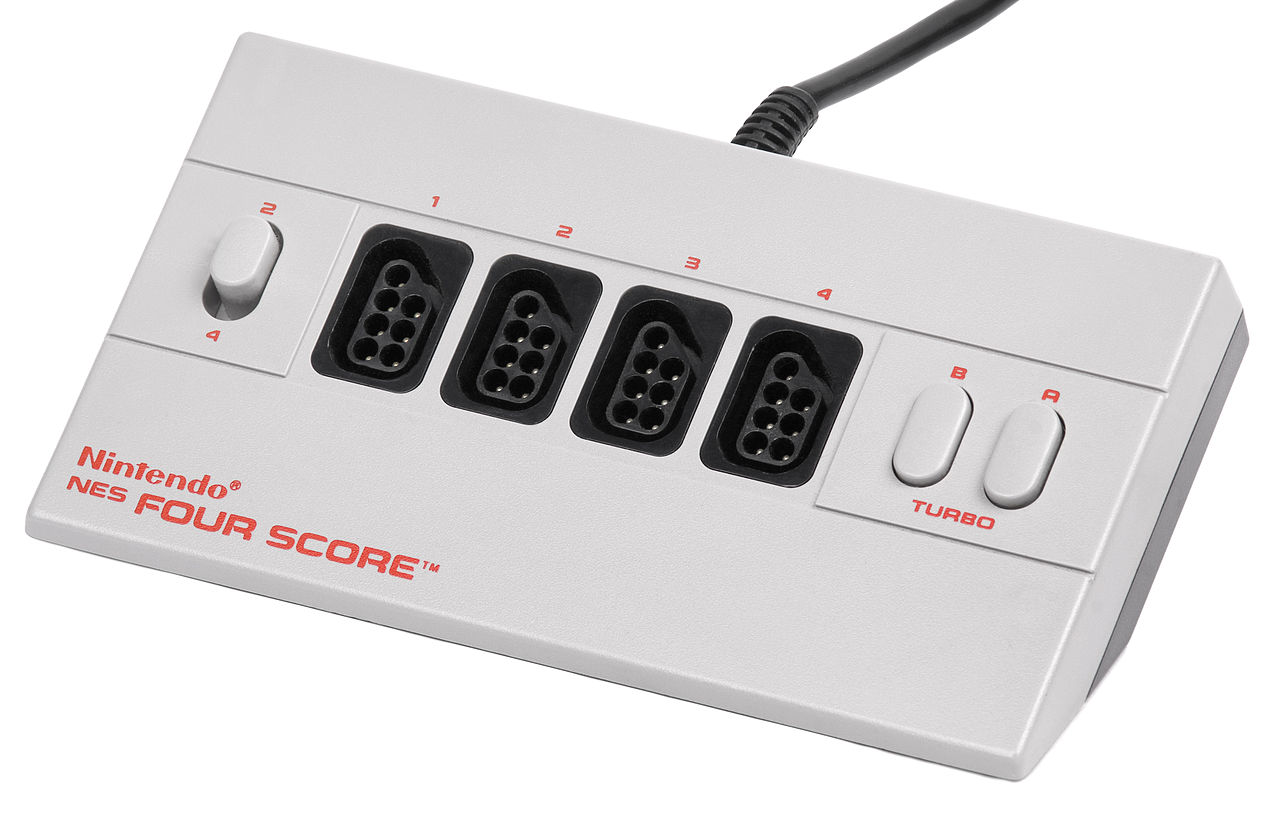
Design and operation
The accessory consisted of two parts: a small receiver or cable that connected to the NES controller ports and a separate battery-powered hub that accepted controllers. The hub communicated with the receiver by infrared, so it required line-of-sight and only worked within a limited range. Players plugged standard NES controllers into the Satellite hub, which presented up to four controller inputs to the system when used with compatible software.
Features
- Added support for four simultaneous players on games designed for multiple controllers.
- Wireless infrared link removing the need for additional wiring across a room.
- Battery operation and simple plug-in connection to the console’s controller ports.
Compatibility and use
The Satellite only worked with games that explicitly supported additional controllers through the NES controller protocol. It did not change in-game controls for titles that were designed for one or two players. Because the interface used infrared, gameplay could be affected by bright lighting or if the line-of-sight between the hub and receiver was blocked.
For more technical details and user guides, consult dedicated references and collector resources: more details.
History and legacy
Released as part of Nintendo’s efforts to broaden multiplayer gameplay on the NES, the Satellite offered an early example of a wireless home-console accessory. It is often mentioned alongside the Four Score, a wired four-player adapter: both served the same purpose, but the Satellite’s wireless approach introduced advantages and limitations—convenience versus the constraints of infrared communication. Today it is of interest to collectors and retro gaming enthusiasts as an unusual official wireless solution from the 8-bit era.
Related articles
Author
AlegsaOnline.com NES Satellite Leandro Alegsa
URL: https://en.alegsaonline.com/art/69229