
Acherontia styx — the Asian death's‑head hawkmoth
Acherontia styx is a large sphingid moth from Asia, one of three death's‑head hawkmoths. Noted for a skull‑like thoracic mark, honey‑robbing behaviour and striking larval forms.
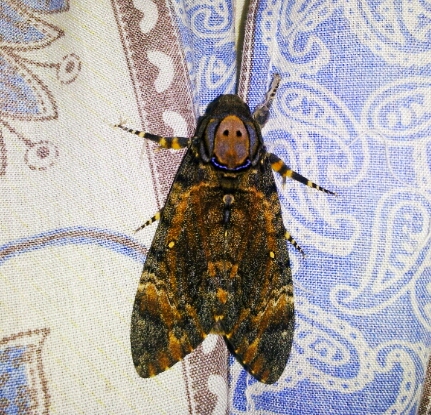
Acherontia styx is a large, nocturnal moth in the family Sphingidae, commonly grouped with the death's‑head hawkmoths. It is sometimes called the Bee Robber because adults may enter beehives to feed on honey. The species is distinguished by a pale, skull‑like pattern on the thorax and robust, streamlined body typical of hawkmoths.

Image gallery
10 Images




Identification
Adults reach substantial size with narrow forewings and broad hindwings. Colouration varies across populations but commonly includes bands of yellow, brown and black and the characteristic inverted skull‑shaped mark on the thorax. The moth can produce a short squeaking sound when disturbed and is capable of rapid, direct flight.
Distribution and habitat
A. styx occurs widely across parts of Asia, where it occupies gardens, farmland edges and open woodland. It is adaptable and often found near cultivated plants that serve as larval food.
Biology and life cycle
Like other hawkmoths, A. styx undergoes complete metamorphosis: egg, larva (caterpillar), pupa and adult. Larvae are conspicuous, often brightly coloured and horned at the rear; they feed on plants in families such as the nightshades and other widely grown crops. Pupation typically occurs in loose soil or debris. 

Behaviour, importance and distinctions
- Honey‑robbing: adults may enter bee nests to consume honey, sometimes avoiding attack by stealth or chemical cues.
- Sound production: the species can emit a defensive squeak produced in the throat region.
- Human interactions: larvae may feed on solanaceous crops and ornamental plants, while adults are attracted to lights and sweet odours.
- Similar species: Acherontia styx is one of three closely related death's‑head hawkmoths and is differentiated from its relatives by subtle differences in pattern and regional range.
Because of its striking appearance and unusual habits, A. styx features in folklore and popular culture, often symbolising mystery or death, though such associations are cultural rather than biological.
Related articles
Author
AlegsaOnline.com Acherontia styx — the Asian death's‑head hawkmoth Leandro Alegsa
URL: https://en.alegsaonline.com/art/691
Sources
- species.wikimedia.org : Acherontia styx
- commons.wikimedia.org : Acherontia styx