
National Assembly of Thailand
The National Assembly (Ratthasapha) is Thailand’s bicameral legislature, responsible for making laws, approving budgets and exercising checks on the executive within the constitutional framework.
The National Assembly of Thailand (abbreviated NAT; Thai: รัฐสภา, RTGS: Ratthasapha) is the country's national legislature. It functions as a bicameral institution and is the principal legislative branch of the government of Thailand. The Assembly enacts statutes, approves national budgets, considers treaties and exercises oversight of the executive under the prevailing constitution.
Image gallery
9 Images


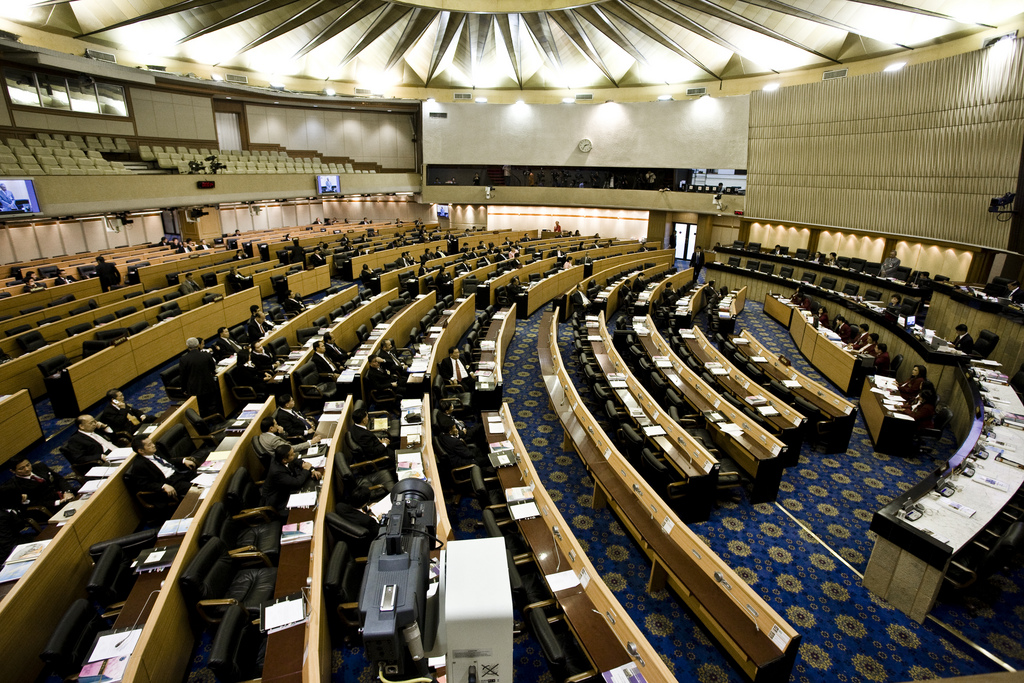

Structure and composition
The National Assembly comprises two chambers: a lower chamber commonly known as the House of Representatives and an upper chamber known as the Senate. Members of the House are generally chosen by popular vote, using constituency and party-list mechanisms under the electoral law. The Senate has been constituted in different ways under successive constitutions; in several recent arrangements it has consisted of appointed or selected members representing various professions and institutions.
- House of Representatives: the elected chamber that initiates most legislation and controls the budget and confidence in government.
- Senate: the upper chamber that reviews legislation, confirms certain high-level appointments and may participate in oversight or impeachment processes.
Functions and powers
The Assembly's primary duties include introducing, debating and passing laws; voting on the national budget; ratifying international treaties where required; and participating in the selection or approval of key state office-holders. It also provides oversight of ministers and government agencies through questions, committees and formal proceedings. Some powers, such as granting royal assent or promulgation procedures, involve the monarchy as specified by the constitution.
Origins and historical development
The National Assembly traces its origin to political change in 1932, when Siam moved from an absolute monarchy toward a constitutional monarchy. Since that transformation, Thailand’s legislature has evolved through multiple constitutions and periods of political disruption, including coups and reforms that reshaped how members are selected and how authority is shared between elected and appointed institutions.
Over time the Assembly has been a central arena for Thailand’s political contestation—balancing popular representation, elite interests and the legal framework set by successive constitutions. Its precise composition, powers and procedures vary with constitutional change, but its core role as the forum for lawmaking and parliamentary oversight remains constant.
For current procedural rules and membership details consult official sources and recent constitutional texts. The Assembly’s practice and organisation continue to reflect Thailand’s complex political history and the ongoing negotiation between democratic processes and institutional checks.
Bicameral legislature | Legislative branch | Government of Thailand | NAT
Related articles
Author
AlegsaOnline.com National Assembly of Thailand Leandro Alegsa
URL: https://en.alegsaonline.com/art/68536