
Naseer Aruri (1934–2015)
Palestinian-American scholar and activist specializing in Middle East politics, U.S. foreign policy in the region, and human rights. Longtime professor at University of Massachusetts Dartmouth.
Naseer H. Aruri was a Palestinian-born scholar and public intellectual who wrote and spoke extensively about the Israeli–Palestinian conflict, U.S. policy in the Middle East, and international human rights. He combined academic work with public engagement, aiming to bring scholarly analysis into policy debates and broader public discussion. Over decades he became known for his critical stance toward official policies he viewed as obstacles to peace and for championing the rights of Palestinians.
Image gallery
1 Image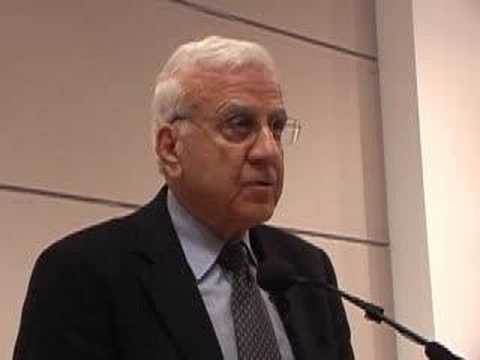
Academic career
Aruri served as a Chancellor Professor (Emeritus) of Political Science at the University of Massachusetts Dartmouth, where he taught from 1965 until his retirement in 1998. In this role he supervised research, taught courses on international relations and Middle East politics, and mentored students from diverse backgrounds. His academic standing enabled him to publish in journals, contribute essays, and participate in conferences that bridged scholarship and activism.
Scholarship and activism
His work addressed the interaction between domestic politics, international law, and foreign policy. Aruri wrote for both scholarly and popular audiences, producing analyses, opinion pieces, and public lectures that examined the roots of conflict and prospects for resolution. He engaged with human rights organizations, contributed to public debates in the United States and internationally, and was frequently cited by activists and policymakers interested in alternative perspectives on peace efforts.
Background and personal life
Born in Jerusalem, Aruri later pursued an academic career in the United States while maintaining close intellectual and moral ties to Palestinian affairs. His identity as a Palestinian informed his scholarly priorities and his activism, though he worked within American academic institutions and the broader international arena to address questions of justice, self-determination, and human rights.
Themes, influence and legacy
Aruri's influence rests on combining rigorous analysis with sustained public engagement. He is remembered for bringing attention to legal and human-rights dimensions of the Israeli–Palestinian dispute, critiquing the policies of major powers, and encouraging dialogue about pathways to a just settlement. His positions provoked debate and sometimes controversy, reflecting the polarized nature of the issues he studied.
- Primary topics: Middle East politics, U.S. foreign policy, human rights, Israeli–Palestinian relations.
- Roles: university professor, public commentator, author of essays and analyses.
- Approach: scholarly research paired with activism and public education.
Aruri died in 2015 after a long illness; reports indicate he suffered from Parkinson's disease. Today his writings and public interventions remain a resource for students and analysts seeking critical perspectives on regional politics and the international responses that shape them.
Related articles
Author
AlegsaOnline.com Naseer Aruri (1934–2015) Leandro Alegsa
URL: https://en.alegsaonline.com/art/68423