
Nasal septum: anatomy, function, and clinical significance
The nasal septum is the internal partition that divides the left and right nasal cavities and nostrils. It consists of cartilage and bone, supports airflow, and has clinical importance in breathing and surgery.
The nasal septum is the midline partition inside the nose that separates the left and right nasal cavities and divides the two external nostrils. It provides structural support to the nose, directs airflow through each side, and helps maintain the shape of the external nose. For a general reference to its role in dividing the nasal passages see left and right nasal airways and to the nostrils themselves see nostril anatomy.
Image gallery
8 Images
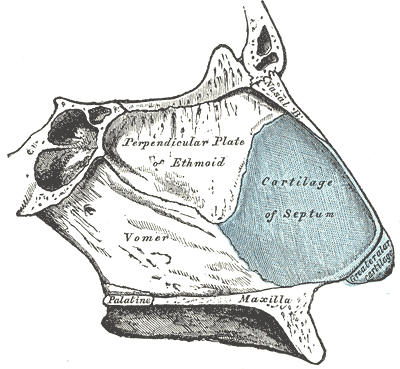
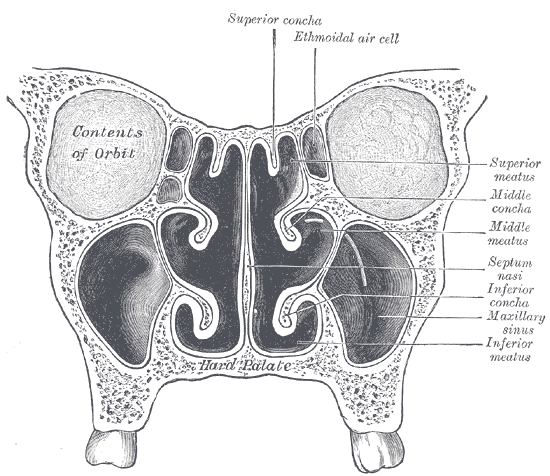

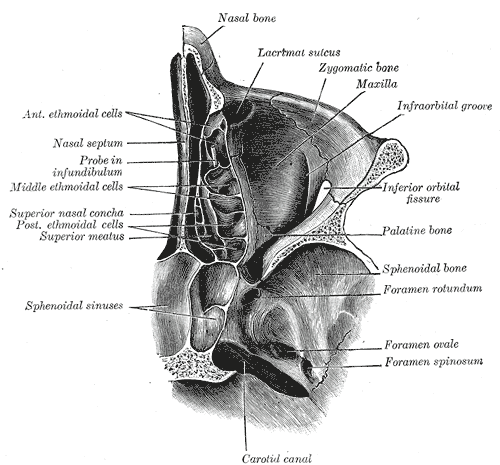
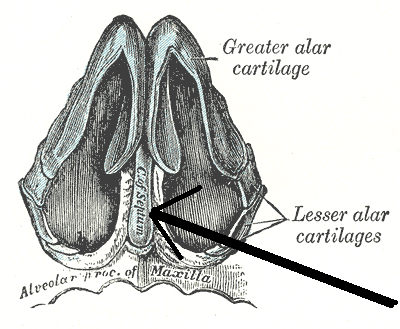
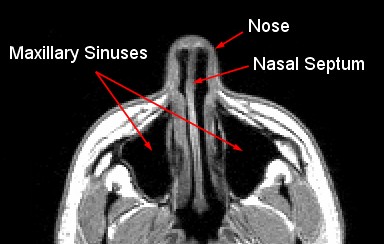

Structure and components
Structurally, the septum is composed of a flexible anterior portion of quadrangular cartilage and a posterior bony portion formed mainly by the vomer and the perpendicular plate of the ethmoid bone. The septal surface is lined with mucous membrane that warms and humidifies inhaled air and contains blood vessels and small glands. The junctions between cartilage, bone, and mucosa are clinically important because they influence both function and vulnerability to injury.
Development and variation
The septum develops during fetal growth and continues to change through adolescence. Individual variation is common: many people have a mildly deviated septum that does not cause symptoms, while others have more pronounced deviations, perforations, or congenital differences. Trauma, chronic inflammation, or prior surgery can alter septal shape.
Function and importance
Beyond separating the two nasal passages, the septum helps to:
- channel and equalize airflow between sides;
- support the external nose so it maintains its form;
- house mucosa that conditions air and defends against pathogens.
Clinical considerations
Common clinical issues include septal deviation, which can cause nasal obstruction; septal perforation, which may produce whistling or crusting; and septal hematoma after injury. Treatments range from conservative measures (saline irrigation, topical therapies) to surgical correction (septoplasty) when symptoms are significant. Recognizing septal problems is a routine part of ear, nose and throat practice and general medical assessment.
Related articles
Author
AlegsaOnline.com Nasal septum: anatomy, function, and clinical significance Leandro Alegsa
URL: https://en.alegsaonline.com/art/68417