
Mystic, Connecticut: coastal village, maritime heritage and visitor center
Mystic is a historic coastal village and census-designated place in southeastern Connecticut, known for its maritime history, museums, drawbridge, and role as a regional tourist destination.
Overview
Mystic is a village and census-designated place (CDP) in southeastern Connecticut that lies within the towns of Groton and Stonington. Because it is not an incorporated municipality, Mystic has no independent municipal government; public services, planning and administration are provided by the two towns that contain the village. The community grew up around the tidal Mystic River where it reaches Long Island Sound and developed a strong maritime identity that remains central to its character. For basic practical and visitor information, see local guides and municipal resources. Local information.
Image gallery
9 Images


Geography and transportation
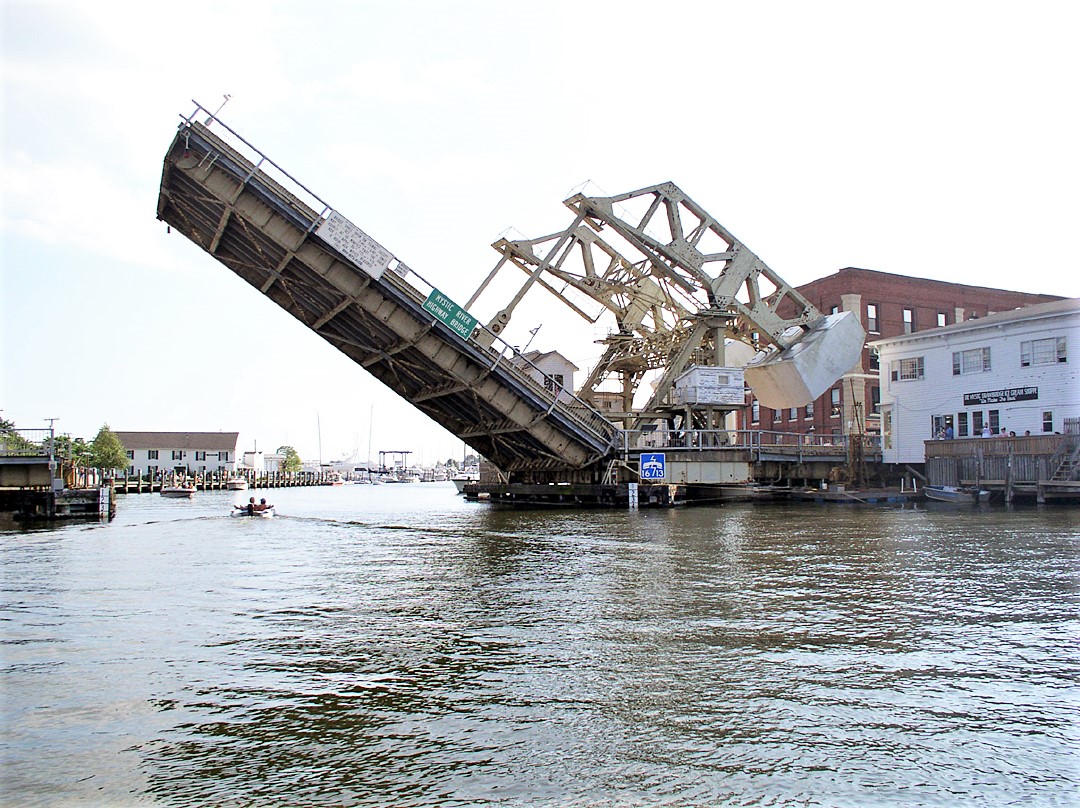
Mystic sits on both banks of the tidal Mystic River, which flows into Long Island Sound and historically provided sheltered but direct access to coastal waterways. The village center is dominated by waterfront streets, old wharves and the Mystic River Bascule Bridge, a movable drawbridge that opens to permit taller vessels to pass along the river. The bridge is both a working piece of infrastructure and a widely photographed focal point for visitors. Shoreline roads connect Mystic to the broader region and the community is readily reached from Interstate 95 and other regional routes. Maritime access and the tidal nature of the river have shaped both the village’s economy and its recreational use. Coastal access and waterways.
History and name
The name Mystic is derived from an indigenous term recorded by early European settlers. Local historical sources trace the name to a Pequot word often rendered as "missi-tuk," used to describe a large river whose waters are driven into waves by tides or wind. Settlement along the river began during the colonial era and the village grew into a busy 18th- and 19th-century seaport. Shipbuilding, coastal trade and whaling were important activities in Mystic and the surrounding region, leaving a legacy of maritime buildings, shipyards and artifacts that are interpreted today by local organizations. Name origin and historical research.
Maritime heritage and museums
Mystic is best known for institutions that preserve and interpret New England’s seafaring past. Mystic Seaport Museum is a large maritime museum that maintains historic vessels, reconstructed shipyard facilities and exhibits on navigation, ship construction and coastal life. The museum’s collections and living-history programs make the village a center for maritime scholarship and public education. Nearby, the Mystic Aquarium focuses on marine life, conservation and public exhibits that attract families and researchers. Among the preserved vessels associated with the village’s history is the whaling ship Charles W. Morgan, an example of the region’s 19th-century whaling fleet that is interpreted for visitors. Mystic Seaport and Charles W. Morgan provide principal points of interest for visitors.
Attractions, culture and events
In addition to maritime museums, Mystic’s compact downtown offers restaurants, shops, galleries and historic buildings. Olde Mistick Village is a cluster of shops and eateries styled to evoke early New England village architecture; the area and the waterfront host seasonal events, craft fairs, arts programs and food-focused gatherings that draw both local residents and tourists. The natural setting encourages boating, paddling and waterfront walks, while interpretive programs at museums and historical societies support guided learning about shipbuilding, local industries and coastal ecology.
Economy and community life
Mystic’s economy is shaped by tourism, hospitality, retail and marine services, with many businesses catering to visitors as well as to the year-round community. Historic preservation, small-scale craft and specialty commerce are important to the local character, and community organizations work to balance economic activity with conservation of historic and natural resources. The village supports a year-round population and sees substantial seasonal increases in visitor numbers during warmer months and major events.
Governance and services
Because Mystic is a CDP rather than a municipality, municipal functions such as policing, schools and public works are provided by the towns of Groton and Stonington. This arrangement affects zoning, emergency services and municipal planning; anyone seeking formal regulatory information or civic services should consult the towns that encompass the village. Municipal arrangements and governance.
Visitor guidance and practical notes
Mystic is accessible by regional roads and is commonly visited on day trips or longer stays. Travelers often combine a visit with other Connecticut shoreline destinations. The village’s maritime museums, aquarium and waterfront provide year-round interest, though individual museums and seasonal events may follow their own schedules and admission policies. Local visitor bureaus and museum websites offer up-to-date information on opening times, special exhibitions and guided programs. Visitor and travel resources.
Notable facts
- Mystic is not an incorporated municipality but a village/CDP within two towns, which influences local governance. State municipal distinctions.
- The Mystic River Bascule Bridge is a central historic and working landmark that opens for marine traffic and attracts frequent photography and study.
- Mystic Seaport houses extensive maritime collections and interprets shipbuilding, navigation and coastal trade for the public. Museum information.
- The whaling ship Charles W. Morgan is preserved as a key artifact illustrating New England’s 19th-century whaling economy. Charles W. Morgan exhibits.
- The village’s river and loctation on Long Island Sound have defined its historic economy and remain central to recreation and conservation. Regional coastal context.
- Local historical societies collect research and oral histories that explore place-name origins and the region’s indigenous and maritime past. Historical sources.
The population recorded for the Mystic CDP at the 2010 U.S. census was 4,205; the number of residents and visitors changes with seasonal activity and local development. Overall, Mystic combines preserved maritime heritage with an active waterfront village atmosphere, making it a prominent spot for learning about New England’s coastal past and for enjoying contemporary cultural and recreational offerings.
Questions and answers
Q: What is Mystic?
A: Mystic is a village and census-designated place in Connecticut, USA.
Q: Does Mystic have its own independent government?
A: No, Mystic does not have its own independent government because it is not a municipality in Connecticut.
Q: What was Mystic's historical significance?
A: Mystic was a leading seaport of the area historically.
Q: What is the Mystic Seaport?
A: The Mystic Seaport is the nation's largest maritime museum that has preserved a number of sailing ships, such as the whaling ship Charles W. Morgan and tells the story of Mystic's nautical background.
Q: Where is Mystic located?
A: Mystic is located in the towns of Groton and Stonington, Connecticut, and situated on the Mystic River that flows into Long Island Sound.
Q: What is the Mystic River Bascule Bridge?
A: The Mystic River Bascule Bridge is a bridge that crosses the Mystic River in the center of the village.
Q: What is the origin of Mystic's name?
A: According to the Mystic River Historical Society, the name "Mystic" comes from the Pequot words "missi-tuk," which describes a large river whose waters are driven into waves by tides or wind.
Related articles
Author
AlegsaOnline.com Mystic, Connecticut: coastal village, maritime heritage and visitor center Leandro Alegsa
URL: https://en.alegsaonline.com/art/68008
Sources
- geonames.usgs.gov : U.S. Geological Survey Geographic Names Information System: Mystic
- mysticseaport.org : mysticseaport.org/about/
- factfinder2.census.gov : "Profile of General Population and Housing Characteristics: 2010 Demographic Profile Data (DP-1): Mystic CDP, Connecticut"