
My Name Is Rachel Corrie — play based on Rachel Corrie's writings
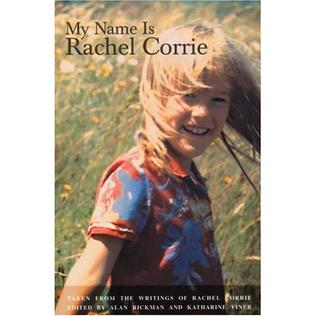
A verbatim stage piece assembled from Rachel Corrie's diaries and emails, edited by Alan Rickman and Katharine Viner. Premiered at the Royal Court in 2005 and has generated wide artistic and political debate.
My Name Is Rachel Corrie is a documentary stage work compiled from the diaries, emails and other personal writings of Rachel Corrie. The material was edited for performance by Alan Rickman, with journalistic assistance from Katharine Viner, and assembled into a continuous dramatic monologue. The finished piece presents Corrie’s voice in the first person and follows her experiences as a young American peace activist who travelled to the Gaza Strip to observe and protest demolitions. The work is widely cited as an example of verbatim or documentary theatre because its text derives directly from real documents rather than invented dialogue.
Image gallery
3 Images

Form and content
The play is structured as a single‑narrator piece that moves between personal anecdote, political reflection and eyewitness description. Editors selected excerpts to suggest a narrative arc: university life and relationships, a growing commitment to activism, and accounts of protests and confrontations. Productions typically rely on one actor, minimal staging and sometimes recorded or projected material to situate the testimony. Its dramatic effect rests on the intimacy of a single perspective addressing complex public issues.
Creation and premiere
The stage adaptation was prepared by Rickman and Viner and directed by Rickman for the first production. It premiered in April 2005 at the Royal Court Theatre in London. Early performances emphasized fidelity to Corrie’s own language while shaping the text for dramatic coherence. Producers described the piece as both memorial and provocation: a way to bring a private voice into public debate about conflict and humanitarian concerns.
Production history and controversies
After its debut the play toured and was produced in several countries. Its subject matter—the circumstances of Corrie’s death and the larger Israeli–Palestinian conflict—provoked strong reactions. Supporters argued the play humanized a political issue by foregrounding an individual witness; critics said a single personal account could be incomplete as a historical record. Controversies have led to protests, programming disputes and occasional cancellations; these episodes illustrated how theatre can become a site of civic contestation.
Reception, legacy and study
Critical responses ranged from praise for the emotional clarity of the performance to debate about the responsibilities of documentary theatre when handling contested events. Scholars and theatre practitioners study the piece for questions it raises about authorship, ethics and the adaptation of private texts for public performance. The play has been translated and staged in multiple languages and continues to be discussed in contexts that address activism, commemoration and the role of theatre in political life.
Characteristics and further resources
- The script is drawn almost entirely from Corrie’s own writings and correspondence.
- Its dramatic method places a single eyewitness voice at the centre of public argument.
- Productions have encouraged discussion about documentary drama, memory and accountability.
For an overview of the play and its production history see a published production page or programme notes linked from authoritative sources about the play. Biographical material on Corrie and reporting on events in Gaza provide context for readers interested in the background of the text; consult biographies, contemporary news reports and critical studies for fuller analysis. Additional production records and critical essays may be found through theatre archives and academic discussion forums that address verbatim theatre and political performance.
Note: the work is widely discussed across theatre criticism, human rights writing and contemporary histories of the early 2000s; readers wishing to compare accounts should consult multiple sources and consider debates about evidence and interpretation when approaching performances of this material.
Related links: activism, Gaza context, editor/director, Corrie biography, premiere venue, play page.
Related articles
Author
AlegsaOnline.com My Name Is Rachel Corrie — play based on Rachel Corrie's writings Leandro Alegsa
URL: https://en.alegsaonline.com/art/67918
Sources
- motherjones.com : The Death of Rachel Corrie Joshua Hammer Mother Jones
- haaretz.com : "American peace activist killed by army bulldozer in Rafah" Haaretz March 18, 2003
- english.aljazeera.net : Gaza's tunnel economy stumbles
- query.nytimes.com : Israeli Army Bulldozer Kills American Protesting in Gaza