
Gaza Strip
A densely populated coastal Palestinian territory on the Mediterranean, the Gaza Strip has a complex political history, constrained geography, and significant humanitarian and strategic importance.
Overview
The Gaza Strip is a narrow coastal territory along the Mediterranean Sea in the eastern Mediterranean basin. It is part of the Palestinian territories and is bounded by Israel on the north and east and by Egypt on the southwest. Its largest urban center is commonly called Gaza City, which serves as the main population and economic hub.
Image gallery
10 Images




Geography and population
The strip measures roughly 41 kilometers in length and varies between about 6 and 12 kilometers in width, giving a total area near 365 square kilometers. Approximately 1.8 million people live there, making it one of the most densely inhabited territories in the world. Limited land area, high population density and constrained movement shape everyday life for residents.
Administration and politics
Governance of the Gaza Strip has been contested. Today the territory is administered by the de facto authorities led by Hamas, an organization that many countries classify as a terrorist organization. The political situation has included periods of Palestinian Authority administration, Israeli occupation, and separate local control; these shifts affect governance, services and external relations.
History and development
The modern political history of Gaza is tied to the broader Arab–Israeli conflict. After the 1948 war the area saw changing administration, later experiencing Israeli occupation after 1967. The 1990s Oslo process and subsequent events led to varying degrees of Palestinian self-rule; a formal Israeli military withdrawal from the strip occurred in 2005, followed by internal political division and the current governing arrangements.
Economy and humanitarian conditions
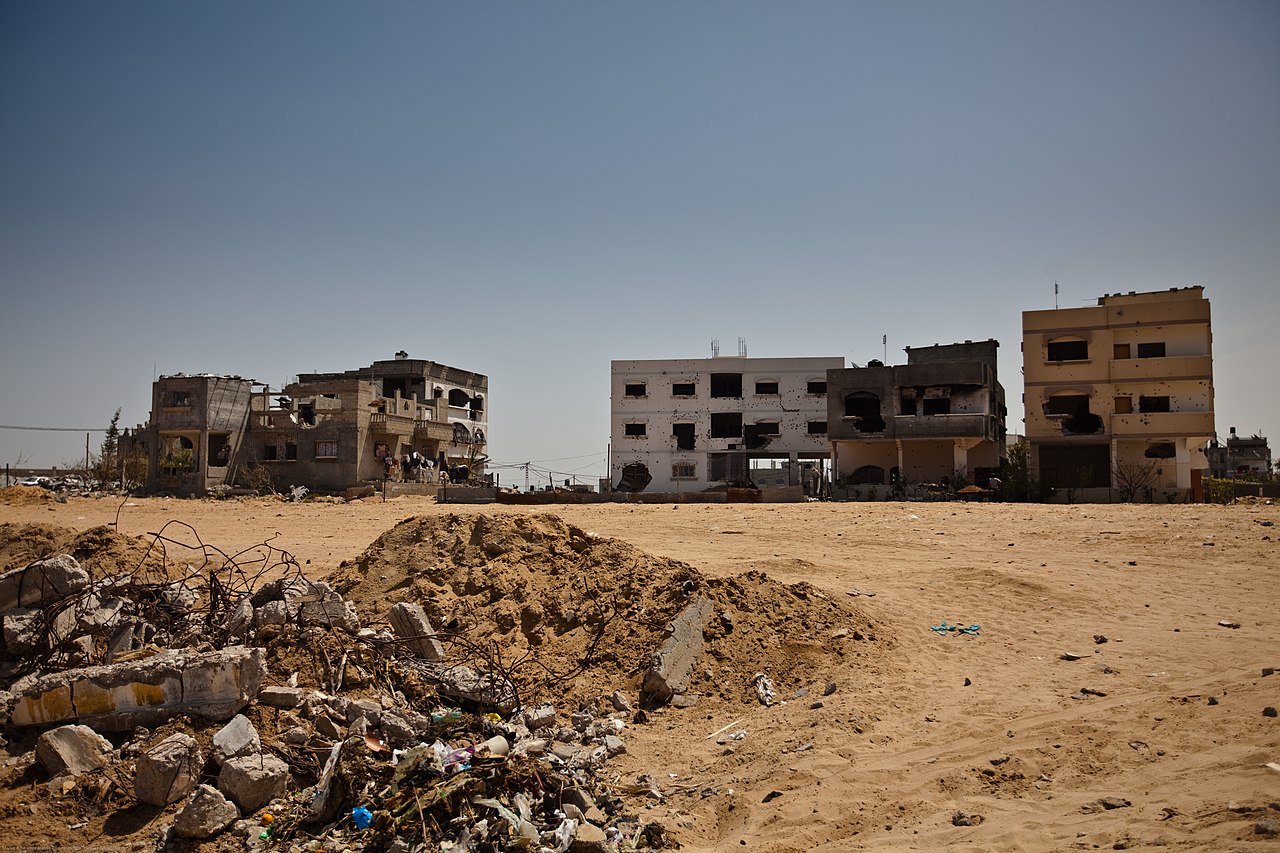
The territory faces significant economic and humanitarian challenges. Restrictions on movement of people and goods, damages from recurring hostilities, limited natural resources, and infrastructure needs contribute to high unemployment and reliance on external assistance. Basic services such as water, electricity and healthcare are frequently under strain.
Notable facts and context
- Key urban area: Gaza City region functions as the social and commercial center.
- Strategic significance: its coastal position and dense population make Gaza central to regional politics and humanitarian attention.
- International concern: frequent clashes and blockade policies draw ongoing international diplomatic and aid responses.
Understanding the Gaza Strip requires attention to its geography, recent history, humanitarian reality, and the range of political perspectives that shape policies and daily life there.
Related articles
Author
AlegsaOnline.com Gaza Strip Leandro Alegsa
URL: https://en.alegsaonline.com/art/37796
Sources
- bbc.com : "Profile: Hamas Palestinian movement"