
Rachel Corrie
Rachel Corrie (1979–2003) was an American activist with the International Solidarity Movement who died in Gaza while protesting house demolitions; her death sparked legal cases and broad international debate.
Overview
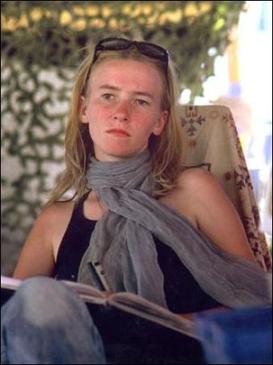
Rachel Corrie (April 10, 1979 – March 16, 2003) was an American student and activist from Olympia, Washington, who traveled to the Gaza Strip as part of the International Solidarity Movement (ISM). She went to Gaza to support Palestinian civilians and to protest demolitions of homes and other military and civilian actions. Corrie was killed in Rafah in March 2003 when she was struck and crushed by an armoured bulldozer operated by the Israel Defense Forces (IDF). The circumstances of her death remain contested: eyewitnesses and some ISM members say she was deliberately run over while acting as a human shield, while Israeli military investigations characterized the event as an accident during operations to clear a path.
Image gallery
10 Images


Early life and activism
Raised in Olympia, Corrie was a college student and community activist interested in environmental and human rights issues. She joined the International Solidarity Movement, a network of international volunteers who physically accompany Palestinian civilians and document confrontations between civilians and Israeli forces. Her activities in Gaza included accompanying families facing demolitions and recording incidents on video. Supporters describe her as a committed, nonviolent protester who sought to bring international attention to the humanitarian impact of the conflict.
Death and inquiries
The incident that killed Corrie occurred during operations in the Rafah area, where bulldozers were demolishing structures. Accounts vary: several international activists who witnessed the event said Corrie positioned herself in front of a bulldozer and was visible to the operator, while Israeli military statements and subsequent internal inquiries concluded the operator did not see her and that the death was not intentional. Her family and supporters contested those findings and sought further legal review. The case prompted investigations and legal actions in different forums and received sustained media attention around the world.
Legal proceedings and official responses
Corrie’s family initiated civil legal proceedings claiming responsibility on the part of the state. Israeli courts examined the case and, after deliberation, issued judgments that did not accept allegations of intentional wrongdoing by the military; these rulings were publicly debated. U.S. officials and others called for transparency, and human rights organizations used the case to highlight concerns about civilian protection during military operations. Different courts and institutions reached different conclusions about liability, fact-finding and the adequacy of the investigations.
Cultural impact and legacy
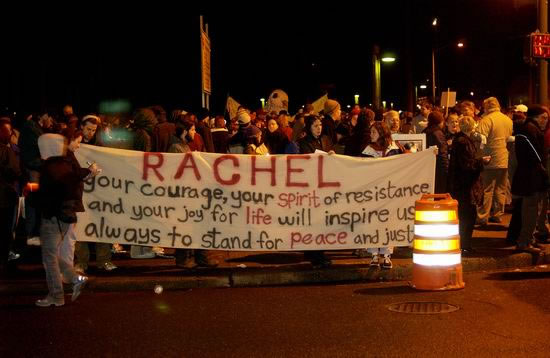
Rachel Corrie’s life and death inspired a wide range of artistic and civic responses. Her collected writings were published as a book titled Let Me Stand Alone, and her story was adapted into the stage play My Name Is Rachel Corrie, which used her emails and journal entries. Musicians and composers also commemorated her in songs and large-scale musical pieces. The Rachel Corrie Foundation for Peace and Justice was founded to continue work on issues she had cared about, promoting nonviolent action and supporting human-rights causes. For many, she became a symbol of international activism and the risks faced by civilian volunteers in conflict zones; for others, the case represents a cautionary episode illustrating the complexities of civilian presence in active military areas.
Controversies and differing perspectives
Reactions to Corrie’s death split along political and legal lines. Supporters argue her killing demonstrated the vulnerability of civilians and the harsh realities of occupied territory, while critics question the tactics of foreign activists entering conflict zones and stress operational hazards faced by military personnel. Comparisons between Corrie and historical figures have appeared in public discourse, though such analogies remain polarizing. The case has continued to provoke discussion about rules of engagement, accountability, documentation of incidents, and the role of international activists in local conflicts.
Further reading and sources
- Birth record and biographical summary
- Family and hometown information
- Reports on the Rafah incident
- Background on the International Solidarity Movement
- Human rights context and analysis
- Accounts of nonviolent activism
- Israel Defense Forces statements
- Information on Palestinian civilian impact
- Regional context: Gaza Strip
- Tributes and memorials
- Theatre adaptation: My Name Is Rachel Corrie
- Musical works inspired by Corrie
- Collected writings: Let Me Stand Alone
- Rachel Corrie Foundation for Peace and Justice
- Comparisons and public debate
Questions and answers
Q: Who was Rachel Corrie?
A: Rachel Corrie was an American human rights activist, peace activist and a member of the International Solidarity Movement (ISM).
Q: How did Rachel Corrie die?
A: Rachel Corrie was crushed to death by an armored bulldozer belonging to the Israel Defense Forces, while she was protesting against the destruction of Palestinian homes in Gaza.
Q: Who claimed that Rachel Corrie's death was an accident?
A: The Israeli government claimed that Rachel Corrie's death was an accident.
Q: What did eyewitnesses say about Rachel Corrie's death?
A: Eyewitnesses said that the Israeli soldier operating the bulldozer on purpose ran over Corrie.
Q: What tributes have been made to Rachel Corrie?
A: Several tributes have been made to Rachel Corrie, including the play My Name Is Rachel Corrie, the cantata The Skies are Weeping and more than 30 songs.
Q: What was Rachel Corrie's collected writings published under?
A: Rachel Corrie's collected writings were published in 2008 under the title Let Me Stand Alone.
Q: What organization was established to continue Rachel Corrie's work?
A: The Rachel Corrie Foundation for Peace and Justice was established to continue Rachel Corrie's work.
Related articles
Author
AlegsaOnline.com Rachel Corrie Leandro Alegsa
URL: https://en.alegsaonline.com/art/80692
Sources
- bbc.co.uk : "Profile: Rachel Corrie"
- guardian.co.uk : "Israeli report clears troops over US death"
- newsfeed.time.com : "Who Is Rachel Corrie?"
- mondoweiss.net : A legacy of two martyrs