
Acetate (ethanoate): structure, properties, uses, and biological roles
Acetate, or ethanoate, is the anion derived from acetic acid. Found in salts, esters and polymers, it plays roles in chemistry, industry and metabolism and forms common compounds like sodium acetate.
Acetate, also called ethanoate in systematic nomenclature, is the anion formed when acetic acid loses a proton. In chemical terms this deprotonation process is how the conjugate base is generated, a step sometimes referred to simply as deprotonation. The acetate ion is most commonly written as CH3COO− (or equivalently CH3CO2−) and serves as a basic unit in many salts, esters and coordination compounds.
Image gallery
7 Images


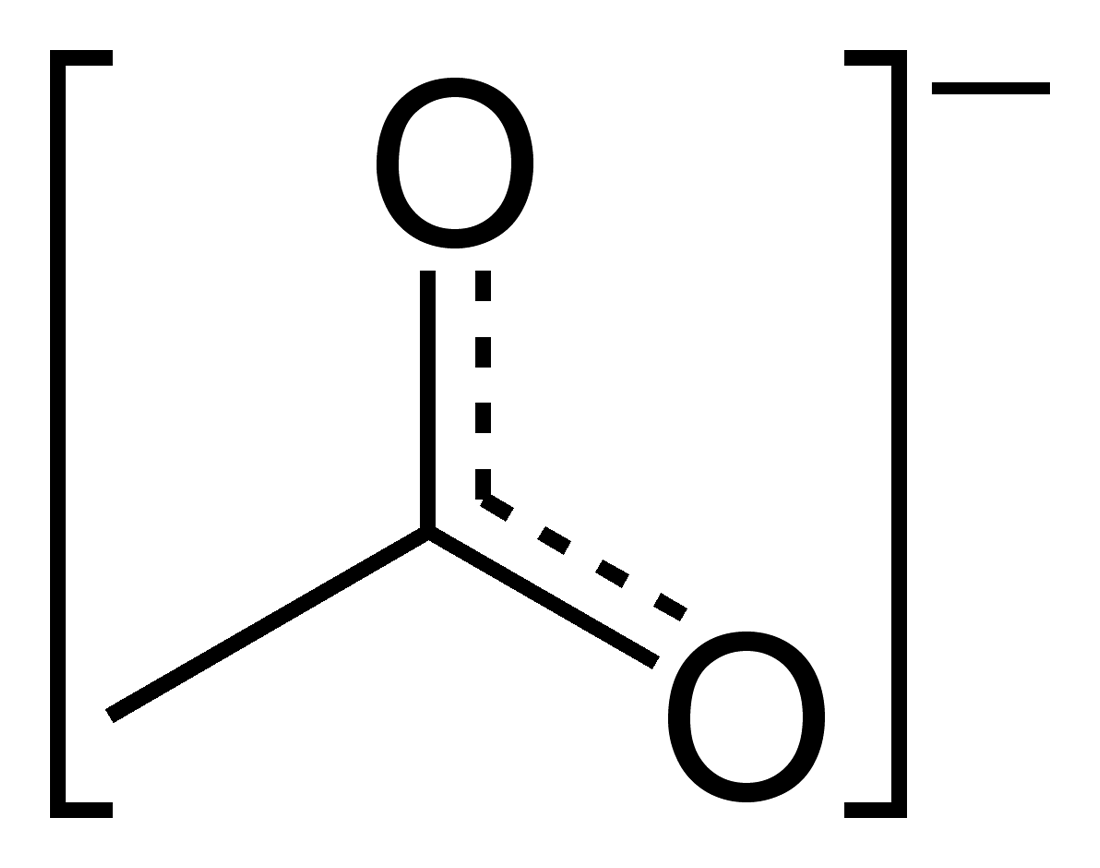


Characteristics and common forms
Acetate appears in several distinct chemical classes: inorganic salts (metal acetates), organic esters (such as ethyl acetate), and polymeric derivatives (for example cellulose acetate). Many acetate salts are water-soluble and, when acidified, release the familiar vinegar-like odor of acetic acid. Physically and chemically, acetates tend to be stable under ambient conditions but can hydrolyze or decompose under strong acidic, basic, or high-temperature conditions.
- Common salts: sodium acetate, potassium acetate, calcium acetate and others; sodium acetate is a widely used example.
- Esters: ethyl acetate is a common solvent used in coatings and extractions.
- Polymers: cellulose acetate is used for fibers, films and some plastics.
Acetate salts typically form when acetic acid reacts with a base in a neutralization step; this general reaction is often described in texts as a neutralisation between an acid and a base. The resulting salts may have uses that take advantage of their solubility, buffering capacity or thermal behavior (for example reusable heating packs exploit the crystallization of sodium acetate trihydrate).
Uses and significance
Acetates are industrially important. Esters such as ethyl acetate are common solvents in paints, adhesives and pharmaceuticals. Metal acetates serve as catalysts, food additives, and components in textile and paper processing. Cellulose acetate was historically important for photographic film and remains in specialty plastic and fiber applications. In laboratories, acetate buffers provide mild, well-understood pH control for biochemical and analytical procedures.
Biologically, acetate and its activated form (acetyl groups linked to coenzyme A) are central to metabolism. Microorganisms produce acetate during fermentation, and acetate units enter biosynthetic and energy-yielding pathways in cells. Because of this biochemical ubiquity, acetate chemistry connects basic laboratory practice, industrial processes and metabolic biology.
Distinguishing terms is useful: "acetic acid" names the protonated acid; "acetate" refers to the anion or salts; and "acetate esters" describe organic derivatives formed by condensation. Safety and handling vary by compound class—many acetate salts are low-toxicity, while some ethers and esters are flammable or irritant—so specific material information should be consulted for practical use.
Related articles
Author
AlegsaOnline.com Acetate (ethanoate): structure, properties, uses, and biological roles Leandro Alegsa
URL: https://en.alegsaonline.com/art/673