
Assembler: Program that Converts Assembly Language into Machine Code
An assembler translates readable assembly language into machine-executable code. This article explains how assemblers work, their types and features, historical role, and where they remain important today.
Overview
In computer science, an assembler is a utility that converts assembly language—human-readable mnemonics and symbolic names—into machine code that a processor can execute. The assembler reads a source file of assembly language statements and emits an object file containing binary instructions or other data in machine code form. Simply put, an assembler bridges the gap between the low-level textual representation programmers use and the numeric bit patterns the hardware requires.
Image gallery
1 Image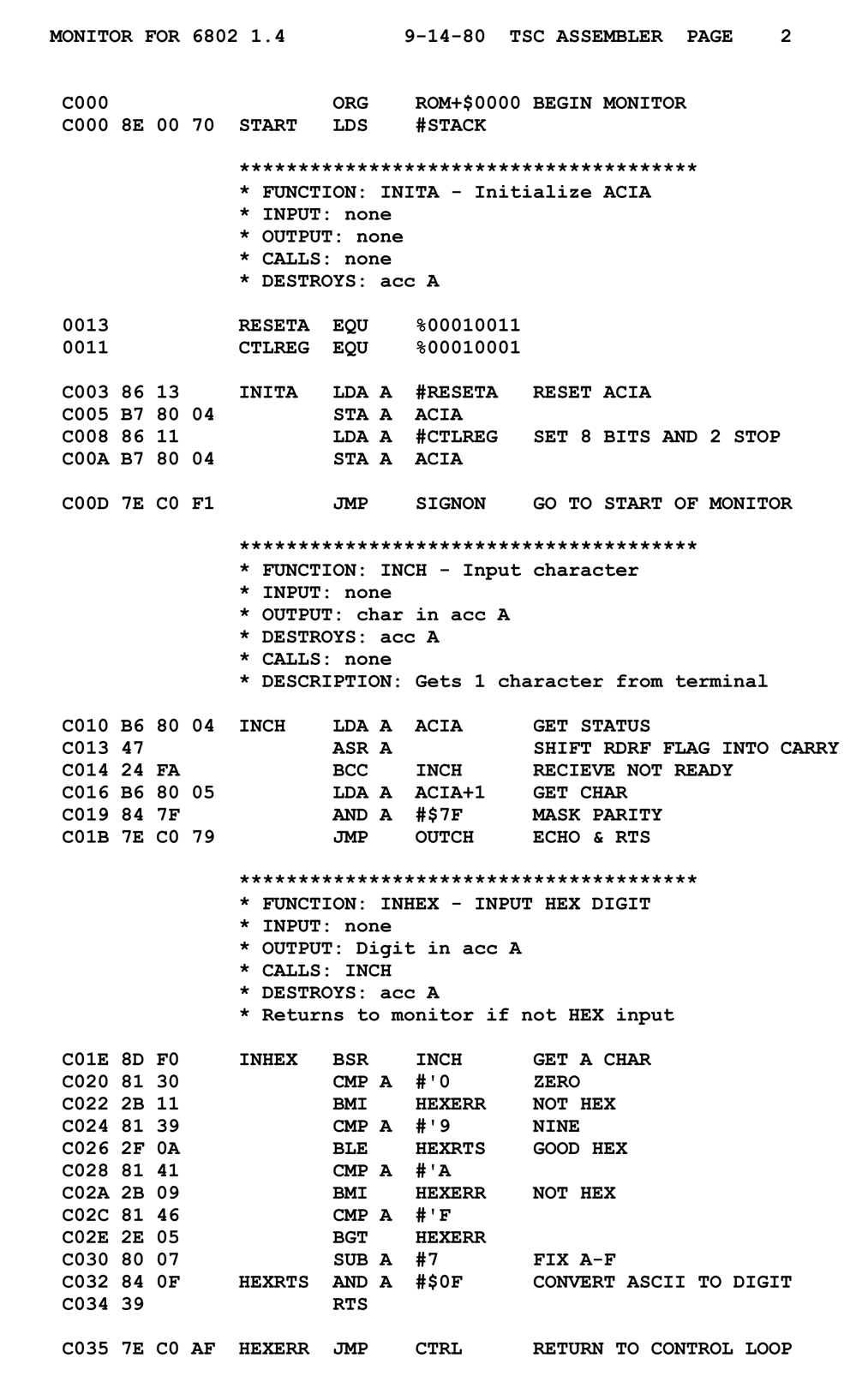
How an assembler works
An assembler accepts a sequence of basic computer instructions described using mnemonics (short words for operations) and operands (registers, memory addresses, constants). These written instructions may include labels, directives that control assembly and data definitions, and macro invocations. The assembler typically performs several tasks: parsing source lines, translating mnemonics into opcodes, resolving symbolic addresses through a symbol table, applying relocation information, and producing object code suitable for linking and loading on the target computer.
Key features and components
- Mnemonics and opcodes: Assembly mnemonics map directly to the processor's opcode set; the assembler replaces each mnemonic with its numeric opcode.
- Operands and addressing: Assemblers encode register identifiers, immediate values, and memory addressing modes into the correct binary formats.
- Symbol table and labels: Named locations are recorded in a symbol table so references can be resolved to addresses during assembly or later linking.
- Directives and data: Assembler directives (.data, .text, .org, etc.) control layout, reserve storage, and define constants or alignment.
- Macros and conditional assembly: Many assemblers support macros to expand repeated patterns and conditionals to assemble different variants from one source.
- Object formats and relocation: Output is usually an object file that may require linking; common formats include platform-specific standards that carry relocation and symbol information for linkers to use.
Types of assemblers and passes
Not all assemblers operate identically. A one-pass assembler attempts to translate and resolve symbols in a single sweep and is suitable when forward references can be avoided or handled by fixups. A two-pass assembler first collects symbol definitions and then produces correct addresses in a second pass, which simplifies handling forward references. There are also cross-assemblers that run on one host platform but generate object code for a different target processor, and macro-assemblers that provide powerful preprocessing facilities to reduce repetitive coding.
History and relationship to compilers and virtual machines
In the earliest computing days programmers entered machine code directly as binary or hexadecimal. Assemblers were developed to replace error-prone handwritten machine words with mnemonic forms, speeding development and reducing mistakes. Over time, high-level languages such as COBOL, FORTRAN and C became preferred for general programming because they express complex ideas more concisely and portably; compilers for those languages typically generate assembly-language output or machine code directly. In more recent paradigms, languages like Java are compiled to an intermediate bytecode that runs on a virtual machine, trading direct hardware control for portability.
Where assemblers are still used
Although fewer applications are written entirely in assembly today, assemblers remain important in several areas: operating system kernels and boot loaders that must initialize hardware very precisely; device drivers and embedded systems where memory and timing constraints demand minimal, predictable code; performance-critical inner loops in some libraries; and reverse engineering, security research, and malware analysis where analysts work in assembly to understand binary behavior. An assembler gives the programmer deterministic control over registers, instruction selection, and memory layout that high-level languages may obscure.
Process: source to object to executable
The typical workflow is source code -> assembler -> object file -> linker -> executable. The assembler produces an object program that encodes instructions, data, symbol definitions and relocation entries. Tools that follow—linkers and loaders—combine object files, resolve external symbols, and place the final code into memory. The assembled object (sometimes simply called the object program) is what ultimately becomes a runnable image after linking and loading.
Practical considerations and notable distinctions
- Architecture-specific: Assembly language is tied to a processor's instruction set; an assembly program written for one CPU family will not assemble for another without modification.
- Readability and maintainability: Assembly is verbose and less abstract than high-level code, so teams usually restrict its use to small, critical sections.
- Toolchain integration: Modern assemblers are part of larger toolchains; they often accept inline assembly inside higher-level language source files and cooperate with debuggers and linkers.
- Educational value: Learning assembly helps programmers understand how processors execute instructions, manage registers, and perform memory operations; it remains a valuable teaching tool.
For more in-depth technical references or historical context, readers can consult resources on assembly programming techniques, processor manuals that document opcode formats, and toolchain documentation that explains object formats and link-time behavior. Additional background on the role of assemblers in the software toolchain and their interaction with compilers and virtual machines can be found via assembler references and general programming texts. Examples showing simple instructions and symbolic labels illustrate the direct mapping from human-readable mnemonics to the binary encodings produced by an assembler; for instance, moving a value from memory into a register may be written with a mnemonic such as LOAD or MOV and translated by the assembler into the corresponding opcode and operand encodings, resolving any address or label used as an operand (example operand). Many assembler tutorials include end-to-end demonstrations that begin with a source file and end with an executable, showing how directives, macros, and symbol resolution operate together. Historical comparisons often contrast assembler usage with higher-level languages like FORTRAN and with bytecode approaches exemplified by Java. For platform-specific guidance and best practices, see manufacturer documentation and community-maintained guides (assembly instruction examples, instruction set descriptions, and processor architecture overviews), and consult tutorials that demonstrate common assembler features such as conditional assembly and macro expansion (machine code basics, foundational theory)."
Related articles
Author
AlegsaOnline.com Assembler: Program that Converts Assembly Language into Machine Code Leandro Alegsa
URL: https://en.alegsaonline.com/art/6720