
Assamese language (অসমীয়া)
Assamese is an Eastern Indo-Aryan language of Northeast India, the principal language of Assam, with its own script variant, multiple dialects, and a long literary and cultural tradition.
Assamese (অসমীয়া, pronounced approximately /ɔxɔmija/) is the principal Indo-Aryan language of the Indian state of Assam. It is spoken by several million people across northeastern India and in communities beyond the region. The language also appears in parts of Arunachal Pradesh and neighboring states and serves as a shared medium for administration, education, media and everyday communication in its home region.
Image gallery
3 Images

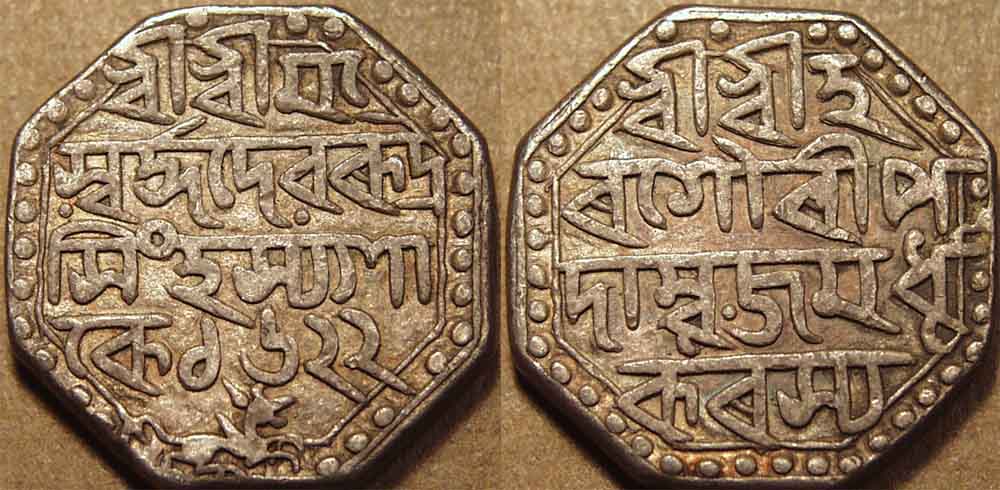
Characteristics and script
Assamese belongs to the eastern branch of the Indo-Aryan family. It uses a regional form of the Eastern Nagari writing system, commonly referred to as the Bengali–Assamese script, with orthographic forms and letters particular to Assamese. Phonetically the language has a rich vowel system and a set of consonants that reflect both its Indo-Aryan heritage and local developments; one commonly noted sound in Assamese words is a voiceless velar fricative often romanized as "x". The vocabulary shows layers of Sanskrit-derived words alongside borrowings and substrate influences from neighboring Tibeto-Burman and Austroasiatic languages.
History and development
The modern language developed from Middle Indo-Aryan stages (regional Prakrits and Apabhramsa varieties) that evolved in the northeastern subcontinent. Early Assamese literary forms emerged in the medieval period, and the language continued to change under regional, cultural and political influences. In more recent centuries the spread of printing, formal education and standardizing efforts helped shape a modern standard used in schools, newspapers and official contexts.
Dialects and regional distribution
- Central (often taken as the basis for the standard written form)
- Eastern varieties, spoken in the eastern districts of Assam
- Kamrupi or western varieties, with distinctive phonological and lexical traits
- Goalpariya and other southwestern coastal varieties
Beyond Assam, Assamese-speaking communities exist in neighboring states and among the diaspora, where regional accents and mixed-language practices are common.
Uses and cultural importance
Assamese is the language of a long literary tradition that includes poetry, religious texts, folk literature and modern prose. It functions in government, schooling and broadcasting across Assam and underpins many aspects of regional culture — music, theatre, rituals and festivals. Newspapers, radio and television in Assamese continue to be central to cultural life and public discourse.
Notable distinctions
- It is the easternmost major Indo-Aryan language, showing contact effects from neighboring language families.
- The Assamese variant of the Eastern Nagari script is closely related to Bengali script but retains distinctive characters and spelling conventions.
- Dialect diversity and substrate influence give Assamese a characteristic sound and lexical profile within the Indo-Aryan group.
Related articles
Author
AlegsaOnline.com Assamese language (অসমীয়া) Leandro Alegsa
URL: https://en.alegsaonline.com/art/6695
Sources
- ethnologue.com : "2016. Ethnologue: Languages of the World, Nineteenth edition. Dallas, Texas: SIL International"
- openaccess.leidenuniv.nl : "The Indo-Aryan languages, Routledge Language Family Series, vol. 2, London and New York: Routledge"
- lisindia.net : "Assamese"
- omniglot.com : "Nagamese alphabet, prounciation and language"
- glottolog.org : "Assamese"