
Monorail: single-rail urban transit systems
An overview of monorails — single-rail guided transit systems — covering design types, history, propulsion (including maglev), typical uses, advantages and limitations.
A monorail is a guided transport system that runs on a single rail or beam rather than the paired rails used by conventional trains. Vehicles are supported and guided by one longitudinal structure that may be a raised concrete beam, an elevated steel guideway, or a suspended rail. Unlike a conventional line that requires two running rails to form a railway track, monorail guidance concentrates forces on a single element, which influences vehicle design, maintenance and station arrangements.
Image gallery
10 Images


Design and types
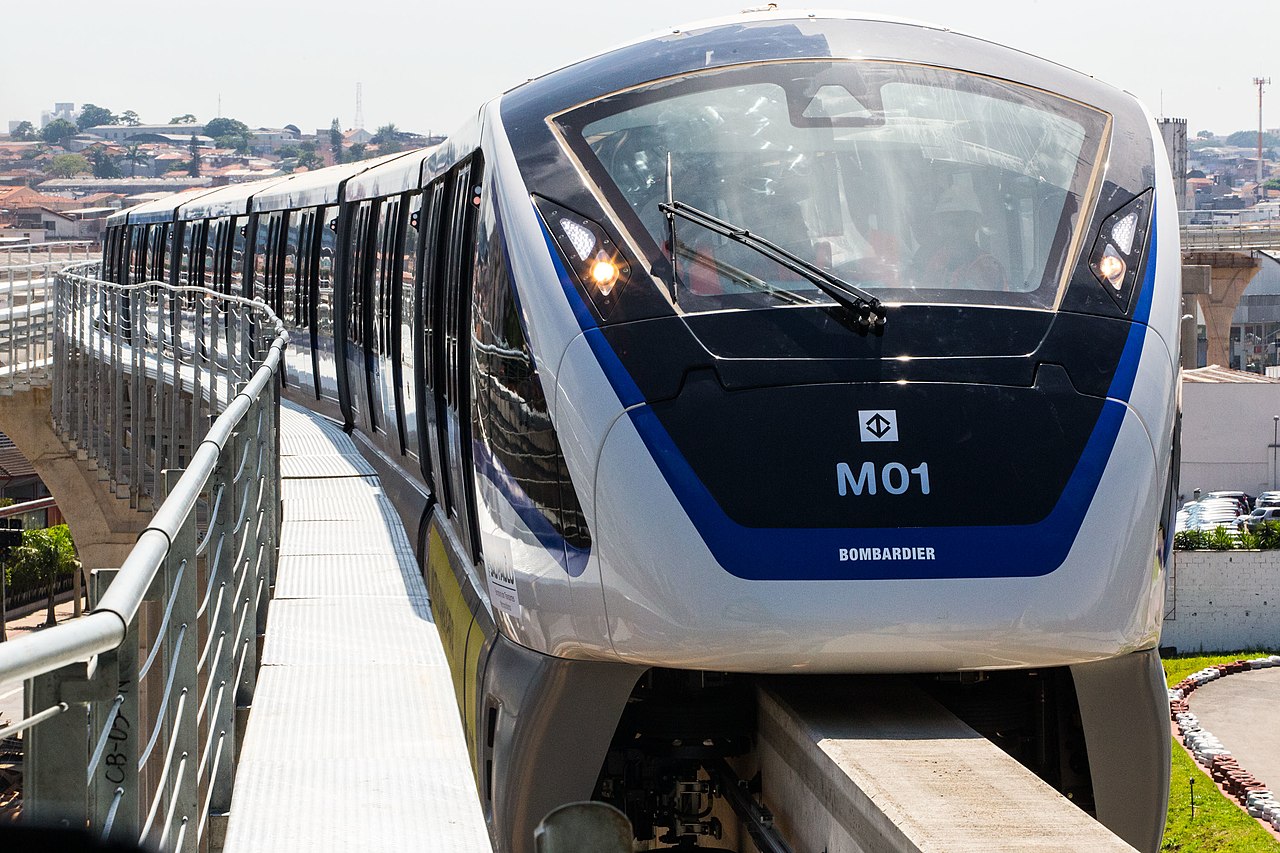
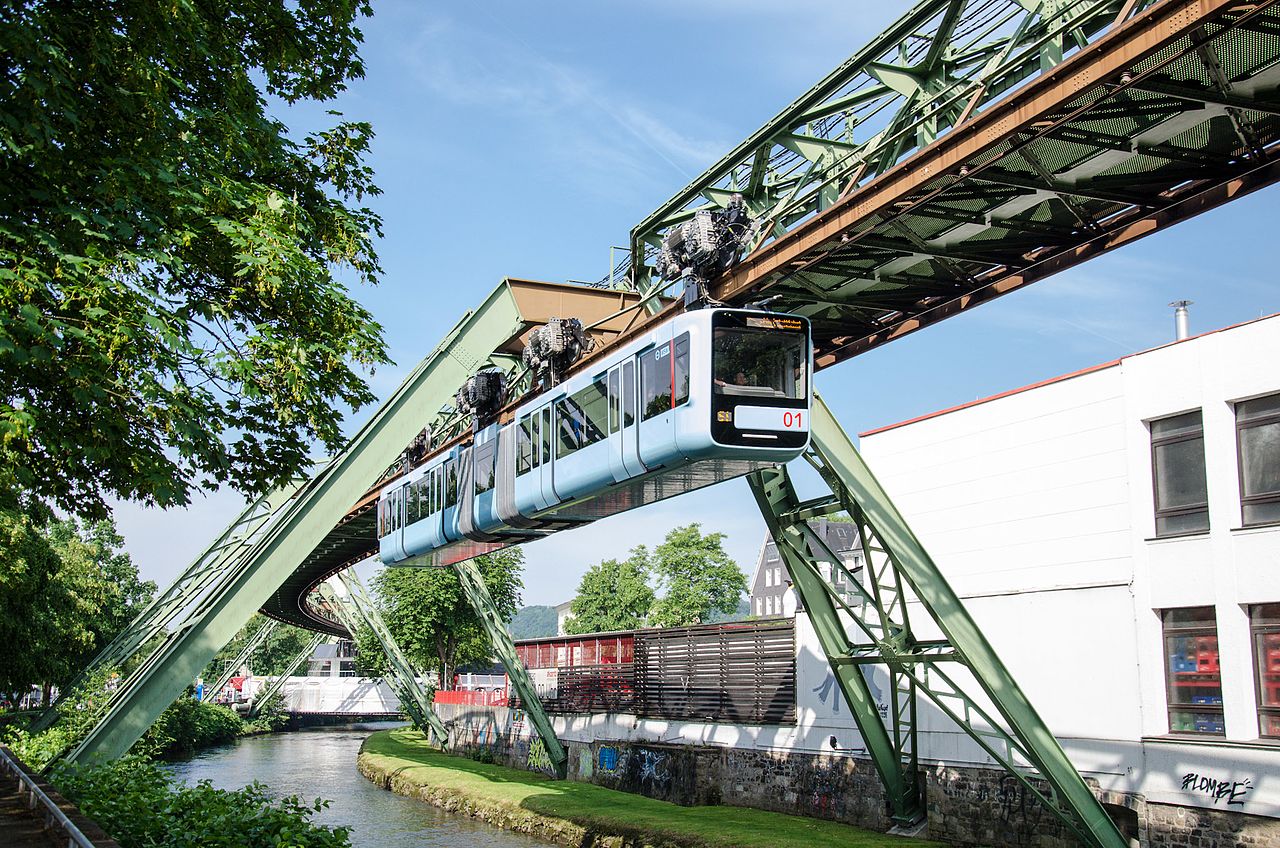
Modern monorails generally fall into three broad categories. The straddle-beam type rides on top of a wide beam and wraps around it; load-bearing tyres or wheels run on the top surface and side rollers provide lateral guidance. The suspended type hangs below an overhead rail; the carbody is carried by bogies attached above the car. A third category includes magnetic systems that rely on contactless magnetic forces for lift or guidance. Components common to many systems include the guide beam, support columns, vehicle bogies, propulsion equipment and platform interfaces.
- Straddle-beam: vehicle rides over the beam with guide rollers and often rubber tyres for a smooth ride.
- Suspended: vehicle hangs under an overhead rail, useful where clearance and visual impact are concerns.
- Magnetic systems: use magnets to provide levitation or guidance, removing direct wheel-rail contact.
Propulsion, wheels and guidance
Propulsion is usually electric, with motors driving wheels that press on the beam or with linear motors integrated into the guideway. Some experimental or high-speed systems use magnetic levitation; these are often described as maglev systems and eliminate most mechanical contact to reduce surface friction. Wheel arrangements and rolling surfaces are designed differently from conventional railway wheelsets: rubber-tyred systems trade lower noise and better adhesion for different wear characteristics, while steel-wheel systems emphasize energy efficiency. The mechanical wheel and tyre assemblies, plus side guides, keep the vehicle aligned on the single guide beam.
History and development
Concepts for single-rail transport date to the 19th century, and through the 20th century monorails progressed from exhibition curiosities and industrial conveyors to dedicated people-movers in airports, theme parks and some cities. Advances in materials, control systems and automated operation have made modern monorails capable of reliable, frequent service over short to medium distances. Their elevated guideways and compact footprints often make them attractive where ground-level space is limited or where separation from road traffic is desired.
Uses, advantages and limitations
- Advantages: compact elevated alignment, tight turning radii, separation from traffic, quieter ride with rubber-tyred systems, and suitability for automated operation.
- Limitations: comparatively high infrastructure cost per route length, specialized maintenance and rolling stock, limited interoperability with conventional networks, and sometimes lower peak capacity than heavy rail.
Monorails are commonly deployed as airport shuttles, theme park transport and in a number of urban corridors where planners accept the trade-offs between cost, capacity and visual impact. Guideways, stations and support structures are integral to network planning; in many cases the single-beam approach reduces land acquisition but can increase construction complexity. As technology evolves, magnetic and hybrid single-rail concepts continue to appear alongside conventional designs, and engineers evaluate them according to expected ridership, urban design goals and lifecycle costs. For explanations of technical terms and comparisons with other modes, see additional resources referenced by industry guides and transport authorities.
For more general information on rail systems and comparisons, follow introductory references on conventional rail technologies.
Related articles
Author
AlegsaOnline.com Monorail: single-rail urban transit systems Leandro Alegsa
URL: https://en.alegsaonline.com/art/66125