
Mohéli (Mwali): island of the Union of the Comoros
Mohéli (Mwali) is the smallest of the main Comorian islands in the Indian Ocean, with capital Fomboni; known for rural communities, marine biodiversity, and growing conservation and ecotourism activities.
Overview
Mohéli, locally called Mwali, is one of the three main islands of the Union of the Comoros. It lies in the Indian Ocean off the eastern coast of Africa and forms part of the sovereign archipelago commonly referred to as the Comoros. The island's administrative centre and largest town is Fomboni. Mohéli is smaller and less densely populated than its neighbours Grande Comore and Anjouan, and retains a largely rural character with scattered villages, plantations and coastal settlements.
Image gallery
4 Images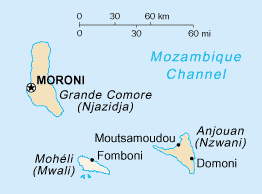


Geography and environment
Mohéli is volcanic in origin with a coastline of fringing reefs, bays and mangrove-lined inlets. Interior terrain is modestly elevated with wooded slopes and fertile valleys where subsistence agriculture is practised. Surrounding waters include coral reefs and seagrass beds that support diverse marine life, including turtles, reef fishes and dolphins. Several nearshore areas have been set aside for conservation to protect critical habitats and breeding sites.
History and political development
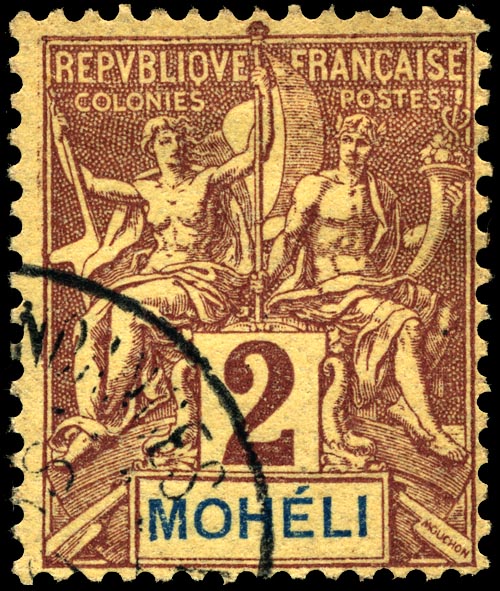
The island shares the broad historical currents of the Comoros archipelago: long-standing connections to Indian Ocean trade networks, influences from Swahili and Arab cultures, and a period as part of the French colonial domain. In 1975 Mohéli joined Grande Comore (Ngazidja) and Anjouan (Nzwani) in forming the independent state now known as the Union of the Comoros. Since independence, the islands have experienced episodes of political tension, periods of increased regional autonomy, and local initiatives to manage resources at community level.
People, economy and culture
Most inhabitants rely on a mix of subsistence farming, artisanal fishing and small-scale commerce. Common crops include coconuts, cassava, ylang-ylang, cloves and vanilla, which are part of the local rural economy. The dominant language is a Comorian dialect (Shikomori) with Arabic influences; Islam shapes daily life and social practices. Traditional music, oral storytelling and communal ceremonies remain important cultural expressions.
Conservation, tourism and development
Mohéli is noted for its comparatively intact coastal ecosystems and for early examples of community-based marine protection. Conservation projects focus on reef protection, sea turtle nesting beaches and sustainable fisheries management. These efforts support a modest ecotourism potential that emphasises guided nature excursions, snorkeling and cultural exchanges rather than high-volume resort development. Local authorities and international partners have occasionally collaborated on scientific surveys and capacity-building for protected-area management.
Transport and administration
Fomboni functions as the island's primary port and market town, linking Mohéli with the other Comorian islands by ferry and with regional centres by small aircraft services. Road infrastructure is limited outside main settlements, reflecting the island's dispersed population and rural economy. Administratively, Mohéli participates in the institutions of the Union of the Comoros while often pursuing locally tailored policies to address island-specific needs.
Significance
Mohéli's value lies in its cultural continuity, its role within the Comorian federation and its natural diversity. Relations with Grande Comore (Grande Comore) and Anjouan (Anjouan) remain central to national politics, while proximity to the African mainland (Africa) situates the island within wider patterns of trade and migration. For regional context see resources about the Indian Ocean and national profiles of the Comoros.
Related articles
Author
AlegsaOnline.com Mohéli (Mwali): island of the Union of the Comoros Leandro Alegsa
URL: https://en.alegsaonline.com/art/65803
Sources
- researchgate.net : "Figure 1. Map of the Comoros showing the islands of Ngazidja (Grande..."
- tools.wmflabs.org : 12°15′S 43°45′E / 12.250°S 43.750°E / -12.250; 43.750