
ASCII art: text-based images, emoticons, and their history
ASCII art is the creation of pictures and designs from plain text characters. It ranges from simple emoticons to large multi-line images and influenced early computing culture, BBS, and modern text graphics.
Overview
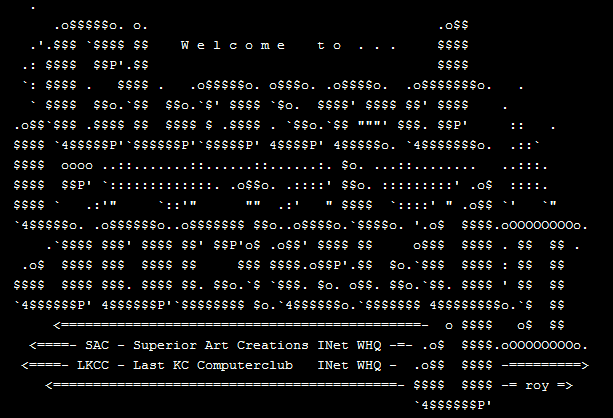
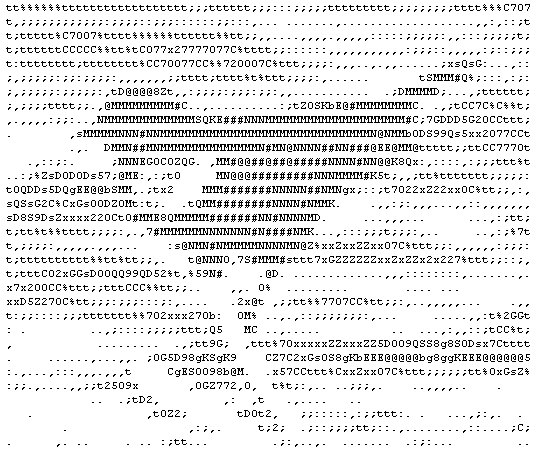
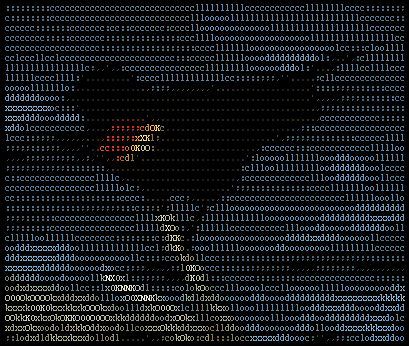
ASCII art is a form of visual design that uses the characters of the ASCII character set to represent pictures, symbols, patterns and expressions. At its simplest it includes emoticons such as :) or :-D and symbols like <3. At larger scale it arranges letters, numbers and punctuation into multi-line compositions that suggest shapes, textures and shading.
Image gallery
8 Images




Forms and characteristics
Works labeled as ASCII art share a reliance on monospace layout and the predictable width of characters. Artists use character choice, density and repetition to imply tone and depth: for example, using @ or # for dark areas and . or ` for highlights. Common subtypes include simple emoticons, ASCII banners and logos generated by FIGlet-style utilities, and hand-crafted portraits made of many rows of characters. ASCII art is inherently accessible in plain-text environments because it requires no special graphics support.
Origins and history
The practice arose when early computers, terminals and printers supported only textual output. Users adapted keyboard characters to draw images on teletypes, mainframes and later bulletin board systems (BBS). As communities exchanged messages in text-only forums and email, artists and hobbyists refined techniques for larger, more detailed pieces. For background on the character set often used for such work see ASCII character set, and for historical context about early systems see early computer displays.
Uses and examples
ASCII art has served multiple roles: decorative signatures in email and forums, title screens and logos in text-mode applications, banners created by utilities, and expressive emoticons in chat. Examples range from one-line faces like :-), ;), or (=^.^=) to elaborate text portraits and scene depictions created for demos and mailings. Tools and archives collected by enthusiasts help newcomers explore styles and learn common techniques; see further examples for curated collections and galleries.
Tools, conventions and preservation
Specialized software and typeface-aware utilities (for example FIGlet and its descendants) produce stylized ASCII banners from plain words. Communities also developed conventions for framing, signatures and line-breaking so pieces display correctly across terminals. Preservation is a concern because modern systems often replace fixed-width fonts or re-encode text, which can break alignment; archives therefore store pieces in plain text and document the intended monospace settings.
Variations and notable distinctions
ASCII art is often compared with ANSI art and Unicode or text-art using box-drawing and block elements. ANSI art extends ASCII by exploiting terminal control codes and color, while modern Unicode art can use a wider palette of glyphs and combining characters. Emoticons and emoji occupy related cultural ground: emoticons (built from ASCII) predate emoji and remain popular in environments where only plain text is available. Despite shifts in display technology, ASCII art endures as an expressive, low-bandwidth visual medium rooted in the history of computing.
Related articles
Author
AlegsaOnline.com ASCII art: text-based images, emoticons, and their history Leandro Alegsa
URL: https://en.alegsaonline.com/art/6474