
Aschaffenburg — historic city on the Main in northwestern Bavaria
Aschaffenburg is a Bavarian city of about 68,000 on the river Main, known for Schloss Johannisburg, cultural institutions, and its role in the Frankfurt metropolitan area.

Overview
Aschaffenburg is a German city in the northwestern part of Bavaria, historically counted among the Franconian region. It lies on the river Main and has a population of roughly 68,000. The town functions as an important regional centre for culture, education and administration and is part of the wider Frankfurt metropolitan area, with close economic and transport links to the Rhine‑Main conurbation.
Image gallery
10 Images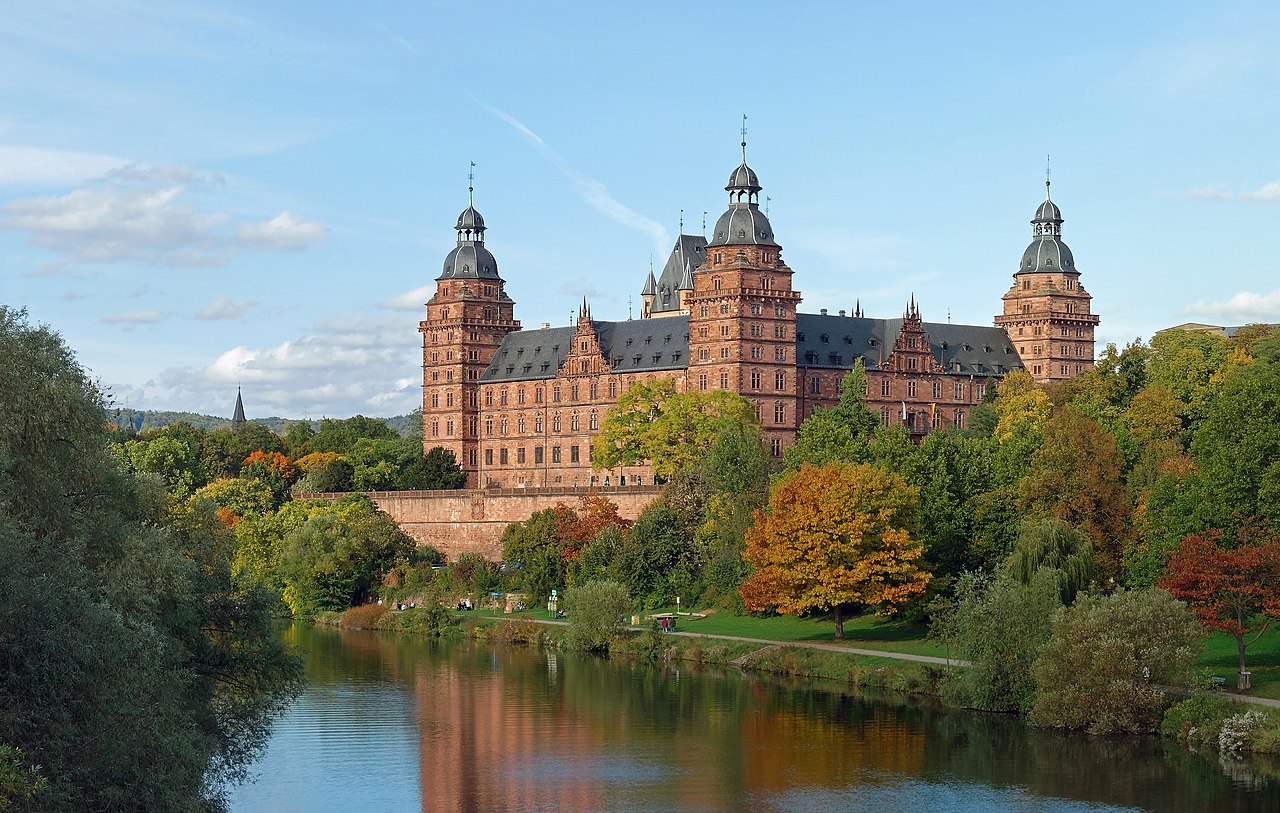


Geography and administration
The urban area stretches along the Main and includes a historic centre, several suburbs, and green belt areas. Administratively it is an independent city within Bavaria and serves nearby communities for services such as hospitals, courts and secondary education. Visitors approach Aschaffenburg by river, rail or motorway; its location west of the main Franconian uplands gives it a transitional landscape between low hills and the river plain. For more municipal information see the city's official pages (city information).
History and development
Aschaffenburg's origins date back to medieval times when it grew around a fortress and later became associated with the Archbishopric of Mainz. Over centuries it was shaped by ecclesiastical rule, trade on the Main and phases of rebuilding after wars. In the 19th and 20th centuries industrial and transport developments tied the town more closely to neighbouring economic centres. For historical overviews consult regional studies on Franconia (Franconia region).
Culture, landmarks and institutions
The city is best known for Schloss Johannisburg, a red sandstone Renaissance palace with museum collections, and the Pompejanum, a 19th‑century villa modelled on a Roman house. Museums, concert venues and annual festivals contribute to a lively cultural scene. Notable green spaces and riverside promenades make the Main a focal point for leisure and tourism. Visitors often use regional guides and statistics for planning (population and visitor data).
Economy and transport
Aschaffenburg's economy mixes small and medium industry, retail and services, with many residents commuting to the wider Rhine‑Main job market. Transport links include regional raillines, long‑distance connections via Frankfurt, and motorway access that support both freight and passenger movement. Local infrastructure and partnerships with neighbouring towns influence regional planning (administrative links).
Notable facts and distinctions
- Dialects: the local East Franconian dialect is still heard in parts of the population.
- Cultural ties: the city maintains twinning and cooperation with other European towns.
- Location: its position on the Main has defined trade, transport and recreation for centuries.
Aschaffenburg combines a compact historic core with modern services and strong connections to the Rhine‑Main metropolitan region, making it both a local centre and a commuter town with a distinct cultural heritage.
Related articles
Author
AlegsaOnline.com Aschaffenburg — historic city on the Main in northwestern Bavaria Leandro Alegsa
URL: https://en.alegsaonline.com/art/6471
Sources
- destatis.de : "Alle politisch selbständigen Gemeinden mit ausgewählten Merkmalen am 31.12.2018 (4. Quartal)" · web.archive.org
- statistikdaten.bayern.de : "Fortschreibung des Bevölkerungsstandes"