
Maurizio Arcieri: Italian singer, bandleader and electronic music collaborator
Italian singer (1942–2015), leader of 1960s beat group The New Dada and later member of the electronic/new wave duo Krisma; noted for a career that spanned pop, beat and synth-influenced music.
Maurizio Arcieri (30 April 1942 – 29 January 2015) was an Italian singer and performer whose career moved from 1960s beat and pop into late 20th‑century electronic and new wave styles. Born in Milan, Italy, Arcieri first gained public attention as a charismatic frontman and later became best known as one half of the duo Krisma.
Image gallery
1 Image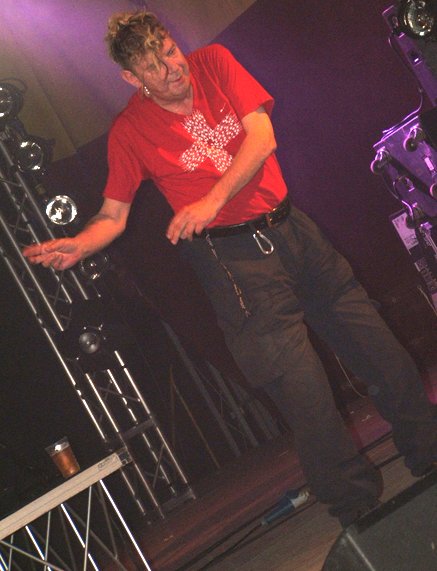
Career overview
Arcieri rose to prominence in the 1960s as leader of The New Dada, a band associated with the Italian beat movement that blended British and American rock influences with Italian pop sensibilities. Throughout the 1960s and 1970s he recorded as a solo artist as well, appearing in clubs, on radio and on television at a time when Italy's popular music scene was expanding rapidly. In the late 1970s he formed a long-term duo partnership that evolved into Krisma, which explored synthesizers, electronic textures and a minimalist aesthetic distinct from his earlier beat work.
Style and contributions
Arcieri's career is notable for a pronounced stylistic shift: from the energetic, guitar-driven arrangements typical of 1960s beat bands to the colder, more experimental electronic sounds associated with new wave and synth-based music. His background as a pop singer and his willingness to adopt new technologies and production techniques allowed him to bridge generations of Italian popular music. He is remembered for his strong stage presence, versatility as a vocalist and role in popularizing contemporary electronic approaches in Italy.
Later life and legacy
In later decades Arcieri continued to perform and collaborate, and Krisma maintained a presence within niche electronic and alternative music circles. He died in January 2015 in Varese, reportedly after an illness related to cancer, at the age of 72. His work is cited by fans and some musicians as part of a broader narrative connecting Italy's 1960s beat era to subsequent experimental and electronic movements.
- Leader of The New Dada during the 1960s beat era.
- Later collaborator and creative partner in Krisma, a duo embracing electronic and new wave sounds.
- Career illustrates a transition in Italian popular music from guitar-based pop to synth-driven production.
- Associated with Milanese cultural life and the broader Italian music scene.
For listeners and researchers, Arcieri's discography and the recordings of The New Dada and Krisma provide insight into changing trends in Italian popular music across three decades, from post‑war pop culture to the emergence of electronic experimentation.
Milan and Italy remained central to the context of his career, while the places tied to his later years and passing—such as Varese—are often cited in biographical summaries and remembrances.
Related articles
Author
AlegsaOnline.com Maurizio Arcieri: Italian singer, bandleader and electronic music collaborator Leandro Alegsa
URL: https://en.alegsaonline.com/art/62982