
Accelerometer: sensor for measuring proper acceleration and motion
An accelerometer measures proper acceleration (acceleration relative to freefall). Covers principles, main types, performance metrics, history, and common applications from navigation to consumer devices.
Overview
An accelerometer is a device that measures proper acceleration — the physical acceleration experienced by an object relative to freefall. Unlike coordinate acceleration (change of velocity in an inertial frame), proper acceleration is what a device or person actually feels, for example the 1 g felt while standing on Earth. For a concise definition see basic description. Accelerometers convert mechanical motion into an electrical signal that can be processed by electronics.
Image gallery
3 Images
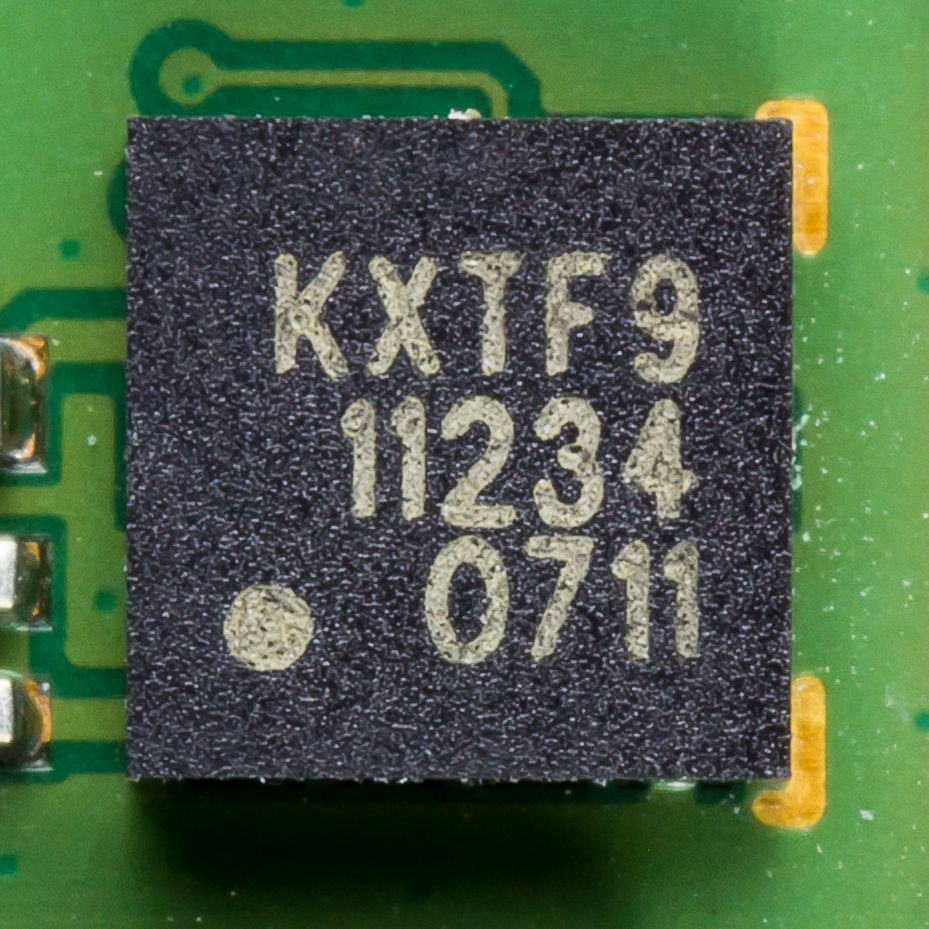

How it works and main components
At a basic level an accelerometer senses force on a test mass. That mass is suspended or attached to a structure; when acceleration occurs, the mass displaces or produces a measurable effect. Different transduction methods convert that mechanical effect into an electrical output. Common elements include a proof mass, a spring or flexure, sensing electronics, and packaging that determines environmental resistance and mounting.
Common types and technologies
- Capacitive: measure change in capacitance as the mass moves; widely used in MEMS devices for consumer electronics.
- Piezoelectric: use materials that generate voltage under stress; suited for dynamic and vibration measurements.
- Piezoresistive: resistive elements change value with strain; used in some industrial sensors.
- Thermal and optical: less common, used where other trade-offs are required.
- MEMS: microelectromechanical systems combine small size, low cost and digital interfaces; dominate mobile and wearable markets.
Performance characteristics
Key specifications that define an accelerometer's suitability include range (maximum measurable acceleration, often in g or m/s²), sensitivity (output per unit acceleration), bandwidth (frequency range over which it responds reliably), resolution (smallest detectable change), noise, bias and drift, and cross-axis sensitivity. Designers balance these for applications: a seismometer prioritizes low noise and low frequency response, while an airbag sensor emphasizes high range and fast response.
History and development
Mechanical methods to sense motion predate electronics—pendulums and mass-spring systems were used in early inertial instruments. The 20th century brought piezoelectric accelerometers and rugged industrial sensors. Miniaturization accelerated in the late 20th and early 21st centuries with MEMS fabrication, enabling low-cost, low-power accelerometers in consumer devices such as phones, game controllers, and fitness trackers.
Applications and examples
Accelerometers appear across industries and products:
- Inertial navigation systems for aircraft, missiles and spacecraft where they provide short-term motion sensing combined with gyroscopes.
- Vibration monitoring and predictive maintenance of rotating machinery.
- Orientation sensing in smartphones, tablets and cameras so displays rotate correctly and user interfaces respond to tilt.
- Drop detection and deployment of automotive safety systems such as airbags.
- Stabilizing flight control for drones and stabilizers for cameras and gimbals.
- Scientific uses such as measuring gravity gradients: coordinated accelerometers can detect small differences in proper acceleration over a separation, enabling gravity gradiometry and studies of local density variations; see gravity gradient and gravitational field.
Distinctions and practical notes
An accelerometer does not directly measure the gravitational field in isolation; it measures total proper acceleration including both gravitational and inertial contributions. In freefall an ideal accelerometer reads zero. Practical systems often fuse accelerometer data with gyroscopes, magnetometers or GPS to separate orientation, rotation and velocity effects. Choice of sensor type depends on required accuracy, bandwidth, size, power and cost.
Because accelerometers are ubiquitous and available in many grades—from tiny MEMS sensors embedded in phones to laboratory-grade units—the term covers a broad range of performance and design trade-offs. Understanding the intended application and the key specifications is critical when selecting or interpreting accelerometer data.
Related articles
Author
AlegsaOnline.com Accelerometer: sensor for measuring proper acceleration and motion Leandro Alegsa
URL: https://en.alegsaonline.com/art/629