
Matsuo Bashō: Life, Poetry and Lasting Influence of Japan’s Haiku Master
Matsuo Bashō (1644–1694) perfected the short seasonal poem and the poetic travel diary, blending classical learning, observation of nature and concise imagery that shaped Japanese and global ideas of haiku.
Matsuo Bashō (born Matsuo Munefusa, 1644–1694) is widely regarded as the foremost master of early modern Japanese short verse and one of the greatest writers of the Edo period. He helped transform the opening stanza of linked verse (hokku) into an autonomous, image‑rich form and developed a prose‑and‑poem hybrid that deepened the expressive possibilities of travel writing. Bashō’s work is celebrated for its focus on nature, seasonal reference and a restrained tone that invites the reader’s imagination to complete the scene.
Image gallery
8 Images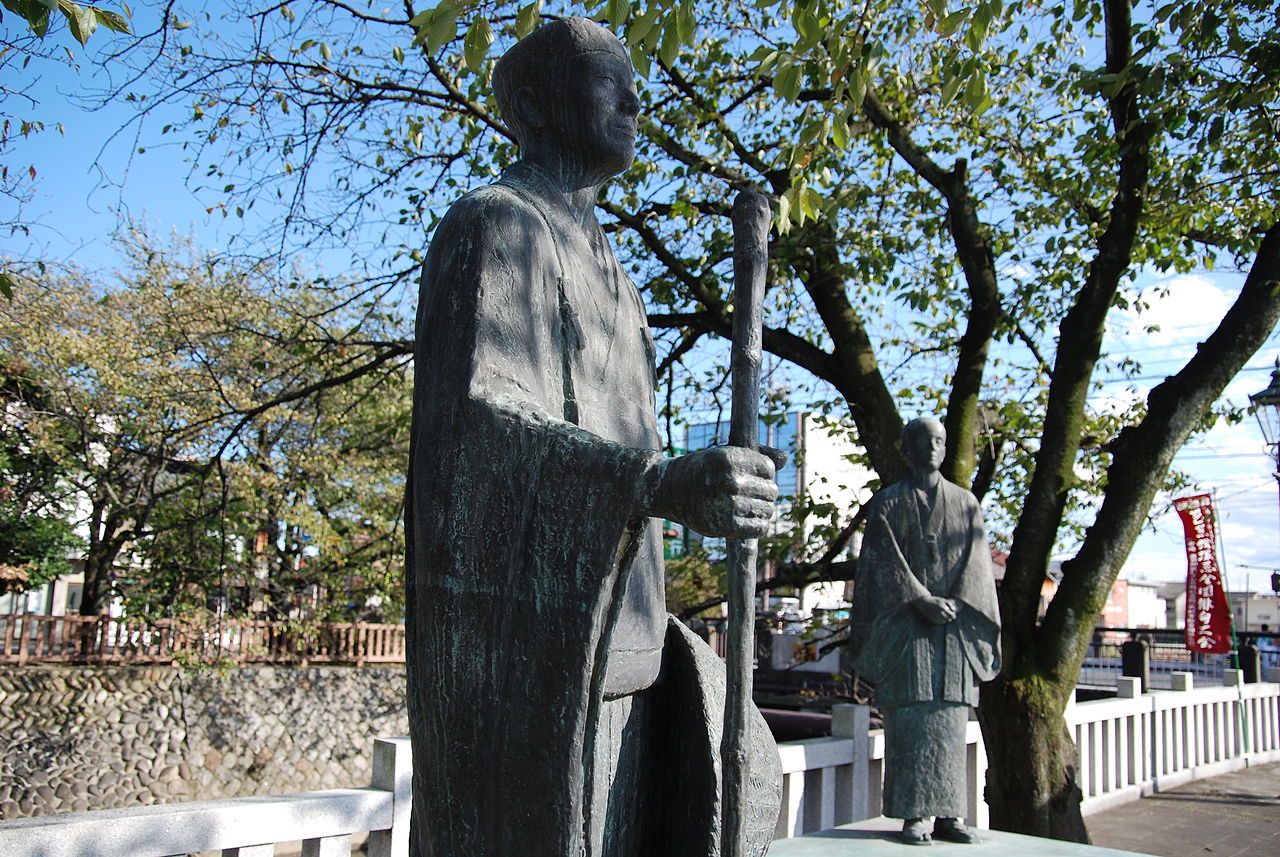


Early life and names
Bashō was born into a lower‑rank samurai household in Iga, a region now part of Mie Prefecture. Trained in classical reading and verse, he initially followed a samurai path before choosing a life devoted to poetry, teaching and travel. Over his career he used several art names; among them was Tōsei, and later he became widely known by the name Bashō, taken from a banana plant (basho) given to him by a disciple for his small garden near Edo. The modest plant and the simple hut in which he lived came to symbolize the plainness and attentiveness of his aesthetic.
Form, technique and themes
Bashō’s important innovations lie in tone and method rather than in a rigid syllable count. Though the 5‑7‑5 on pattern influenced classical haikai practice, Bashō’s poems are best judged by their use of a seasonal word (kigo), a cutting pause or sudden turn, and an economy that yields depth by suggestion. He often fused everyday observation with classical allusion: a single, spare image—of rain on a riverbank, a winter bird, or a roadside flower—can open a larger emotional or philosophical register.
Haibun, renga and the travel diary
Beyond standalone hokku, Bashō composed linked verse (renga) with students and developed the haibun form, short prose passages interspersed with haiku‑length poems. His travel diaries combine descriptive narrative, reflective prose and concise verse, producing a hybrid genre that influenced later Japanese literature. These works emphasize movement through landscape, attentiveness to place, and a moral or spiritual undercurrent that often emerges through simple, closely observed detail.
Major journeys and Oku no Hosomichi
Travelling was central to Bashō’s practice. His most famous prose travel narrative, Oku no Hosomichi (commonly translated as The Narrow Road to the Deep North), grew from an extended journey northward undertaken with companions. The work interweaves short poems with sketches of places, historical associations and moments of introspection. The travel notebooks and the smaller poems that accompany them record encounters with temples, ruins, ordinary people and seasonal phenomena, and they helped to establish his reputation as a poet who could make the remote intimate and the brief deeply resonant.
Teaching, disciples and social role
Bashō taught a circle of disciples and followers who gathered to compose renga and to study his aesthetic. He did not preside over a rigid school so much as offer a model of poetic practice that emphasized sincerity, surprise and humility. His signature approach—equal parts thrift of language and richness of implication—became a touchstone for subsequent poets and a standard set of values for those who sought to write short, image‑based verse.
Notable poems and the voice of restraint
Among the short poems attributed to Bashō, a handful have achieved wide fame for their simplicity and vividness. One of the best known evokes an old pond and the sound of water after a frog jumps in; this single small scene exemplifies his capacity to make stillness and sudden action coexist in a few words. Rather than explain, Bashō’s lines often create a space in which readers’ memories and associations complete the effect.
Death and final lines
Bashō died in 1694 while on a journey in the region of Osaka. Contemporary and later accounts describe how, during his final illness, he continued to compose and to give instruction; a brief verse is said to have been among his last utterances. The image of the itinerant poet composing until the end has contributed to his lasting reputation as a life lived inseparably from the practice of verse.
Legacy and global reception
Over the centuries Bashō’s poems and prose have been read, translated and adapted worldwide. His influence is evident in modern Japanese poets and in Western poets who adopted haiku‑like forms or sought a similar discipline of observation and concision. Scholarly study has traced his debt to Chinese and classical Japanese antecedents while also recognizing his singular contribution: a way of seeing that makes modest things luminous and that treats the act of attention as itself a moral and artistic practice.
Further reading and links
- Japanese name and characters for Matsuo Bashō
- Biographical entries on Bashō as a poet
- General resources on Japanese poetry
- Background on haiku and its history
- Notes on verse forms and syllable patterns
- Interpretation and the role of reader imagination
- Context on samurai families and social status
- Influence of Chinese poetry on Bashō
- Edo period cultural background
- Chronology of Bashō's major journeys
- The banana plant (basho) and the origin of his pen name
- Itinerary and dates for Oku no Hosomichi
- Accounts of Bashō's death and final verses
Note: This article synthesizes established, broadly known information about Matsuo Bashō and his work. Exact wording of individual poems and disputed biographical details can vary between sources; readers are encouraged to consult translations and critical studies for line‑by‑line readings and textual history.
Related articles
Author
AlegsaOnline.com Matsuo Bashō: Life, Poetry and Lasting Influence of Japan’s Haiku Master Leandro Alegsa
URL: https://en.alegsaonline.com/art/62863
Sources
- commons.wikimedia.org : Matsuo Basho
- wikidata.org : wikidata.org/wiki/Q5676
- authority.bibsys.no : 90247412
- catalogo.bne.es : XX1143814
- catalogue.bnf.fr : cb11890470t
- data.bnf.fr : (data)
- cantic.bnc.cat : a11160962
- ci.nii.ac.jp : DA00312171
- d-nb.info : 118653369
- isni.org : 0000 0001 0870 0296
- id.loc.gov : n81014364
- kopkatalogs.lv : 000133124
- musicbrainz.org : 97894d11-10c1-41b4-9026-1b49f5dc17c5
- aleweb.ncl.edu.tw : 000805590
- id.ndl.go.jp : 00270778