
Massively multiplayer online role-playing game (MMORPG)
A persistent online role-playing game that supports large numbers of players in a shared virtual world, emphasizing character progression, social interaction, and long-term content.
A massively multiplayer online role-playing game (commonly abbreviated MMORPG) is a subtype of MMOG that combines elements of a RPG with a persistent online environment accessed via the internet. Players create and develop characters, explore virtual worlds, complete objectives, and interact with many other people simultaneously. These games are designed for long-term play rather than a single play session.
Image gallery
4 Images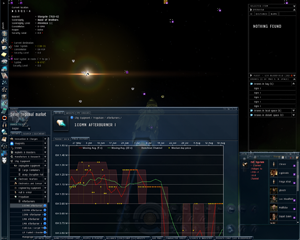


Core characteristics
MMORPGs share several recurring systems that define their gameplay:
- Persistent world: The game environment continues even when a player is offline.
- Character progression: Advancement through experience, levels, skills, equipment, or reputation.
- Social features: Guilds, parties, chat, trading, and cooperative challenges.
- Economy: Player-driven markets, crafting, and currency management.
- Content variety: PvE (player versus environment), PvP (player versus player), quests, raids, and events.
Origins and development
The genre evolved from text-based multi-user dungeons (MUDs) and early graphical online games in the late 20th century. Over time, improvements in networking, graphics, and server technology allowed worlds to scale to thousands of concurrent players. Developers have experimented with business models ranging from subscription fees to free-to-play with microtransactions.
Gameplay systems and technology
Architecturally, MMORPGs rely on distributed servers to host regions, instances, or whole shards of a virtual world. Designers balance progression pacing, content updates, and imbalanced economies. Common features include instancing (separate copies of areas for groups), matchmaking, and anti-cheat measures to preserve fairness.
Social importance and examples
These games foster long-term communities and real social bonds, often supporting player-run events, role-play, and economies that mirror social behaviors. They have influenced online culture, virtual goods markets, and multiplayer design in many other genres.
Distinctions and notable facts
While all MMORPGs are MMOGs, not all MMOGs are RPGs; other massive multiplayer genres include shooters and strategy games. The term highlights both the scale of participation and a focus on role-playing mechanics, character growth, and narrative content.
Related articles
Author
AlegsaOnline.com Massively multiplayer online role-playing game (MMORPG) Leandro Alegsa
URL: https://en.alegsaonline.com/art/62714