
Mark the Evangelist
Early Christian figure traditionally credited with the Gospel of Mark; companion of apostles, honored in Eastern and Western traditions and venerated as the founder of the Alexandrian church.
Overview
Mark the Evangelist is a prominent early Christian figure traditionally credited with writing the Gospel of Mark. He appears in New Testament writings under the name John Mark and is remembered as a companion of key apostles in the first generation of the church. His life and work bridge Palestinian and Mediterranean Christian communities and have been important to both Eastern and Western Christian traditions.
Image gallery
10 Images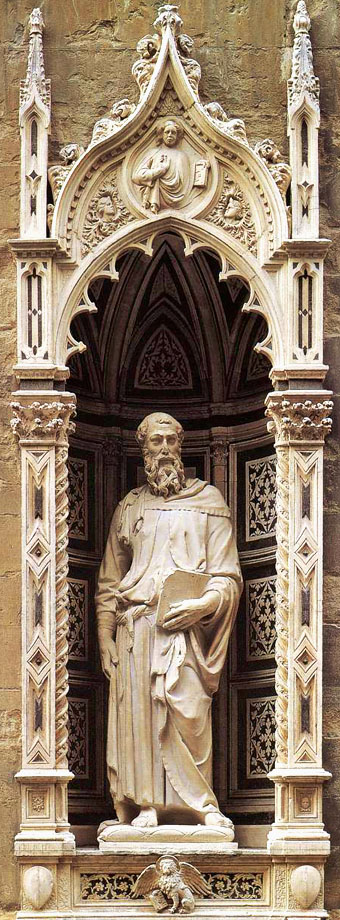




Name and identity
His Greek name appears in early manuscripts as Μάρκος, often rendered in English as Mark or Marcus. In the Acts of the Apostles and some Pauline letters he is called John Mark; traditions link him to Barnabas and to the Roman-Jewish world. Many scholars treat the author of the Gospel of Mark and the New Testament figure John Mark as the same person, though ancient and modern writers sometimes distinguish between them.
Writings and characteristics of the Gospel
The Gospel traditionally ascribed to Mark is the shortest of the four canonical gospels and is often regarded as emphasizing action, immediacy, and the deeds of Jesus rather than lengthy discourses. Early church fathers reported that Mark wrote down the teachings and reminiscences of the apostle Peter, which helped shape the Gospel's content and perspective. Because of these features, the Gospel of Mark has been central to studies of the historical Jesus and to the formation of the other Gospel narratives.
Tradition, history, and Coptic connection
Several later traditions preserve additional details about Mark. The Coptic church has long claimed that Mark brought Christianity to Alexandria and founded the local Christian community there; this connection is an important element of Egyptian Christian identity. Coptic sources and liturgy honor him as a founding figure, and many churches in Egypt and elsewhere claim ancient links to his ministry. The house associated with his family is also implicated in some traditions about gatherings of early disciples.
Iconography and legacy
In Christian art and symbolism Mark is commonly associated with the winged lion, one of the four living creatures derived from prophetic imagery and later linked to the four evangelists. His feast day is observed in various Christian calendars, and his Gospel remains a foundational text for liturgy, preaching, and scholarship. Over time his persona has become a bridge between apostolic eyewitness testimony and later Christian communities.
Key points and scholarly caution
- Traditional attribution: author of the Gospel of Mark (Gospel of Mark).
- New Testament mentions: identified with John Mark, companion of Paul and Barnabas in Acts and some epistles.
- Coptic tradition: regarded as the bringer of Christianity to Alexandria and honored in Egyptian churches (Copts, Egypt).
- Broader context: part of the early Mediterranean Christian movement that spread Christianity beyond Palestine.
Modern scholarship treats many details of Mark's life and the precise circumstances of his Gospel's composition cautiously: while the traditional links to Peter and to Alexandria have long-standing support in church history, historians evaluate such claims by weighing textual, liturgical, and archaeological evidence together rather than relying on any single ancient testimony.
Related articles
Author
AlegsaOnline.com Mark the Evangelist Leandro Alegsa
URL: https://en.alegsaonline.com/art/62100