
Marko Orlandić: Montenegrin politician and diplomat (1930–2019)
Montenegrin communist-era politician and diplomat who served on the Federal Executive Council, as Prime Minister and President of Montenegro, and as ambassador to the USSR; died in 2019.
Marko Orlandić (Serbian Cyrillic: Марко Орландић) (28 September 1930 – 20 December 2019) was a Montenegrin politician and diplomat active in the Socialist Federal Republic of Yugoslavia from the 1960s through the 1980s. He held senior positions in both federal and republican institutions, and later represented Yugoslavia abroad. He died in Podgorica Podgorica in December 2019 at the age of 89.
Image gallery
2 Images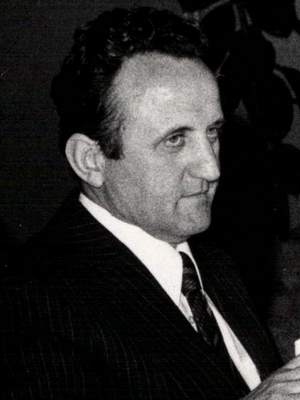

Key offices and dates
- Member of the Federal Executive Council (two terms): Federal Executive Council, 1969–1971 and 1971–1974.
- Prime Minister of the Socialist Republic of Montenegro: served from May 1974 to May 1978 (Prime Minister).
- President of the People's Assembly of Montenegro: May 1983 to May 1984 (President of Montenegro).
- Ambassador of the Socialist Federal Republic of Yugoslavia to the Soviet Union: 1979–1982 (Ambassador to the USSR).
Political career and context
Orlandić rose through the structures of the one-party socialist system that governed Yugoslavia. As a member of the Federal Executive Council he took part in collective federal governance at a time when Yugoslavia was developing a distinctive model of self-management and decentralization. The 1970s were a period of constitutional reform and shifting relations between the federal centre and the republics; Orlandić's term as republican prime minister coincided with these debates and with efforts to manage economic planning and regional development within Montenegro.
In republican office he was involved in administering public affairs, overseeing government functions, and working with party institutions that guided policy. His leadership roles placed him among Montenegro's senior officials and made him a participant in the broader processes that shaped late socialist Yugoslav politics, including attempts to balance local autonomy with federal cohesion.
Diplomatic service and later life
From 1979 to 1982 Orlandić served as Yugoslavia's ambassador in Moscow, a strategically important post during the Cold War. In that capacity he acted as the official representative of Yugoslav interests, maintained diplomatic relations with Soviet authorities, and observed developments in the Eastern Bloc at a time when Yugoslavia pursued a non-aligned foreign policy distinct from the Warsaw Pact and NATO.
After leaving frontline roles he was sometimes mentioned among public figures who, in later decades, were associated with discussions about Montenegro's status within the changing political landscape of the former Yugoslavia. Accounts and commentators have noted his later public statements and positions in the context of debates over autonomy and independence. He remained an elder statesman whose career illustrated the connections between republican administration, federal service, and diplomacy.
Legacy
Marko Orlandić is remembered as a representative figure of Montenegrin leadership in the late socialist period. His career—from membership of the federal executive to republican premiership and diplomatic service—reflects the pathways available to senior officials of that era. For institutional context and summaries of the offices he held, see the entries on the Federal Executive Council, the office of the Prime Minister, the President of Montenegro, and the role of Ambassador, as well as information about the city where he died, Podgorica.
Related articles
Author
AlegsaOnline.com Marko Orlandić: Montenegrin politician and diplomat (1930–2019) Leandro Alegsa
URL: https://en.alegsaonline.com/art/62138
Sources
- dnevnik.rs : dnevnik.rs
- rs.n1info.com : Preminuo nekadašnji jugoslovenski ambasador u SSSR Marko Orlandić