
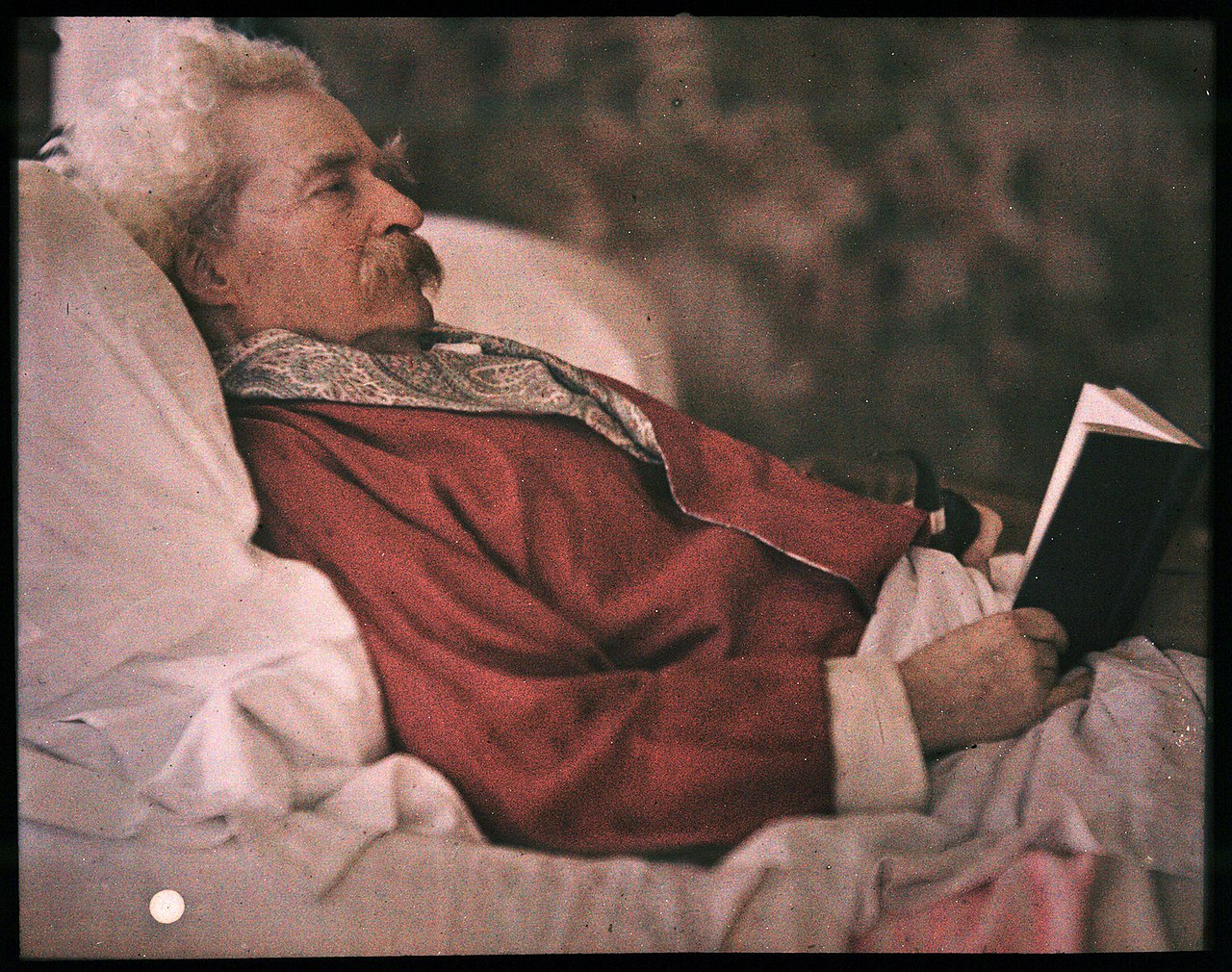
Mark Twain (Samuel L. Clemens) — American writer and humorist
Biography and analysis of Mark Twain (Samuel L. Clemens): life, career, major works, themes, public lectures, financial setbacks, controversies and literary legacy.
Overview
Samuel Langhorne Clemens, known by his pen name Mark Twain, (November 30, 1835 – April 21, 1910) is remembered as one of the major figures in American letters. He was born in Florida, Missouri, grew up in the Mississippi River town of Hannibal, and drew on that upbringing for much of his fiction. Before concentrating on literature he gained experience in several trades and occupations, notably reporting and work for newspapers, and service as a steamboat pilot on the Mississippi River, an experience that shaped his detailed sense of place and local speech.
Image gallery
10 Images


Early life and career
Clemens left formal schooling young and worked in print shops before turning to writing. He first achieved popular attention with humorous sketches and tall tales published in regional and national outlets. These short pieces led to longer works and a national reputation; he also married Olivia Langdon in 1870 and for long periods the family home was in Hartford, Connecticut. To supplement income after business reverses he gave popular public lectures that mixed storytelling with social observation.
Major works
Clemens wrote both fiction and non‑fiction. He published travel books, memoirs, essays and novels that combined humor with serious themes. Early national fame came with a comic short story often cited as his breakthrough, "The Celebrated Jumping Frog of Calaveras County." His best known novels include The Adventures of Tom Sawyer and Adventures of Huckleberry Finn, the latter widely regarded as a landmark of American literature for its narrative voice and moral complexity. Much of his fiction explores the social world of the river valleys and uses vernacular speech to give characters vivid individuality; he is broadly associated with the literary practice often described as local color or fiction drawn from regional life.
Themes and style
Mark Twain's style is notable for an informal, conversational tone, frequent irony, and a readiness to satirize social pretence. He used dialect and colloquial language to render particular communities and to dramatize ethical tensions. His works address themes such as friendship, moral growth, freedom and the contradictions of American society. For example, Huckleberry Finn traces the developing conscience of a young white boy who helps a man escape the condition of slavery in the southern United States, and the novel continues to provoke discussion about representation and historical context.
Opinions, controversies and reception
Clemens was outspoken and sometimes caustic about other writers and literary fashions. His expressed dislike for authors such as Jane Austen and specific books like Sense and Sensibility and Pride and Prejudice are part of his recorded commentary and illustrate his willingness to challenge established tastes. Over time critics have alternately celebrated his social insight and criticized certain portrayals and language in his works; these debates have kept his writing in active scholarly and public discussion.
Later life and legacy
In later years Clemens faced serious financial problems after speculative investments and publishing ventures failed. To recover he devoted himself to worldwide lecture tours and public readings, which reestablished his income and reputation as a public performer. His stage presence and spoken style were influential enough that in the 20th century actor Hal Holbrook developed a long‑running one‑man show presenting Twain to new audiences.
A frequently noted coincidence tied Twain to Halley's Comet: the comet appeared in the year of his birth and the year of his death. Observers have remarked on the comet’s roughly 74‑year interval as a striking link in the popular memory of his life; it has become part of the lore surrounding his biography and public image. The comet itself is a well‑known periodic comet that returns at long intervals.
Reputation and influence
Twain's influence extends across American literature, journalism and popular culture. His novels and shorter works are taught widely and adapted in various media; they are valued for both narrative craft and their capacity to combine humor with social purpose. While tastes and critical frameworks have changed since his lifetime, his writing continues to be read for its inventive language, memorable characters and persistent engagement with moral and social questions. Scholars study his work in contexts ranging from literary realism and regional writing to examinations of race and national identity, and readers continue to encounter his stories in editions and adaptations that seek to present both his comic energy and the historical complexities of his subjects.
Questions and answers
Q: Who was Mark Twain?
A: Mark Twain was an American writer born in Florida, Missouri. He is best known for his works in fiction and especially for his use of humour.
Q: What did he do before becoming a writer?
A: Before becoming a writer, he worked mainly for newspapers and as a steamboat pilot on the Mississippi River.
Q: When did he marry?
A: He married in 1870.
Q: Where did he raise his family?
A: He raised his family in Hartford, Connecticut.
Q: What is considered to be Clemens' best work?
A: Adventures of Huckleberry Finn is considered by many to be Clemens' best work.
Q: How does Hal Holbrook portray Mark Twain?
A: Hal Holbrook plays Mark Twain on stage in a one-man show called Mark Twain Tonight.
Q:What phenomenon occurred during the year that both marked the beginning and end of Twain's life?
A:Halley's Comet appeared in the sky during the year Twain was born and the year he died. This periodic comet comes back every 74 years, which is how long he lived.
Related articles
Author
AlegsaOnline.com Mark Twain (Samuel L. Clemens) — American writer and humorist Leandro Alegsa
URL: https://en.alegsaonline.com/art/62104
Sources
- topics.nytimes.com : "Mark Twain"
- twainquotes.com : "Mark Twain quotations - Jane Austen"
- twainquotes.com : "Mark Twain quotations"