
San Francisco Bay — Geography, Ecology, History, and Uses
Shallow estuary on California's coast where Pacific tides mix with rivers; important for ecology, shipping, history, and urban development.
Overview
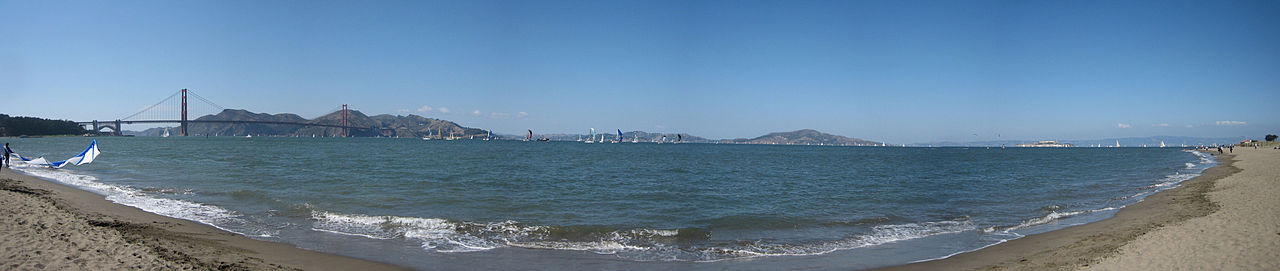
The San Francisco Bay is a broad, shallow estuary on the coast of northern California, opening to the Pacific Ocean through the narrow Golden Gate. It is an estuary where saline ocean water mixes with freshwater delivered by multiple rivers, most notably the Sacramento and San Joaquin. Those rivers rise in the Sierra Nevada mountains and traverse the Central Valley before reaching the bay system, making the estuary a major hydrological node for the region.
Image gallery
10 Images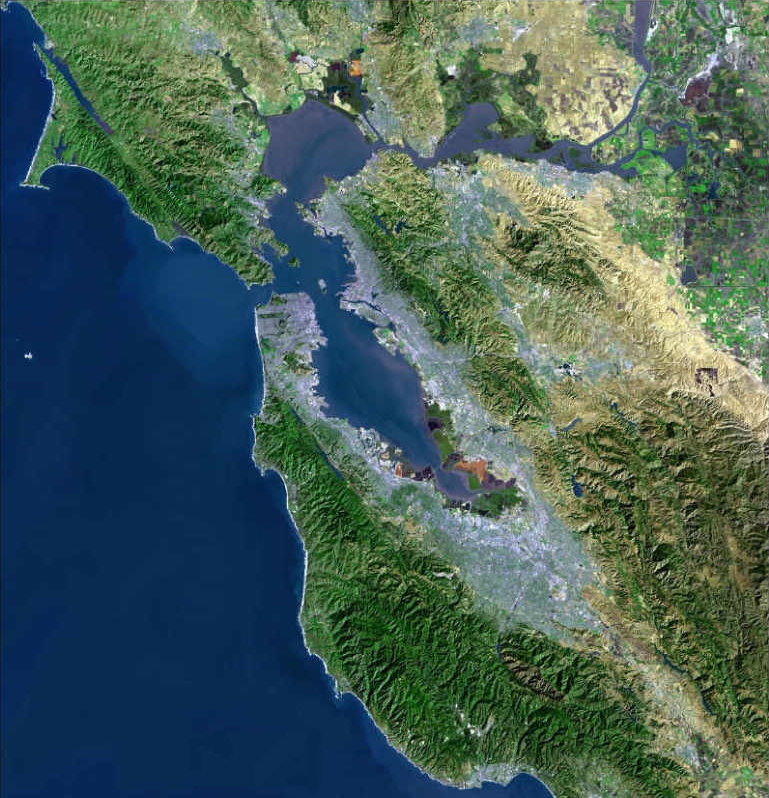




Geography and hydrology
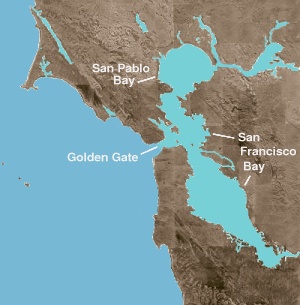
The San Francisco Bay is part of an interconnected system that includes Suisun Bay and San Pablo Bay. Fresh water from the Sacramento–San Joaquin Delta flows into Suisun Bay, passes the Carquinez Strait into San Pablo Bay and then enters the central basins through channels regulated by tides at the Golden Gate. Estimates of surface area vary with what marshes, tidal flats and sub-bays are counted, commonly cited between 400 and 1,600 square miles (about 1,040 to 4,160 square kilometres).
Ecology and wildlife
The bay's mix of salt and fresh water supports productive habitats: tidal flats, salt marshes and shallow channels sustain fish, invertebrates and migratory birds. Historically extensive wetlands acted as natural filters, flood buffers and nurseries for species such as salmon and sturgeon. Much of the original marshland was reclaimed or altered during urban development, but remaining habitats continue to be vital for bird migration and estuarine biodiversity.
Human history and development
For millennia indigenous communities lived along the bay's shores, relying on its fisheries and wetlands. After European contact the bay became a center for maritime trade, and the 19th‑century Gold Rush accelerated population growth, shipping and industry. Over time the shoreline filled for ports, rail yards and urban expansion. Today the bayfront is ringed by the major metropolitan area of the San Francisco Bay Area, including cities such as Oakland and San Jose, and the region plays a prominent role in the economy of the United States.
Uses, infrastructure and recreation
- Maritime commerce: deepwater channels and ports support cargo shipping and fishing fleets.
- Transportation links: bridges, tunnels and ferry routes connect communities around the bay.
- Recreation and tourism: sailing, birdwatching and waterfront parks are popular attractions.
- Research and education: the bay is a focal point for marine science, ecology and climate studies.
Environmental challenges and restoration
Urbanization, pollution, invasive species and sea‑level rise have altered the bay's natural systems. Restoration initiatives now emphasize rebuilding tidal wetlands, improving water quality and adapting shorelines to rising seas. Collaborative programs among government agencies, scientists and community groups aim to reconcile economic use with conserving the bay's ecological functions for future generations.
Distinctions and notable facts
Usage of the name "San Francisco Bay" can be narrow (the central basin near the city) or broad (the larger interconnected bay system). The Golden Gate acts as the principal marine gateway to the Pacific, and waters draining roughly forty percent of California reach the bay, underscoring its significance to the region's hydrology, ecology and economy.
Questions and answers
Q: What is San Francisco Bay?
A: San Francisco Bay is a shallow bay in northern California, along the Pacific Ocean. It is an estuary because salt water from the ocean mixes with fresh water from rivers, especially the Sacramento and San Joaquin rivers.
Q: What rivers feed into San Francisco Bay?
A: The Sacramento and San Joaquin rivers enter the Suisun Bay, which then flows through the Carquinez Strait to meet with the Napa River at the entrance to San Pablo Bay. This connects at its south end to the San Francisco Bay.
Q: How does it connect to the Pacific Ocean?
A: The San Francisco Bay is connected to the Pacific by a strait called the Golden Gate.
Q: Is this entire group of interconnected bays referred to as "the San Francisco Bay"?
A: Yes, this entire group of interconnected bays is often called "the San Francisco Bay".
Q: What region surrounds it?
A: The San Francisco Bay lies in the US state of California and is surrounded by a region known as the San Francisco Bay Area, that includes cities such asSan Francisco, Oakland, andSan Jose.
Q: How big is it?
A: The size ofSan FranciscoBay varies depending on which sub-bays (such asSan PabloBay), estuaries, wetlands etc are included in measurement but it covers somewhere between 400 [1] and 1,600 [2] square miles (1,040 to 4160 square kilometres).
Related articles
Author
AlegsaOnline.com San Francisco Bay — Geography, Ecology, History, and Uses Leandro Alegsa
URL: https://en.alegsaonline.com/art/86818