
Manuel Oltra (1922–2015) — Spanish composer and music educator
Spanish composer and educator Manuel Oltra (1922–2015) directed Barcelona's municipal conservatory and was noted for his work in harmony and counterpoint and for shaping mid-20th-century Catalan musical life.
Manuel Oltra i Ferrer (8 February 1922 – 26 September 2015) was a Spanish composer and pedagogue whose career spanned much of the 20th century. He is particularly remembered for music that reflected a strong interest in formal practice, notably in harmony and counterpoint. Oltra combined creative output with a long term commitment to music education and institutional leadership in Catalonia.
Image gallery
2 Images
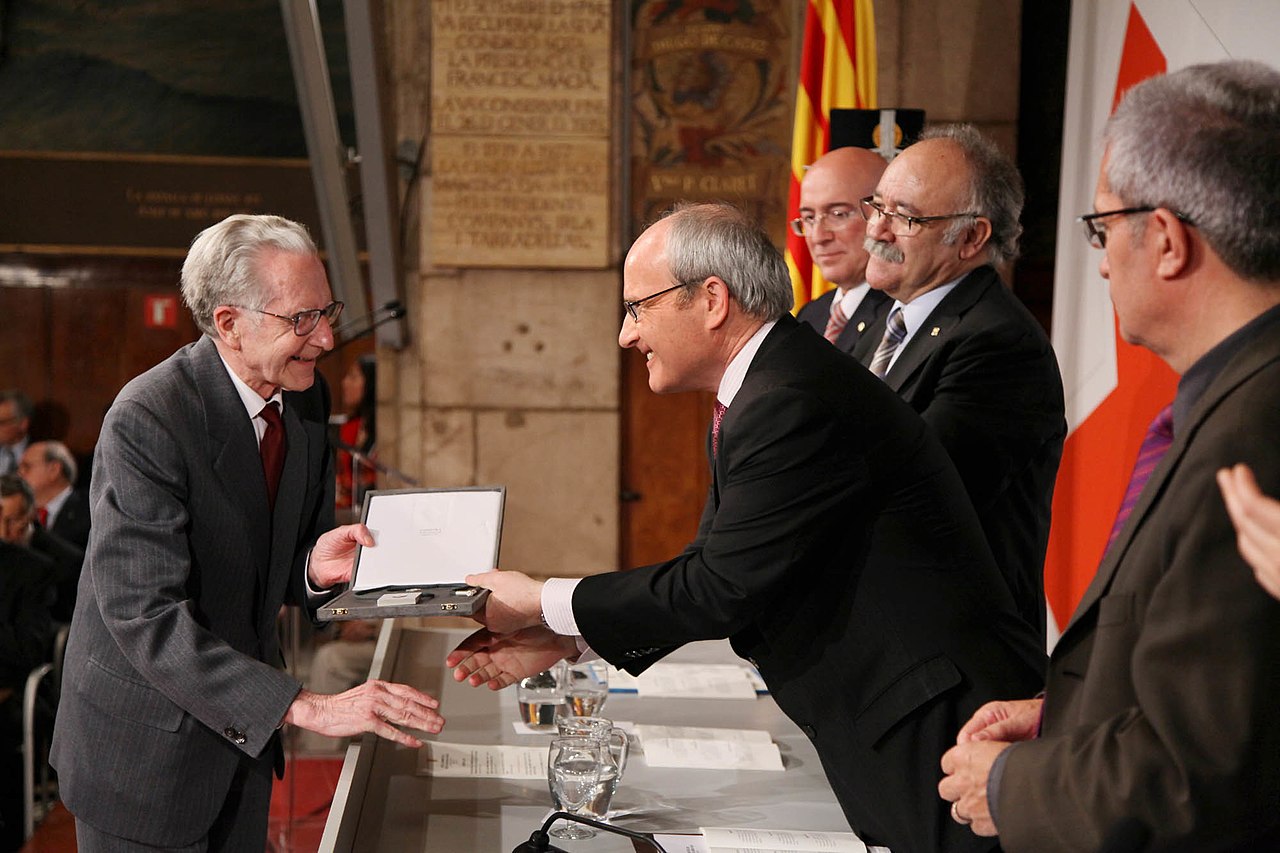
Life and career
Oltra was born in Valencia, Spain. After establishing himself as a composer and teacher he moved to Barcelona, where he became a central figure in municipal musical life. From 1959 until the closure of the institution in 1987 he directed the Conservatorio Superior Municipal de Barcelona, guiding curriculum and training several generations of students and teachers.
Musical style and output
Oltra's compositions are often described as crafted with clarity and contrapuntal skill. His interest in structural technique led him to produce works that are useful both on concert programs and in teaching contexts. He wrote for a variety of forces and favored transparent textures that reveal harmonic and linear procedures.
- Choral music and arrangements suited to community and school choirs
- Chamber works and pieces for small ensembles
- Pedagogical studies and exercises emphasizing theoretical foundations
Legacy and significance
Beyond his compositions, Oltra's chief legacy lies in his impact as an educator and administrator. His long tenure at the Barcelona conservatory helped shape local institutions and teaching standards in Catalonia during decades of cultural change. He remained active in musical circles until late in life and continued to be cited as an influence by students and colleagues.
Manuel Oltra died at the age of 93 in Barcelona, from pneumonia. His work is still performed by choirs and educational ensembles, and he is remembered for bridging compositional craft and practical music teaching.
Related articles
Author
AlegsaOnline.com Manuel Oltra (1922–2015) — Spanish composer and music educator Leandro Alegsa
URL: https://en.alegsaonline.com/art/61467
Sources
- musicvall.com : Biography of Manuel Oltra
- lavanguardia.com : Muere el compositor de sardanas Manuel Oltra