
Manilkara (sapodilla, chicle): tropical trees of the Sapotaceae family
Manilkara is a genus of evergreen tropical trees in the Sapotaceae family, including sapodilla and chicle-bearing species. Valued for fruit, natural latex, and durable timber, they occur across tropical regions worldwide.
Overview
Manilkara is a genus of evergreen trees and shrubs in the plant family Sapotaceae. Several species are economically and culturally important: Manilkara zapota (commonly called sapodilla or sapota) is grown for its sweet fruit, while other species historically provided chicle, a natural latex once used as a gum base. Members of the genus are components of tropical forests and cultivated landscapes in the Americas, parts of Africa, Madagascar and southern Asia.
Image gallery
3 Images

Description and biology
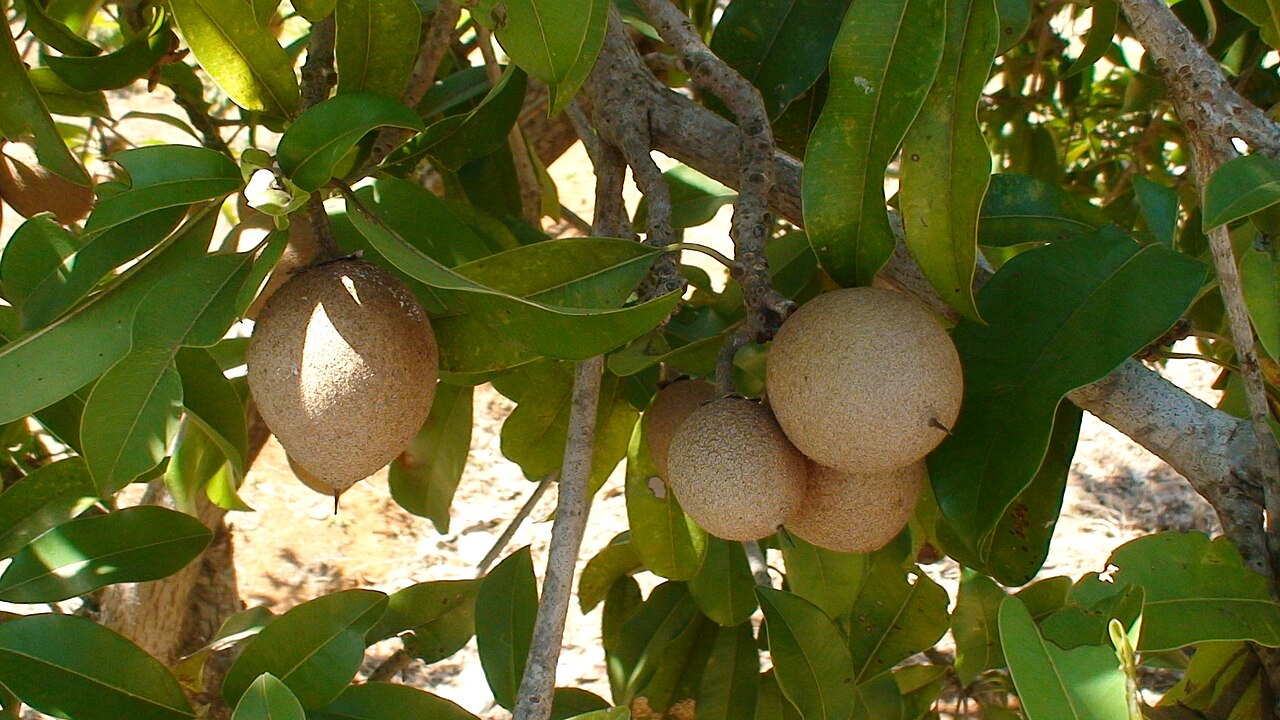
Manilkara species typically have leathery, glossy leaves that often appear clustered at twig tips and short lateral shoots; leaves are usually obovate and darker above than beneath. Flowers are small, often greenish to yellowish, and occur in clusters beneath new leaves. They are generally insect-pollinated. The fruit is a fleshy berry in many species, with a brownish, grainy pulp and a sweet flavor where it is edible. Many species exude a milky latex from the trunk and roots that can be tapped and processed.
Distribution and habitat
Species of Manilkara inhabit lowland to montane tropical forests, coastal stands and seasonally dry woodlands. Some species tolerate a range of soils and climatic conditions and are planted in orchards or home gardens. Natural distribution patterns reflect regional diversity in the Neotropics, Africa and parts of southern Asia, with individual species often restricted to particular islands, regions or habitat types.
Ecology
Flowers and fruits of Manilkara attract a variety of insects, birds and mammals, which act as pollinators and seed dispersers. The dense, often long-lived trees contribute to canopy structure and provide habitat and food resources in forest ecosystems. Regeneration may depend on seed dispersal by animals and suitable microsites for germination and growth.
Uses
- Food: Ripe fruit of Manilkara zapota is eaten fresh and used in preserves, desserts and drinks in local cuisines.
- Latex (chicle): Natural gum from some species was harvested as chicle and used historically as a chewing-gum base; it remains of interest to producers and for traditional uses.
- Timber: Dense, hard wood from several species is used for furniture, flooring and other durable applications where hardness and durability are required.
- Ornamental and shelter: Trees are sometimes planted for shade, windbreaks and ornamental value.
Cultivation and propagation
Manilkara trees are propagated by seed in many traditional contexts; grafting and vegetative techniques are used to maintain desirable fruit varieties and improve yield or uniformity. Plants typically prefer warm conditions and may require several years to reach fruiting size. Management practices vary with species and local agricultural traditions.
Conservation and notes
While some Manilkara species are widely cultivated and common, others have restricted ranges and face threats from habitat loss, overharvesting and land-use change. Conservation of wild populations, sustainable harvesting practices and ex situ cultivation are relevant where species are rare or declining. Identification between species relies on characteristics of leaves, flowers and fruit and on geographic occurrence.
Notable species
- Manilkara zapota – sapodilla, valued for its edible fruit.
- Manilkara chicle – historically associated with chicle production.
Related articles
Author
AlegsaOnline.com Manilkara (sapodilla, chicle): tropical trees of the Sapotaceae family Leandro Alegsa
URL: https://en.alegsaonline.com/art/61338
Sources
- ipni.org : "Plant Name Details for Genus Manilkara"
- ars-grin.gov : "Achras information from NPGS/GRIN"
- ipni.org : "Plant Name Details for Genus Sapota"
- zimbabweflora.co.zw : zimbabweflora.co.zw/speciesdata/species.php?species_id=143820