
Marionberry (blackberry cultivar)
Marionberry is a popular blackberry cultivar developed in Oregon, prized for its rich flavor and used widely in commercial and artisanal foods; it was bred by Oregon State University and partners.
The marionberry is a cultivated variety of blackberry known for its rich, complex flavor and deep color. Originally selected for its eating quality and suitability to Pacific Northwest growing conditions, this berry is grown both by commercial operations and home gardeners. Its name honors Marion County in Oregon, a center of early production.
Image gallery
2 Images
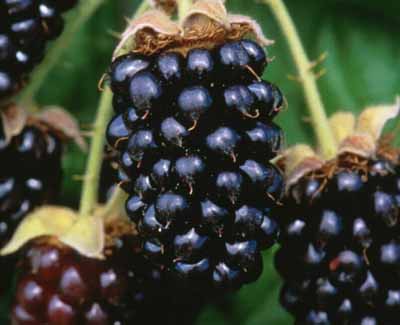
Characteristics
Marionberries are distinguished by a sweet-tart taste with pronounced aromatic notes that many describe as richer than common blackberries. Typical attributes include:
- Large, glossy dark fruit with tender flesh
- High juice content and strong berry aroma
- Long, trailing canes that generally require trellising
- Good suitability for processing as well as fresh eating
History and development
The cultivar was developed through a breeding program in Oregon. Breeders combined traits from several blackberry lines to improve flavor, yield, and adaptability to the region. The program involved institutions including Oregon State University and collaborators who selected the variety for release. For botanical context see the general cultivar concept and classification.
Cultivation and uses
Marionberries thrive in temperate climates with mild, wet winters and dry summers. Commercial growers manage vines on trellises to improve air flow and fruit quality. The berry is versatile in the kitchen: commonly used in jams, pies, sauces, frozen desserts, and as a flavorful fresh fruit. Small-scale producers and farmers' markets often feature marionberry products.
Notable facts and distinctions
In Oregon the marionberry has become culturally and economically significant; it makes up a large share of the region's blackberry sales and is often marketed as a regional specialty. For contemporary production and sales figures consult local market share sources. The marionberry remains an example of how regional breeding programs can create varieties closely tied to local cuisine and agriculture.
Questions and answers
Q: What is marionberry?
A: Marionberry is a type of blackberry cultivar that was developed by a joint venture of Oregon State University.
Q: What is the alternative name for marionberry?
A: Marionberry is also known as marion blackberry.
Q: Who developed marionberry?
A: Marionberry was developed by a joint venture of Oregon State University.
Q: How popular is marionberry in Oregon?
A: Currently, marionberry accounts for over half of the blackberry cultivars sold in Oregon.
Q: Is marionberry a type of raspberry?
A: No, marionberry is not a type of raspberry. It is a type of blackberry cultivar.
Q: Is marionberry grown only in Oregon?
A: No, marionberry can be grown in other parts of the world as well, but it is particularly popular and widely grown in Oregon.
Q: Is marionberry considered a high-yield cultivar?
A: There is no information in the text to indicate whether marionberry is a high-yield cultivar or not.
Related articles
Author
AlegsaOnline.com Marionberry (blackberry cultivar) Leandro Alegsa
URL: https://en.alegsaonline.com/art/62047