
Maneki Neko (Beckoning Cat): Origins, Symbolism, and Uses
Maneki Neko, the Japanese "beckoning cat", is a widely seen talisman believed to attract luck, customers, or money. This article explains its appearance, meanings, history, uses, and notable variations.
Maneki Neko (literally "beckoning cat") is a small figurine often displayed in homes, shops and eateries across Japan and many other countries. Known in English as the "beckoning cat", "lucky cat" or "fortune cat", it is regarded as a charm for good luck or prosperity. You will commonly spot Maneki Neko near entrances or cash registers, where it is intended to welcome customers and invite good fortune. Modern examples range from traditional ceramic statuettes to plastic ornaments and battery-powered, waving models.
Image gallery
10 Images


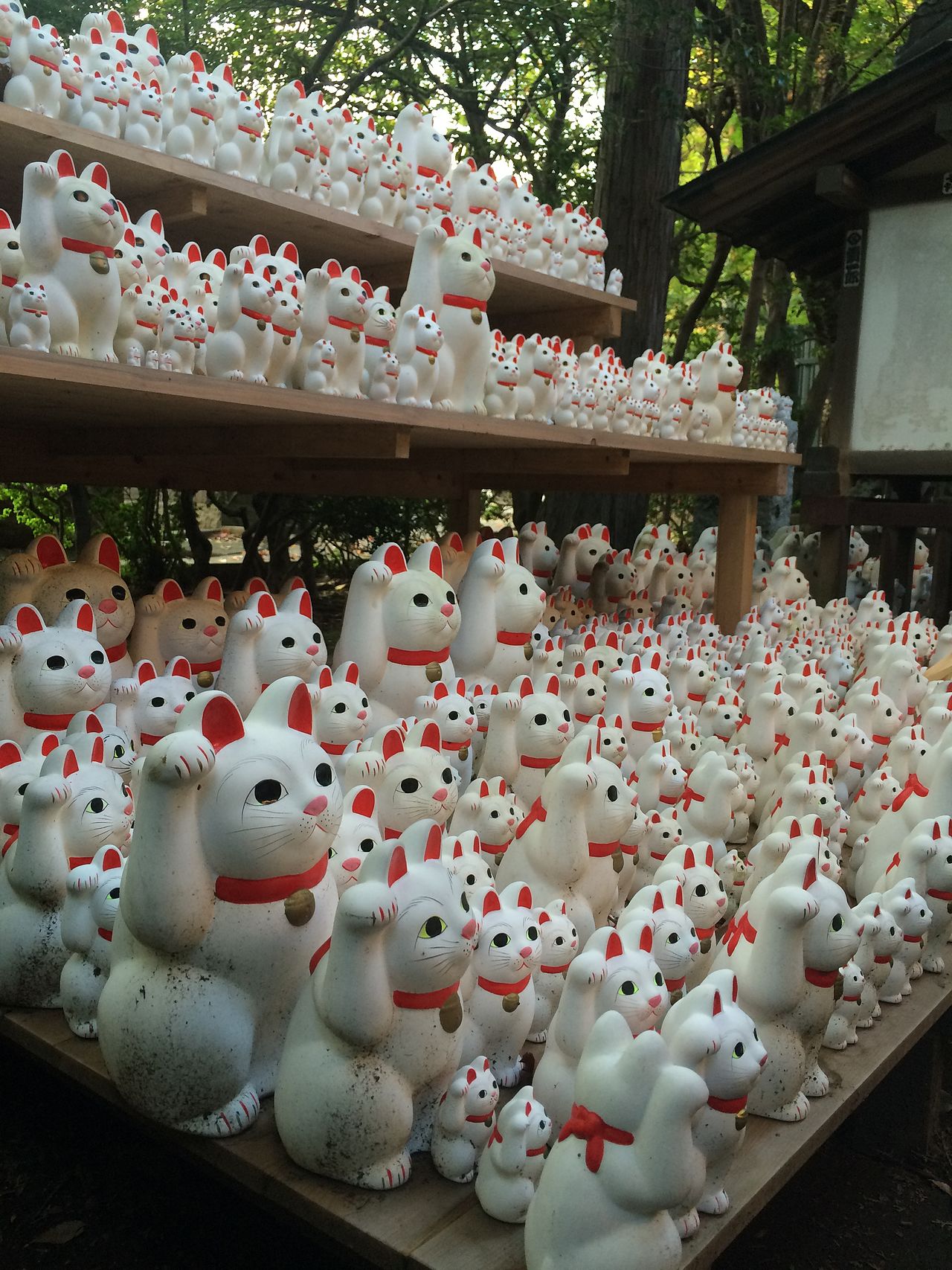
Appearance and common features
Typical Maneki Neko figures depict a seated cat with one paw raised in a beckoning gesture. The raised paw, the coin or accessory around the neck, and the color scheme are all symbolic. Traditional examples are painted in a calico pattern associated with a Calico cat look and often modeled after the Japanese Bobtail. Many pieces wear a red collar, bib and small bell, and frequently carry a gold oval coin called a koban, thought to represent wealth.
Colors and meanings
- Calico — traditionally considered the luckiest and most auspicious.
- White — purity and general good luck.
- Gold — wealth and prosperity.
- Black — protection from harm or illness.
- Red — health and protection from disease.
- Pink — love and romance; blue — education and career success.
Meaning of the raised paw and other distinctions
The direction and number of raised paws are commonly interpreted: a raised left paw is often said to attract customers or visitors, while a raised right paw is thought to invite money and good fortune. Statues with both paws raised are sometimes used to ask for protection or to amplify luck, though cultural interpretations vary. Size, pose and material (ceramic, porcelain, plastic or wood) also reflect the maker’s intent and the setting for which a figure is intended.
Origins and production
The origin of Maneki Neko is not a single proven story but a collection of local legends and craft traditions from the Edo period and later. Popular tales link the figure to temples, shrines and humble household shrines where a cat’s gesture supposedly saved or welcomed a person of status. Production concentrated in pottery towns and kilns, and today Tokoname in Aichi Prefecture is one of Japan’s best-known centers for making traditional Maneki Neko figures. The motif spread from Japan across East Asia and into international popular culture.
Uses, cultural reach and modern variants
Maneki Neko is placed in storefronts to invite customers, in restaurants to bring prosperity, and in homes for general good fortune. It is also a popular souvenir and a collectible item. Beyond ceramic statues, contemporary forms include electronic waving cats, keychains and decorative motifs on packaging. The symbol has been widely adopted outside Japan, particularly in Chinese-speaking communities where similar figures are displayed to attract wealth. For readers seeking visual or commercial references, see examples in local craft shops and guides to Japanese folk charms available through cultural resources (regional craft guides).
Collectors and cultural historians note that while Maneki Neko is often handled as a cute emblem, its varied meanings, regional stories and long production history give it a richer role as a living example of folk belief, commerce and craft. For further reading and examples of regional styles, pottery production and museum displays, consult specialist sources on Japanese folk art and shrine traditions (cat breeds and imagery, color symbolism).
Related articles
Author
AlegsaOnline.com Maneki Neko (Beckoning Cat): Origins, Symbolism, and Uses Leandro Alegsa
URL: https://en.alegsaonline.com/art/61262
Sources
- books.google.com : "Maneki Neko"
- members.virtualtourist.com : "Tokoname, Birthplace of Manekineko Lucky Cats" at Virtualtourist.com