
Macropodiformes: kangaroos, wallabies, potoroos and their relatives
Macropodiformes are a suborder of diprotodont marsupials including kangaroos, wallabies, potoroos, bettongs and rat-kangaroos; notable for hopping locomotion, specialized feet, and important ecological roles.
Overview
Macropodiformes is a suborder within the marsupial order Diprotodontia. It groups the familiar large hopping mammals such as kangaroos and smaller forms like wallabies, together with potoroos, bettongs and rat-kangaroo relatives. Members occur primarily in Australia, New Guinea and nearby islands and display a range of sizes and lifestyles from arboreal to ground-dwelling.
Image gallery
5 Images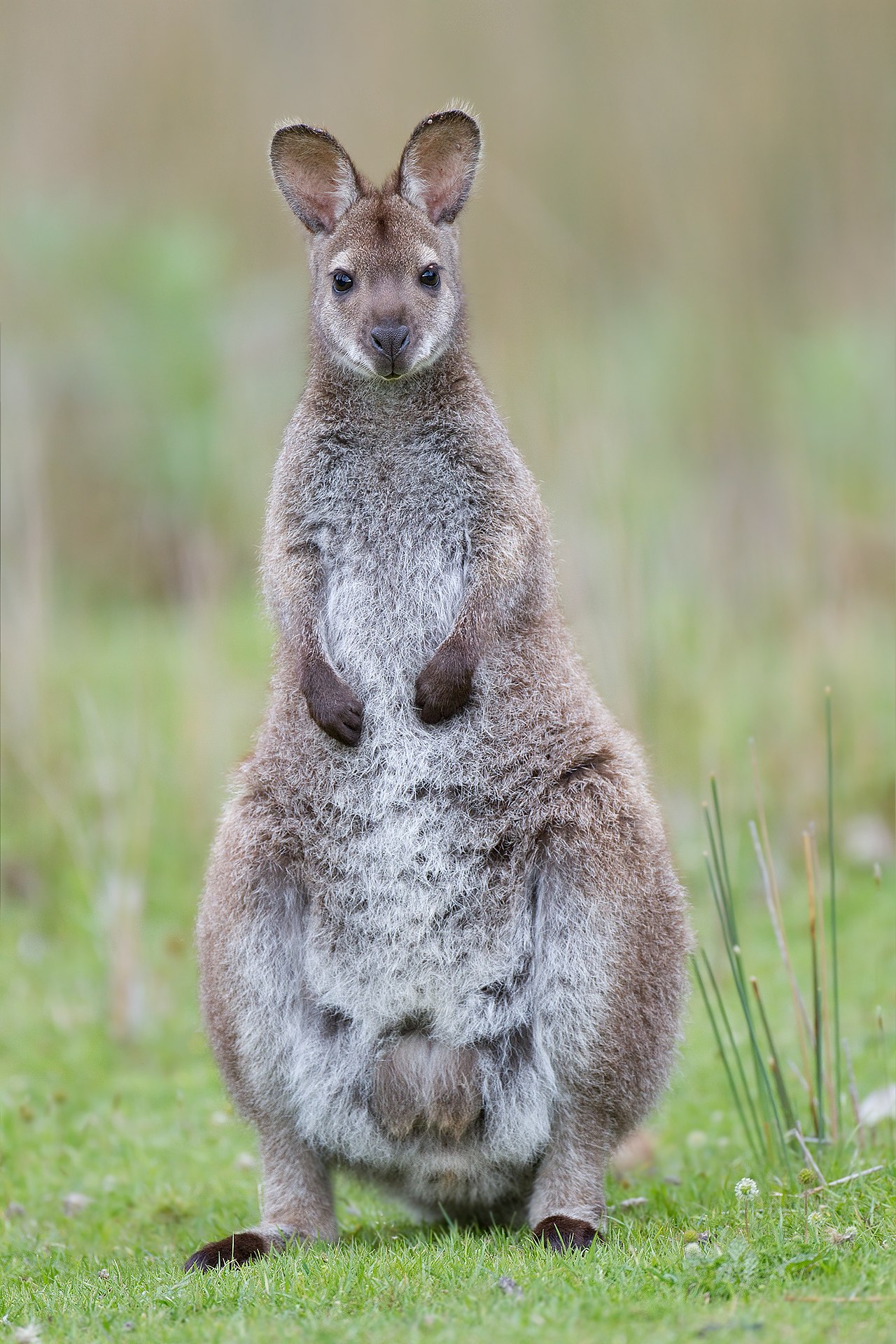


Key characteristics
Most macropodiforms have elongated hind limbs, a long tail used for balance, and adaptations for saltatory (hopping) locomotion. Dentition is typically herbivorous with ever-growing incisors set in a diprotodont arrangement. A distinctive trait among many species is syndactyly: the second and third toes are fused except for separate claws, which aids in grooming. As marsupials they give birth to tiny, undeveloped young that continue development in a pouch.
Classification and examples
The group includes several families and many familiar genera. Representative groups include:
- Macropodidae: kangaroos, wallabies, tree-kangaroos and pademelons (the best-known macropods).
- Potoroidae: potoroos and bettongs, often small, nocturnal and partly fungivorous.
- Hypsiprymnodontidae: the musky rat-kangaroo, a more primitive, ground-dwelling form.
Well-known examples include the red kangaroo and various wallaby species; tree-kangaroos illustrate how some lineages returned to arboreal life.
Ecology, diet and role
Macropodiforms occupy grasslands, forests and shrublands. Many are grazers or browsers; potoroids often dig for subterranean fungi and tubers, acting as important seed and spore dispersers. Their grazing can shape vegetation structure and influence fire regimes, making them integral components of Australian and New Guinean ecosystems.
Evolution, human interactions and conservation
The group diversified in Australasia over millions of years, adapting to shifting climates and expanding grasslands. Several macropodiform species are abundant, while others face threats from habitat loss, introduced predators and competition from livestock. Conservation efforts range from protected areas to predator control and captive breeding. Cultural significance is high: kangaroos in particular feature prominently in Indigenous cultures and national symbolism.
For further reading about their place within Diprotodontia and species accounts, see general treatments of marsupial evolution and faunal guides to Australia and New Guinea, or follow specialized resources on macropod biology and conservation (potoroos and relatives).
Related articles
Author
AlegsaOnline.com Macropodiformes: kangaroos, wallabies, potoroos and their relatives Leandro Alegsa
URL: https://en.alegsaonline.com/art/60399
Sources
- paleodb.org : The Paleobiology Database