
Mac OS X Tiger (10.4): overview, features, and legacy
Mac OS X Tiger (version 10.4) is Apple’s fifth major Mac OS X release, introduced April 29, 2005. It added Spotlight search, Dashboard widgets, Automator and important graphics and developer technologies.
Mac OS X Tiger (version 10.4) is the fifth major release in Apple’s Mac OS X line. Announced and distributed as a desktop and server operating system, Tiger sharpened the user experience while adding system-level technologies that influenced later macOS releases. It arrived as an update to Apple's Unix-based desktop platform and was positioned between Panther (10.3) and Leopard (10.5).
Image gallery
3 Images
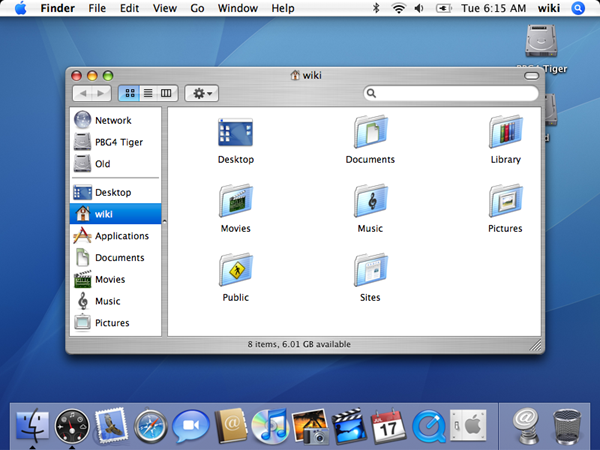

Key features and user-facing changes
Tiger introduced several notable features aimed at improving search, automation and quick access to information. Among the most visible were:
- Spotlight — a system-wide search and indexing service that made finding files, mail, and metadata faster and more flexible than simple filename lookup.
- Dashboard — a layer for small Web-driven widgets (mini-apps) providing at-a-glance information such as weather, calculator, or stock quotes.
- Automator — a graphical tool to build repeatable workflows and automate routine tasks without in-depth scripting.
- Improved Safari and Mail — updates to applications with better web and email handling, including enhanced standards support and user interface refinements.
Underlying technologies and developer additions
Tiger also emphasized modern graphics and developer APIs. It expanded support for GPU-accelerated rendering through Core Image and Core Video, introduced new frameworks and scripting hooks to simplify application development, and broadened 64-bit capabilities on compatible hardware. These changes helped developers create richer visual effects, faster media processing and tighter integration with system services.
Release, compatibility and updates
Apple released Tiger on April 29, 2005. It was distributed for machines running the Mac platform and maintained a period of updates that improved stability and hardware support. Tiger supported a broad range of Macintosh models of that era and was notable for being used on both PowerPC-based Macs and, later, on Intel-based systems when Apple transitioned processor architectures. For more background on Apple’s desktop releases see Mac OS X.
While subsequent Mac OS X versions built on Tiger’s foundations, its introduction of Spotlight, Dashboard and Automator left a lasting mark on how users interact with macOS. Many ideas first popularized in Tiger evolved in later releases into integrated services and user interface conventions still recognizable in modern macOS versions.
Notable distinctions: Tiger was the fifth major Mac OS X release and represented a balance between visible consumer features and behind-the-scenes platform improvements for developers. Its combination of search, automation and graphics acceleration made it an important step in the platform’s evolution and in Apple’s move toward tighter integration of hardware and software.
Related articles
Author
AlegsaOnline.com Mac OS X Tiger (10.4): overview, features, and legacy Leandro Alegsa
URL: https://en.alegsaonline.com/art/60264
Sources
- apple.com : "Apple Unleashes Tiger"